English
 Español
 Français
 Deutsch
 Italiano
 Português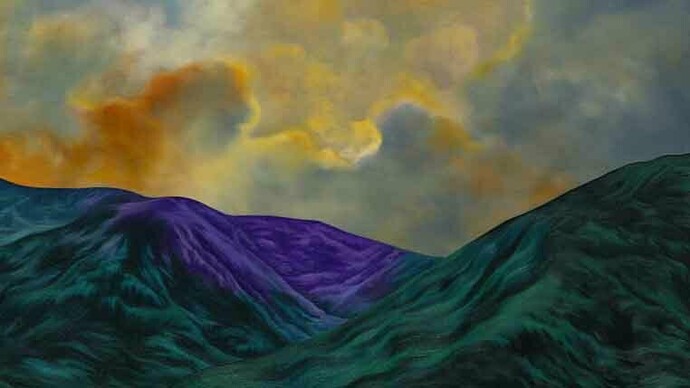
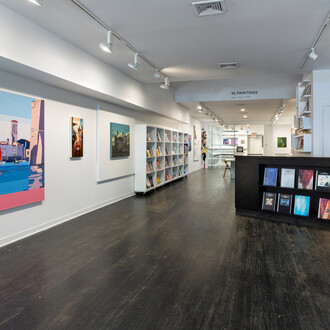
Harper’s is pleased to announce Max Jansons + Joani Tremblay, a two-person exhibition featuring new paintings by each artist at Harper’s East Hampton. Bringing together landscape and still life, the presentation considers how these familiar genres can become vehicles for memory and interior experience, transforming images of nature into expansive psychological terrains. Max Jansons + Joani Tremblay opens with a public reception on Saturday, August 8, 6–8pm.
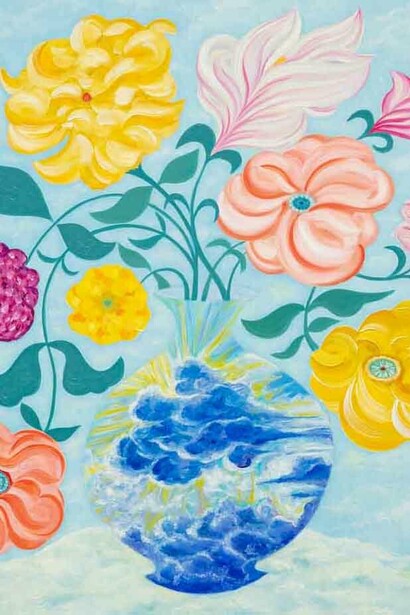
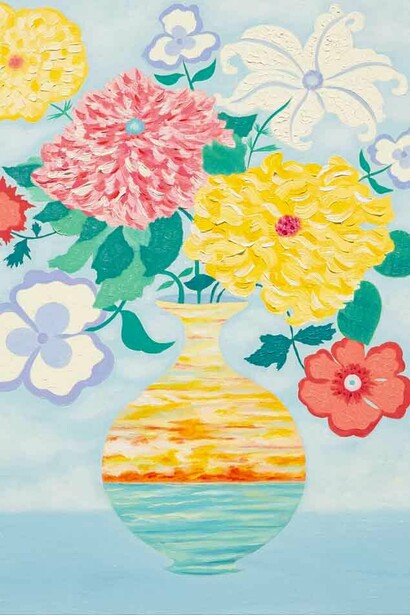
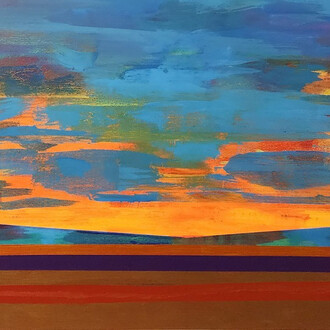
Across his new series, Max Jansons returns to the vase of flowers, a motif he first introduced over a decade ago and has since used as an armature for exploring what he calls “the beautiful language of painting.” Rendered in oil on linen, this body of work was shaped in part by Jansons’s time in Hawaii, where he watched the sunset each evening as his wife’s father approached the end of his life. Here, his floral arrangements appear to float against aerial backdrops far above the earth’s crust. Even when flat surfaces are depicted, the absence of cast shadows lends a feeling of buoyancy that defies gravity and material reality. Often functioning as paintings within paintings, the vases become miniature landscapes of their own, containing vibrant sunsets, ocean horizons, and drifting cumulus clouds that swell and dissolve in raking sunlight. Through this synthesis of genres, Jansons treats the floral arrangement as a vessel for loss, using its suspended horizons and radiant skies to reflect on impermanence and visions of the afterlife. Giving acute attention to the direction and texture of each brushstroke, the artist embraces the slow nature of the medium. In both form and subject matter, painting becomes a means of sublimation for Jansons, allowing the weight of personal experience to pass through its formal possibilities.
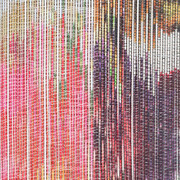
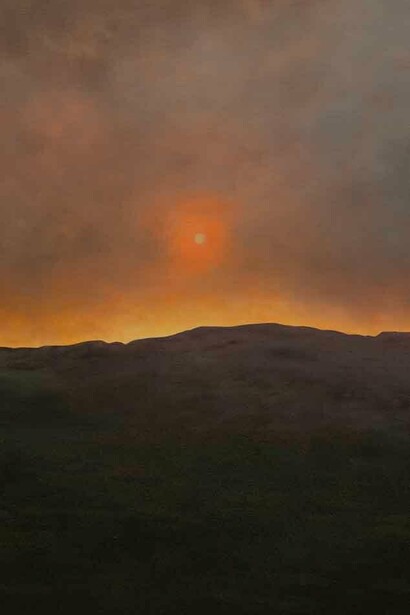
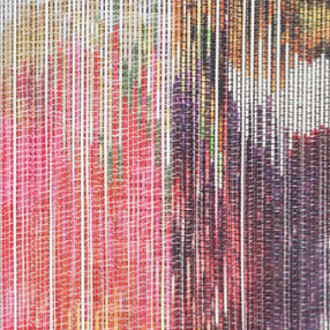
Like Jansons, Joani Tremblay’s new paintings are shaped by memories of places she has encountered and inhabited. Her reference points traverse the Hamptons, the Quebec coast where she grew up, and the California desert, yet these geographies gradually dissolve into one another through her soft-focus, ethereal landscapes. In works such as Blue mountains constantly walking, enlarged flowers emerge from the lower quadrant of the canvas, their fibrous petals and lush colors rendered with gentle precision. As the artist notes, “The flowers aren’t botanical studies, and the landscapes aren’t descriptions of specific locations. They’re fragments of memory, observation, and imagination brought together into a space that feels simultaneously familiar and impossible.” An additional dimension of Tremblay’s practice emerges through the works’ respective titles. Borrowed from literary sources by writers such as Walt Whitman, Terry Tempest Williams, Robert Macfarlane, and Gary Snyder, the titles function as quiet companions, alluding to the relationship between landscape and consciousness that each author explored in distinct ways. Through the interplay of botanical detail and atmospheric dissolution, Tremblay allows technique itself to mirror her subject: the way memory sharpens certain forms while allowing places to blur, drift, and merge into one another.
Viewed together, the landscapes and still lifes of Jansons and Tremblay create a context in which beauty and uncertainty remain closely bound. In both practices, nature is treated less as scenery than as a means of giving visible shape to inner experience, generating a sense of reverence shadowed by loss. Rather than resolving these tensions, their paintings allow shifting emotional states to remain suspended, inviting viewers to reflect on such conflicting feelings.