English
 Español
 Français
 Deutsch
 Italiano
 Português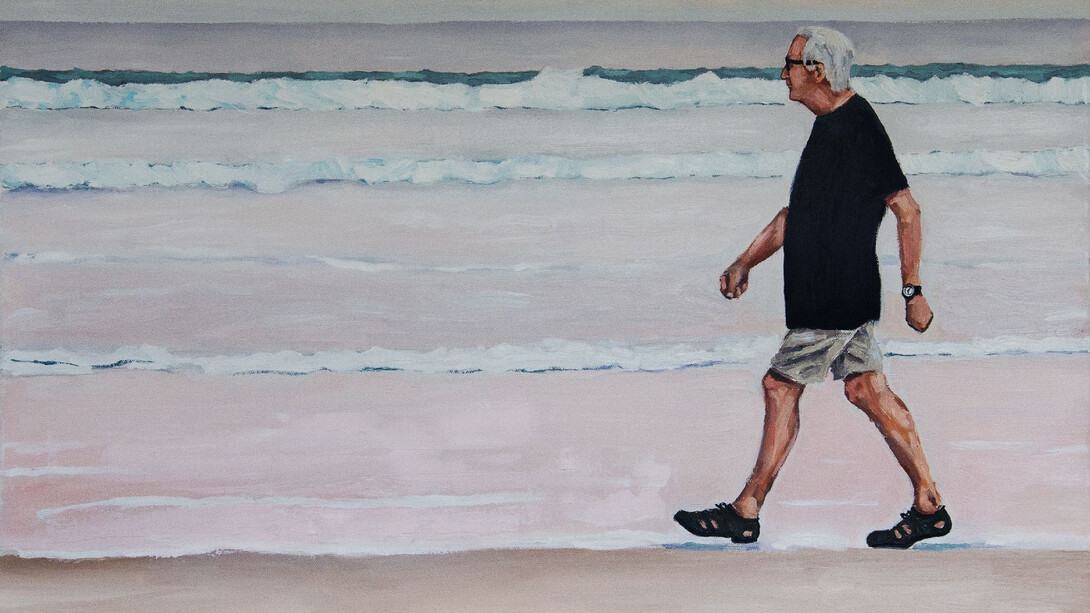
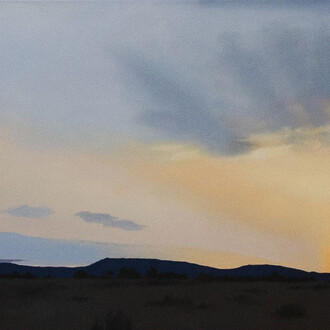
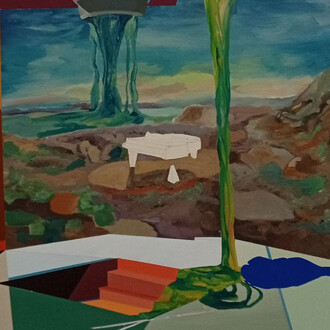
Perspective, horizon line and vanishing point is not only an illusion of space but also an alternative territory that both the artist and viewer can enter, visit or dwell in. A shelter, home.
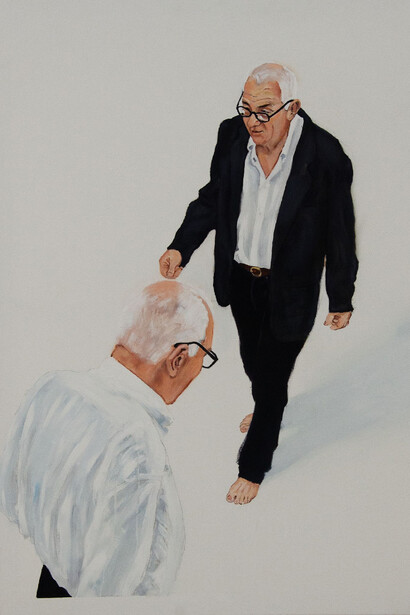
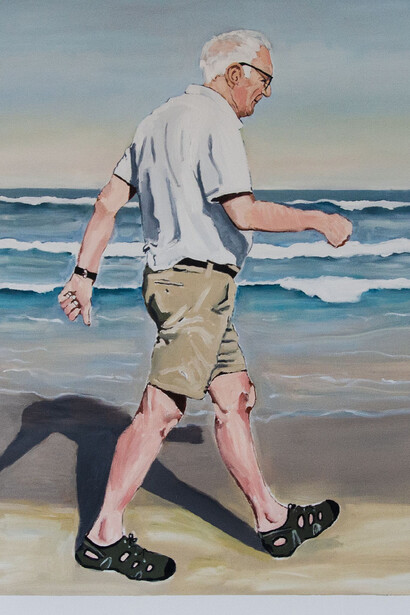
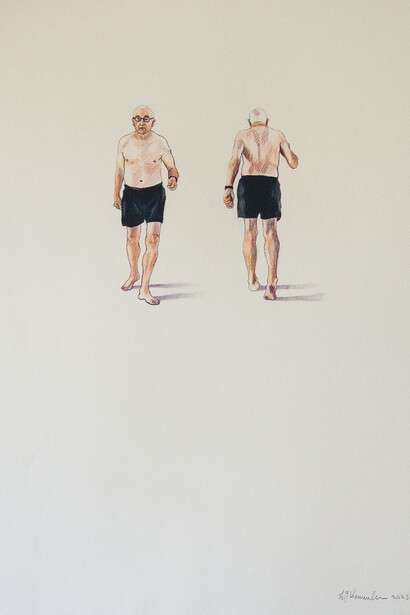
Drawing and painting are constant movement. The brush, pencil, charcoal, and body must be in motion. There is movement in the studio, a lot of walking, and then, after work, I go for a walk— a nomadic life. The body is always present as a subject, an instrument, or a claimed space.
These paintings are a depiction and result of movement and state of mind. Ultimately, an illusion. Insight is a bonus and not guaranteed. The works remain open to the possibility that what appears to be a stable image might instead be a temporary state, shaped by movement, perception and the shifting relationship between the artist and the space of the painting. The horizon becomes less a fixed boundary than a point of departure, suggesting a place that can continually be entered, crossed or reimagined.
Within this space, perspective operates not simply as a technical device but as a way of constructing experience. The paintings hold together the physical act of making with the psychological movement that accompanies it, allowing marks, gestures and spatial structures to register changing states of attention. What emerges is a territory that is at once imagined and inhabited, where the act of looking becomes another form of movement.
The paintings therefore resist a definitive reading, offering instead a space for uncertainty, wandering and return. They can be approached as landscapes, shelters or fragments of an internal geography, but none of these possibilities is fixed. The illusion remains essential: it creates the conditions for entering another space, even if that space ultimately exists only through the movement of the body, the eye and the mind.