English
 Español
 Français
 Deutsch
 Italiano
 Português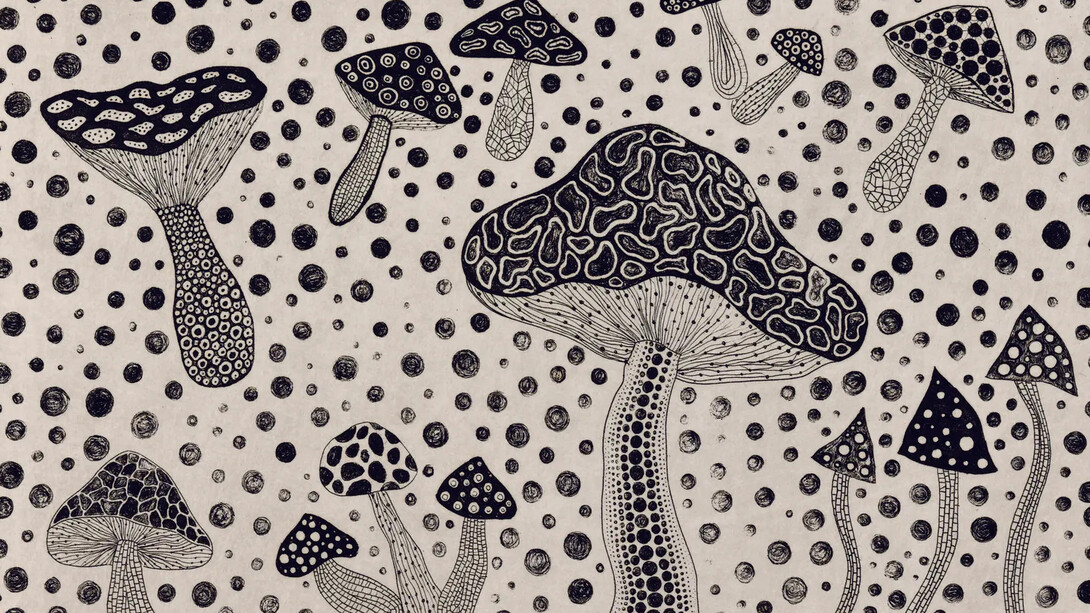
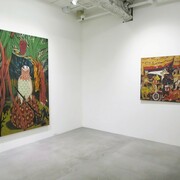
Due to a naphtha shortage, some snack packaging was produced in black and white instead of its usual colors. Seeing snacks of every variety and flavor lined up on store shelves in monochrome packaging made us realize how deeply color represents things, and how much information we draw from color. This exhibition presents works by Ota Fine Arts artists, as well as works from our collection, in which the artists have engaged with the profound world of black and white not as a constraint, but as a deliberate expressive choice. We hope the works gathered here offer a chance to reflect on what a monochrome world can reveal.
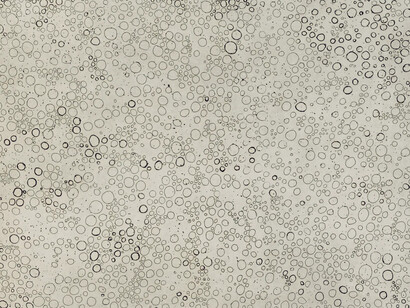
Yayoi Kusama is best known for her pumpkins and flowers rendered in vivid colours, yet her practice is deeply rooted in a world constructed through black and white. This exhibition centres on her etchings from the 1990s, in which organic, life-like forms multiply across the surface, appearing to spread endlessly beyond the picture plane. In the absence of colour, Kusama's lifelong pursuit of infinity through repetition and accumulation emerges here at its purest. These etchings also feature prominently in her major retrospective, which opened at the Fondation Beyeler and is now touring Europe, reflecting a growing international reappraisal of this body of work.
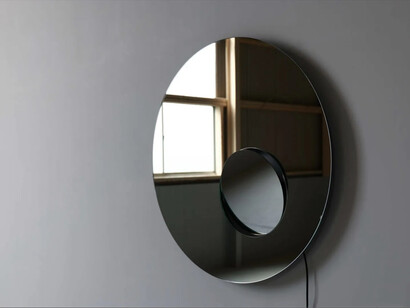
Tsuyoshi Hisakado creates installation works that combine light, sound, and physical materials to explore the uniqueness and eternity inherent in time and space. This exhibition presents Tunnel, a circular work that appears to float off the wall, in two versions: mirror and jet black. While the mirrored surface reflects light to project the world on this side, the black surface absorbs light, inviting us to imagine an unseen world beyond. Common to both works is a hole, a presence connecting this side and the other, open not only to space but also to time: past, present, and future. Within this hole which links the two realms, an angled inner disc slowly rotates, further stirring our imagination toward the world beyond.
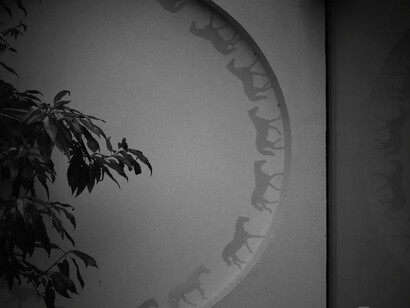
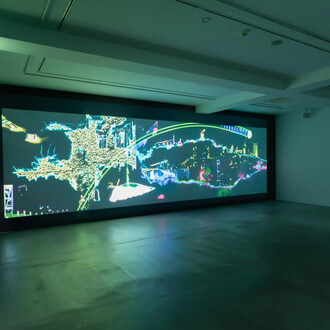
Hiraki Sawa, known for his black-and-white video works, brings a quiet strangeness into everyday spaces, depicting worlds where reality and fiction intersect. Nobody, presented in this exhibition, was born from an opportunity to exhibit at the home of a friend living in London. Amid the rhythms of daily life, hazy shadows of camels and horses gradually appear, blurring the boundary between presence and absence. Though these scenes are visions that only the artist could have witnessed, they resonate with viewers like landscapes glimpsed from a distant memory, or a dream they once had. The choice to work solely in black and white frees the images from being fixed to any particular time or place, leaving room for them to connect with each viewer's own memories and dreams.
Nobuaki Takekawa has examined social and political issues through a wide range of media, including painting, sculpture, and installation. His recent series examining the darker side of the modern industrial history surrounding the Ashio Copper Mine has led him, through his research, to the anarchist Sanshiro Ishikawa. Having fled to Europe in the aftermath of the High Treason Incident, Ishikawa spent seven years abroad, living in France growing potatoes. Ishikawa translated "democracy" as Domin Seikatsu, "life of the people of the soil," envisioning agriculture as a means of cultivating a way of life and a community rooted in the land. This translation became the title for his new work. Just as Takekawa was researching Ishikawa, potato chips in black-and-white "petroleum-saving packaging" appeared on store shelves in Japan. The wars waged by the global powers were now extending into even the smallest corners of daily life, reaching as far as the colour of a snack package. Yet, just a century earlier, Ishikawa had started from that same daily life to rethink about society and the state. Through potatoes and potato chips, the two distant moments converged in Takekawa's imagination.