English
 Español
 Français
 Deutsch
 Italiano
 Português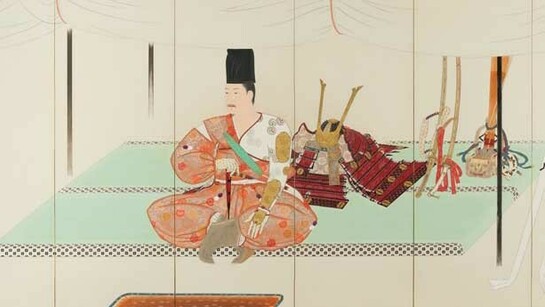
To introduce some features of the museum’s exhibitions of works from the collection: First, its scale is one of the largest in Japan, displaying approximately 200 works each term from the museum’s holdings of more than 14,000 works acquired since its opening in 1952. Also, it is one of the foremost exhibitions in Japan, tracing the arc of Japanese modern and contemporary art from the end of the 19th century to the present day through a series of 12 rooms, each with its own specific theme.
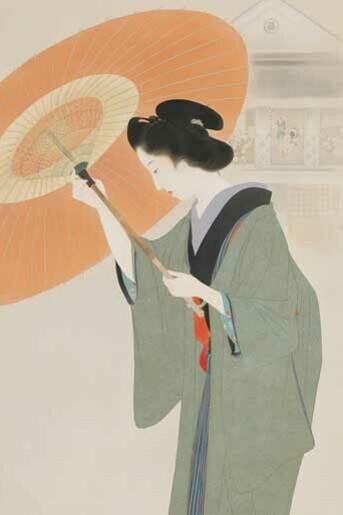
Some highlights of the current term are as follows. In Room 1 on the fourth floor, National Important Cultural Properties that are centerpieces of our Nihonga (Japanese-style painting) collection go on view: Kaburaki Kiyokata’s Tsukiji Akashi-cho Town, Shintomi-cho Town, and Hama-cho Gashi Zone in the first term (through November 15) and Yasuda Yukihiko’s Camp at Kisegawa in the second (from November 17).
In connection with Takehisa Yumeji: An Artist Who Defined His Era (from October 23) on the first floor, Room 3, “A Taste of Romanticism,” and Room 4, “Cafés and Waitresses,” highlight the art and culture of the Taisho era (1912–1926). Room 10 on the third floor, “Seeing Stories,” is a special feature with devices that invite visitors to read the works more closely.