English
 Español
 Français
 Deutsch
 Italiano
 Português
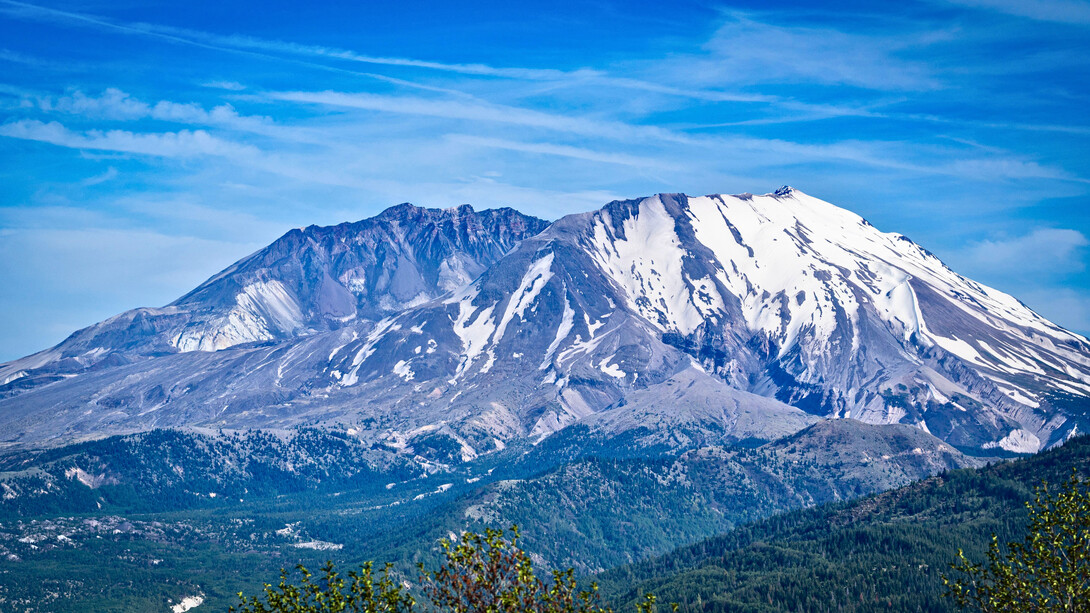
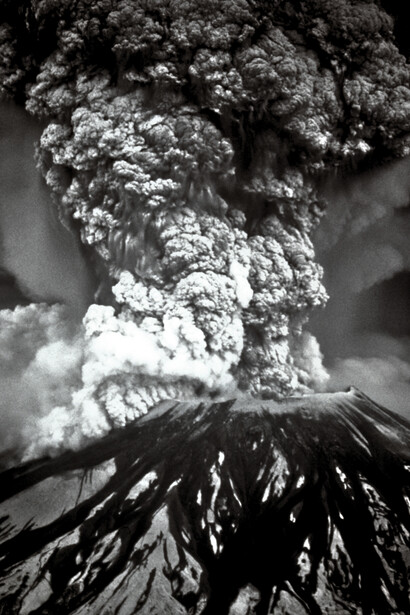
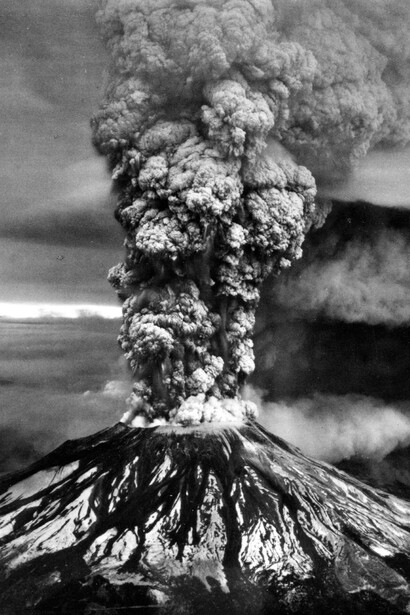
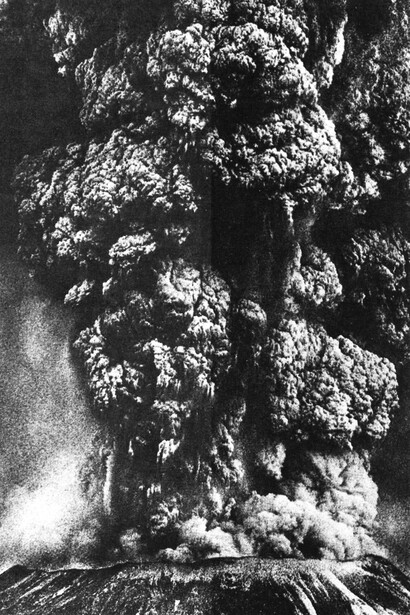
The eruption of Mount St. Helens on May 18, 1980, remains one of the defining natural disasters in modern American history. Within minutes, a magnitude-five-plus earthquake triggered the collapse of the volcano's north flank, producing the largest landslide in recorded history and releasing a devastating lateral blast that flattened approximately 230 square miles of forest. The eruption claimed 57 lives, sent ash more than 80,000 feet into the atmosphere, and transformed the surrounding landscape into an almost unrecognisable wasteland. The official history of the disaster has been extensively documented by geologists, emergency responders, and historians alike.
Alongside that well-established historical record, however, exists a very different narrative. For more than four decades, researchers and enthusiasts within the Bigfoot community have said that the eruption exposed not only thousands of animal carcasses, but possibly the remains of Sasquatch. According to the legend, military recovery teams encountered these bodies during cleanup operations and quietly removed them from the blast zone under conditions of extraordinary secrecy. No official records support these allegations, yet the story has endured far longer than many other Bigfoot legends. Rather than asking whether the conspiracy is true, a more productive question may be why it has persisted for so long despite the absence of verifiable evidence.
Below is my complete presentation on the Mount St. Helens Bigfoot conspiracy that explores the origins of this remarkable story in greater detail.
Understanding the conspiracy requires looking well beyond the events of 1980. Mount St. Helens had already become deeply embedded within Pacific Northwest folklore long before the volcano erupted. Indigenous traditions throughout the region described powerful forest beings known by names such as Skookum and Boqs, creatures that occupied an uncertain space between spiritual entities and physical inhabitants of the wilderness. Within the Chinook Jargon language, the word Skookum referred broadly to something strong, powerful, or formidable, and later generations increasingly associated these traditions with what would eventually become known as Bigfoot. Whether these accounts are interpreted as mythology, oral history, or cultural symbolism, they established Mount St. Helens as a landscape already associated with mysterious beings centuries before modern cryptozoology emerged.
The mountain's reputation expanded considerably in 1924 with what became known as the Battle of Ape Canyon. According to newspaper accounts and later recollections, five prospectors working near Mount St. Helens reported that their cabin came under siege by large, ape-like creatures that allegedly hurled rocks throughout the night. One prospector, Fred Beck, later claimed that he shot one of the creatures, watching it fall into a canyon where no body was recovered. Decades later, Beck revisited the incident in his 1967 book I Fought the Apemen of Mt. St. Helens, cementing the story as one of the foundational narratives of Pacific Northwest Bigfoot lore. Whether the encounter reflected misidentification, embellishment, or something genuinely unexplained, Ape Canyon ensured that Mount St. Helens would occupy a central place within Sasquatch folklore for generations.
Modern efforts have shown that the Ape Canyon incident could be much more than just lore. In 2021, the television show Expedition X, a spinoff of Expedition Unknown with Josh Gates, aired an episode titled “Canyon of the Apes.” In that episode, Phil Torres and Jessica Chobot discover archaeological remnants of what could have been the prospectors’ campsite. This is powerful evidence that gives credibility to the Ape Canyon story.
Against that historical backdrop, the eruption of 1980 presented an extraordinary set of circumstances. The lateral blast swept across forests at extraordinary velocity, killing wildlife on an immense scale while leaving recovery personnel to search an environment unlike anything previously experienced in the United States. The Washington National Guard participated extensively in search-and-recovery operations alongside numerous civilian and governmental organisations. Helicopters continuously transported personnel and equipment, portions of the disaster area remained heavily restricted, and enormous numbers of animal carcasses required removal from the blast zone. These facts are firmly established within the historical record and provide the environmental conditions upon which later theories would develop.
The core of the conspiracy is surprisingly straightforward. If the forests surrounding Mount St. Helens truly represented longstanding Bigfoot habitat, proponents argue, then at least some Sasquatch should have perished alongside bears, elk, deer, and countless other animal species. Once that possibility is accepted, some contend that military recovery teams would almost certainly have encountered those remains during cleanup operations. The theory, therefore, shifts from proving Bigfoot's existence to explaining why no physical evidence ever entered the public domain. It is this logical progression that transformed a regional folklore tradition into a modern government cover-up narrative.
Supporters of the theory frequently point to several eyewitness accounts that began circulating after the eruption. One widely cited story, preserved by author Linda Coil Suchy, attributes testimony to an individual identified only as "Bradshaw," who allegedly guarded a tarp-covered collection of carcasses before witnessing burned Sasquatch bodies being loaded for transport. Another account describes a Chinook helicopter carrying several large, ash-covered, humanoid bodies suspended beneath the aircraft in a cargo net. These reports remain among the best-known elements of the Mount St. Helens conspiracy, yet they also illustrate one of its central evidentiary challenges. None has been independently verified, none is accompanied by physical evidence, and several reached the public only years after the eruption itself. Consequently, they occupy an ambiguous position between firsthand testimony, oral tradition, and modern legend.
Government responses have done little to settle the matter. Freedom of Information Act requests seeking documentation of any Bigfoot recovery efforts reportedly produced a categorical denial stating that no documented reports of Bigfoot or Sasquatch carcasses existed and that no projects had attempted to locate or recover such bodies. For sceptics, this response effectively closes the question. For researchers, however, the denial itself could be evidence of concealment—further confirmation that evidence has been successfully hidden.
From an analytical perspective, the Mount St. Helens conspiracy is noteworthy not because it has been substantiated, but because it demonstrates how folklore, historical events, and institutional secrecy can intersect to produce remarkably durable narratives. Unlike many conspiracy theories that require the invention of entirely fictional events, this story is built almost entirely upon genuine historical circumstances. The eruption occurred. The devastation was immense. Military recovery operations were real. Public access to portions of the disaster zone was restricted. These uncontested facts provide fertile ground for speculation, allowing extraordinary claims to develop within an otherwise well-documented historical framework.
The conspiracy also highlights an important feature of human cognition. In situations involving incomplete information, people naturally seek coherent explanations that account for both what is known and what remains uncertain. When eyewitness testimony, government secrecy, and longstanding regional folklore converge within the context of an unprecedented natural disaster, the resulting narrative acquires a resilience that often proves resistant to official denials. Whether one interprets the Mount St. Helens story as modern mythology, cryptozoological speculation, or an unresolved historical mystery, its persistence reflects broader questions about trust, memory, and the ways extraordinary events become woven into popular culture.
Ultimately, the historical record allows only limited conclusions. The eruption of Mount St. Helens unquestionably devastated an ecosystem long associated with Sasquatch folklore. Anecdotal accounts alleging military recovery of Bigfoot bodies do exist and have become an enduring part of that folklore. At present, however, no publicly available physical evidence or authenticated government documentation corroborates those claims. The result is a conspiracy that occupies an unusual space between documented history and cultural legend, continuing to invite investigation precisely because neither believers nor sceptics have been able to produce evidence sufficient to end the discussion.
Watch the complete episode of All Things Unexplained for a roundtable of various conspiracy theories.