English
 Español
 Français
 Deutsch
 Italiano
 Português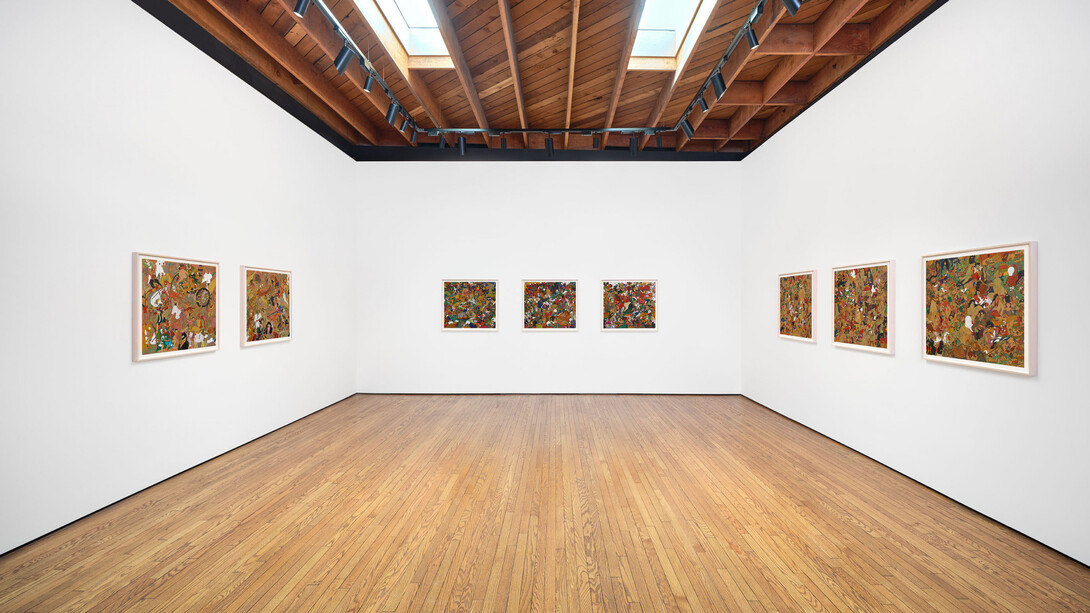
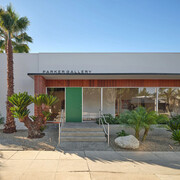
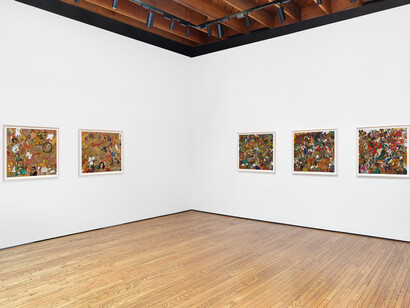
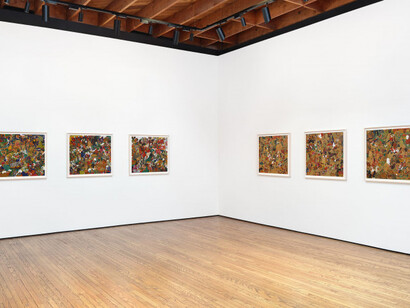
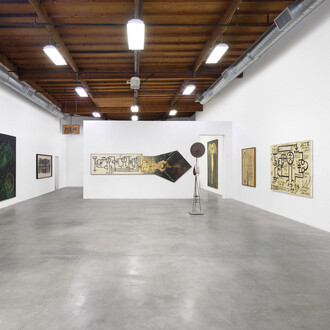
Parker Gallery is proud to present a solo exhibition by Yuichiro Ukai, his first with the gallery. A selection of new large-scale works on paper from 2021–2025 will be shown for the first time in Los Angeles.
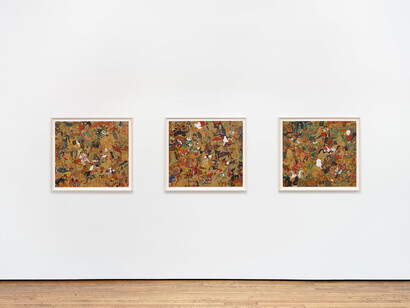
Yuichiro Ukai (b. 1995) is a celebrated self-taught artist from Japan making densely animated works on paper poster board that incorporate figures from contemporary manga and anime, mythic beasts, and historic Japanese epics. Drawn on sequential panels like traditional picture scrolls, Ukai’s works present a cartographic landscape distinctively melding characters from across cultures, time, and space.
Ukai has been a member of the renowned Atelier Yamanami in Japan’s Shiga prefecture since 2014. Founded in 1986 by Katsura Yamashita, Yamanami comes out of a long postwar history of Japanese institutions serving people with disabilities. Today, Yamanami functions as a live-work facility that offers employment, training, and arts enrichment programs for over 90 intellectually and developmentally challenged artists. The influence of these studios on Japanese visual culture has been profound, and their output is referred to in Japanese as aru buryutto or Art Brut.
At Atelier Yamanami, Ukai is provided with a large desk, art materials, and an extensive library. He makes art independently, without the interference of the studio staff, allowing him to develop his techniques and visual vocabularies at his own pace. He draws on many surfaces simultaneously—multiple paper panels as well as his studio walls–and speaks aloud while working in dialogue with the characters he’s depicting. Each of Ukai’s richly detailed and densely populated works on paper take approximately one full month to complete.
Ukai’s work is defined by a uniquely disorienting juxtaposition of heterogeneous visual traditions. Like his Japanese peers, Ukai grew up immersed in the visual culture of manga and anime. His favorite contemporary references include cartoon superhero Anpanman with a red bean paste bun head, robot cat Doraemon, the supernatural manga GeGeGe no Kitaro, Katsuhiro Otomo’s post-apocalyptic Akira, Pokémon, and the films of Hayao Miyazaki. At Atelier Yamanami, Ukai has been introduced to Japanese art history books that have expanded his chosen subjects. His drawings often center on supernatural beings, including classical examples of Japanese yokai–monsters and goblins. Ukiyo-e woodblock print artist Utagawa Kuniyoshi (1798-1861) is an especially important touchstone, particularly his print In the ruined palace at Soma depicting an immense skeleton, a common character in Ukai’s work. Ukai also renders Heian-period princesses in twelve-layer kimonos and traditional samurai figures, along with imagery of namban screens portraying the sixteenth-century Portuguese and Spanish missionaries known in Japan as the “southern barbarians.”
Even the form of Ukai’s works originates in traditional Japanese art conventions. The folktale of Hyakki Yagyo, or “Night Parade of One Hundred Demons,” tells the tenth-century story of oni (demons) marching through city streets at night. The tale has been illustrated on scrolls since the fifteenth century, and Ukai’s parade of strange creatures expands upon this story structure, with characters from ukiyo-e prints and earlier namban paintings mingling seamlessly with contemporary anime figures and large herds of dinosaurs. His working method creates a palimpsest, constantly adding and erasing figurative elements across many compositions at once. Like multi-paneled namban screens, Ukai’s drawings connect from one panel to the next, the imagery unfolding from right to left completely from the artist’s memory.
Ukai’s compositions continue the established Japanese visual tradition of zukushi—depicting one entity multiple times within a single compositional space—and chirashi, the scattering of a subject across a surface. The works carry no narrative; figures accumulate and repeat without beginning or end, evoking the Chinese philosophical concept of wuji, or the infinite—a space without a formal perimeter or fixed orientation. The near absence of landscape or architectural context heightens the incongruous, free-floating nature of these associations. Ukai works on brown paper poster board whose coarse texture and warm color bring out the bold palette and sharp outlines of his figures. Thin black contours delineate his characters rather than shadows or shading, echoing the flatness of ukiyo-e, manga, and anime. Ukai’s mixing of iconographies is disorienting in effect, yet his recombining is deeply rooted in Japanese cultural traditions across chronologies.