English
 Español
 Français
 Deutsch
 Italiano
 Português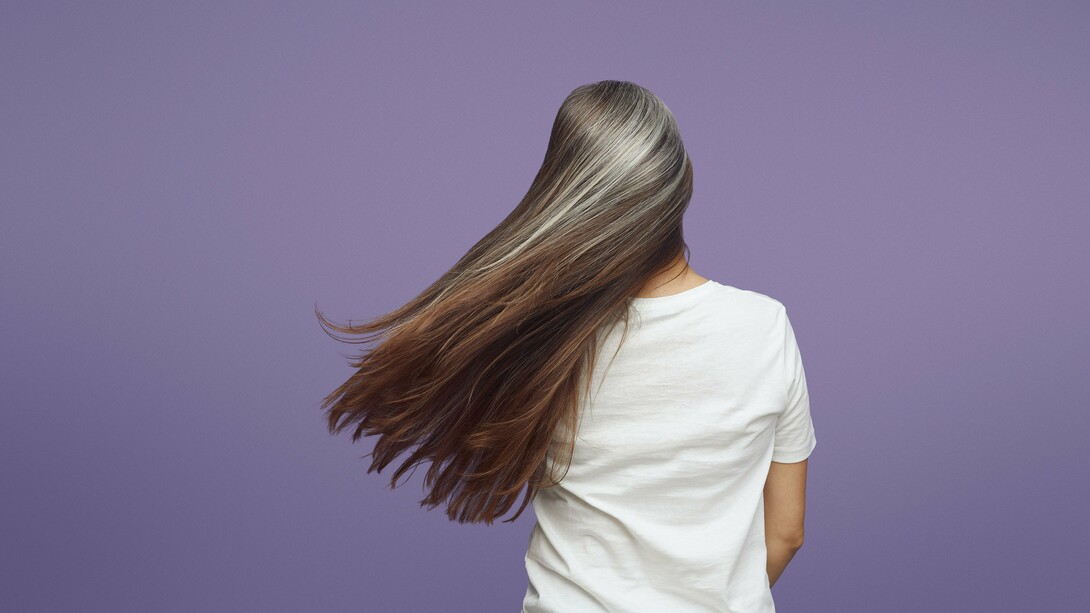
The first gray hair rarely feels like a minor event. It arrives with the emotional force of a headline. One silver strand catches the light in the mirror and suddenly the whole face seems to be negotiating with time. For many women, especially younger women, early graying does not register as a small cosmetic shift. It feels symbolic, as if the body has quietly pushed the timeline forward without asking permission.
That reaction is understandable, but the biology is far more interesting than the panic it causes. Gray hair is not always just a sign of age. Hair loses color when melanocytes inside the follicle stop producing enough melanin, and that shift can be influenced by genetics, oxidative stress, smoking, nutrient status, emotional stress, and certain medical conditions. Dermatologists describe unusually early onset as premature graying, or premature canities, and current reviews treat it as a multifactorial process rather than a single-cause event.
That is also why the internet’s favorite promise—“reverse gray hair naturally”—needs a reality check. In humans, limited repigmentation has been documented in some situations, particularly in recent hairs linked to stress biology, but there is still no broadly proven treatment that reliably restores natural color once the pigment system is fully depleted. The real opportunity lies earlier: understanding why the graying started and intervening while the follicle may still have some functional reserve.
What makes the topic especially compelling is that early graying may feel more visible today, even if we cannot neatly prove some worldwide epidemic. More people are noticing it, talking about it, and in some cases showing it rather than instantly covering it. But visibility aside, several modern pressures do seem to create the perfect environment for pigment cells to struggle.
Why early graying may be showing up more often
1. Chronic stress is no longer just a cliché
Stress has always been blamed for gray hair, but now there is real science behind that old saying. The American Academy of Dermatology notes that stress can speed up graying, and human research has shown that hair pigmentation can shift alongside periods of psychological strain. In some cases, pigment has even returned when that stress load eased. That does not mean every difficult month leaves a silver souvenir behind. It does mean that the nervous system and the hair follicle are in much closer conversation than most people realize.
2. Deficiencies can quietly interfere with pigment production
Hair color is not just an aesthetic flourish. It depends on an active, well-supported follicle, and that requires the right nutritional environment. Reviews of premature graying repeatedly point to associations with vitamin B12 deficiency, lower ferritin, and other micronutrient disturbances. That does not mean every young woman with gray hair needs a drawer full of supplements. But when silver strands show up alongside fatigue, shedding, restrictive dieting, or chronic burnout, nutrient status becomes a much more interesting part of the conversation.
3. Thyroid imbalance can make hair tell the story first
The thyroid has a habit of leaving clues in the mirror. In a retrospective analysis of 71 patients with premature graying, hypothyroidism showed a significant association, alongside abnormalities in vitamin B12 and ferritin in some patients. That matters because hair changes are easy to dismiss as cosmetic when they may actually be one of the earliest visible hints that something hormonal is off balance. Sometimes the most intelligent beauty move is not a serum. It is bloodwork.
4. Smoking and probably heavy drinking too adds oxidative stress
This is where the science becomes wonderfully blunt. If stress lights the match, oxidative stress often keeps the fire going. Smoking is one of the clearest lifestyle factors linked to premature graying. In one often-cited study, smokers were about 2.5 times more likely to develop premature graying than nonsmokers. The mechanism makes sense: smoking increases oxidative damage, and melanocytes are especially vulnerable to that kind of wear and tear.
Alcohol is less strongly established than smoking in the research, but excessive intake can worsen oxidative stress, nutrient depletion, and overall hair health, which is hardly a love letter to pigment preservation.
5. Genetics still writes a large part of the script
Of course, sometimes the explanation is beautifully unexciting: family history. If your parents or grandparents went gray young, you may simply be following the family timetable. Genetics still plays a major role, and no amount of moral virtue, green juice, or expensive scalp tonic can fully out-negotiate DNA. But genetics is not always the whole story. It may set the stage; lifestyle and biology often decide how quickly the curtain rises.
What can actually help
This is the part readers usually want first. The bad news is that dermatology is rarely as theatrical as social media. There is no universally reliable way to switch fully white hair back to its original shade. The better news is that there are smart interventions, especially when graying is recent and the follicle is not completely depleted.
1. Investigate the cause before chasing the cure
If graying appears very early, accelerates suddenly, or comes with shedding, fatigue, cold intolerance, or dietary restriction, the smartest first move is not a supplement haul. It is a proper workup. Checking vitamin B12, iron status, ferritin, and thyroid function may reveal a driver that matters not only for the hair but also for the person wearing it.
2. Correct what is actually low
When a true deficiency is present, treating it is one of the most rational interventions available. That does not guarantee dramatic repigmentation, but it may help protect follicles that are under metabolic strain. This is where evidence-based medicine matters more than internet folklore: targeted correction is very different from swallowing random “hair vitamins” and hoping one of them accidentally solves the plot.
3. Treat stress like part of the hair routine
This may be the least sexy advice and one of the most useful. If stress can help push follicles toward graying, then stress reduction deserves more respect as a hair-health strategy. That does not mean “relax more” in the lazy wellness-influencer sense. It means better sleep, less chronic nervous-system overload, regular movement, and taking recovery seriously enough that the body is not living in permanent alarm mode. The human repigmentation data are still limited, but they are compelling enough to make stress management feel like more than a cliché.
4. Stop smoking and go easier on alcohol
If someone is serious about slowing premature graying, smoking cessation belongs near the top of the list. This is one of the rare areas where the science and common sense shake hands immediately. And while alcohol is not as firmly documented as smoking, cutting back heavy intake makes sense if the goal is reducing oxidative stress and improving nutrient absorption. In other words, the follicle does not need perfection—but it does respond to whether the body is being supported or sabotaged.
There is also something emotionally helpful in understanding gray hair this way. It stops being a personal betrayal and starts becoming information. Sometimes the message is simple: this runs in the family, and your biology has arrived on schedule earlier than you would have liked. Sometimes it is more revealing: the body is stressed, undernourished, inflamed, or hormonally out of balance, and the hair is showing the strain before anything else decides to speak up.
That is why early graying is such a psychologically charged change. It looks cosmetic, but it can behave like a clue. And clues are useful.
The most honest conclusion is not that every gray hair can be reversed, because that would be misleading. It is that early graying is worth taking seriously when it appears out of proportion to age, timing, or family history. In those cases, the goal is not to declare war on silver strands. It is to ask better questions while the follicle may still have something left to preserve.
As Dr. Thiago Freire puts it: “When hair begins losing pigment earlier than expected, it should not always be dismissed as simple bad luck or a cosmetic inconvenience. Caught early enough, the process may sometimes be slowed—and in selected cases, part of the color story may not be entirely finished yet.”
References
American Academy of Dermatology. What causes gray hair, and can I stop it? Updated December 19, 2024.
Poonia K, et al. Premature Graying of Hair: A Comprehensive Review. Indian Dermatology Online Journal. 2024.
Desai DD, et al. Premature hair graying: a multifaceted phenomenon. International Journal of Dermatology. 2024.
Rosenberg AM, Rausser S, Ren J, et al. Quantitative mapping of human hair greying and reversal in relation to life stress. eLife. 2021.
Columbia University Irving Medical Center. It’s True: Stress Does Turn Hair Gray (And It’s Reversible). 2021. Camelia N, et al. Serum Micronutrient Levels in Premature Canities: A Systematic Review and Meta-analysis. 2021.
Sonthalia S, Priya A, Tobin DJ. Demographic characteristics and association of serum Vitamin B12, ferritin and thyroid function with premature canities in Indian patients from an urban skin clinic of North India: A retrospective analysis of 71 cases. Indian Journal of Dermatology. 2017.
Zayed AA, et al. Smokers’ hair: Does smoking cause premature hair graying? Indian Dermatology Online Journal. 2013.
Mahendiratta S, Sarma P, Kaur H, et al. Premature graying of hair: Risk factors, co-morbid conditions, pharmacotherapy and reversal—A systematic review and meta-analysis. Dermatologic Therapy. 2020.
Herdiana Y, et al. Gray Hair: From Preventive to Treatment. Clinical, Cosmetic and Investigational Dermatology. 2025.