English
 Español
 Français
 Deutsch
 Italiano
 Português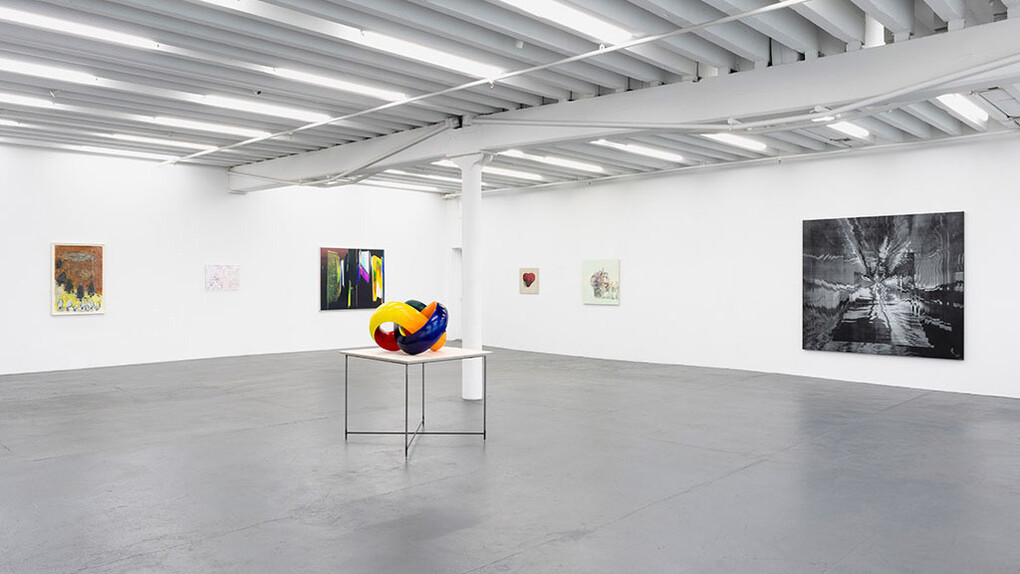
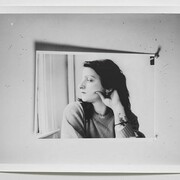
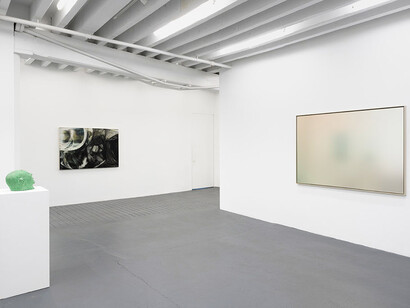
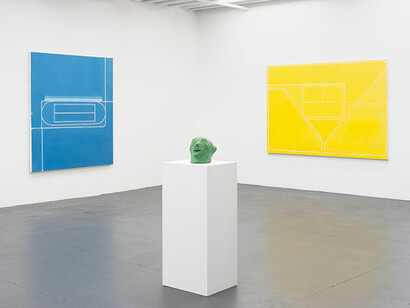
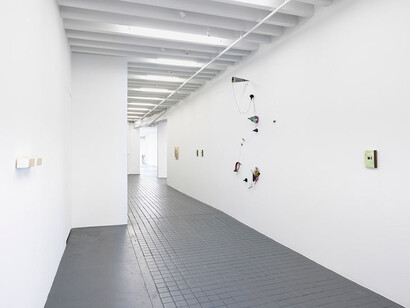
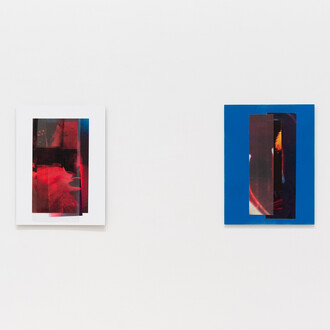
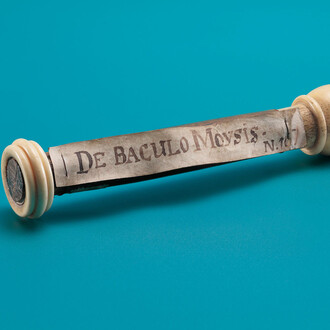
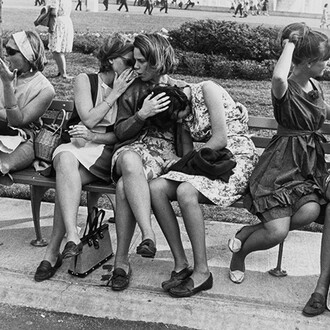
Miguel Abreu Gallery is pleased to present Regroup show, a summer installation of paintings, sculptures, and a photographic object by gallery artists. The exhibition explores two basic vectors of organization: materiality as subject, and the formation and deformation of the image.
An optimization algorithm generates the design etched on Sam Lewitt’s copper sheet included in the show. It measures the most efficient circuit for the production of heat within the work’s specific field. As is known, but is rarely a point of focus, all digital images are the outgrowth of ubiquitous circuit boards made of copper. As such, Lewitt’s etching series encapsulates the dual aim of this group exhibition with his decidedly materialist approach to image-making.
In Quelque chose blanc, Jean-Luc Moulène attempts to find the 3D equivalent of a color spectrum typically represented as a flat disc. The answer is a trefoil knot. A turbulent Straws painting from 1981 by Milton Resnick is a potent example of paint encountering gesture as subject matter. Florian Pumhösl’s monochrome plaster works stage both color and singular architectural forms to produce exquisitely integrated reliefs. Liz Deschenes’ slightly convex Claude glass, further, manifests the materiality of glass as it shapes and intensifies the act of seeing. Paul Pagk’s reductive compositions present minimal linear structures in majestic, monochrome fields of painterly color.
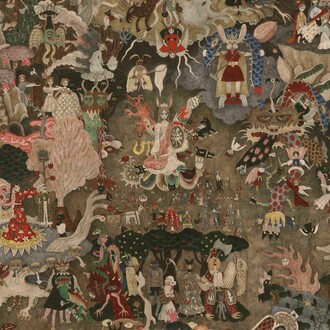
On the image formation front, Beaux Mendes’ small-scale observational paintings of nature produce fleeting moments of sensation. Blake Rayne constructs his work by sewing together pieces of variously painted canvas lying on the studio floor before activating linguistically-charged pictorial operations. He completes his painting by outlining a female figure in black paint derived from a copy etching of a Jean-François Millet drawing. Alex Carver’s depiction of what appears as a pair of clenched skeletal fists emerging from within an ambiguous landscape interacts with a patent diagram of an airflow circulation system. Further, Resnick’s gouache of an imaginary landscape populated with trees incarnates his late-career return to figuration.
R. H. Quaytman’s silkscreened panels from her latest The hieroglyphic, chapter 0.4 rework fragments of 16th century renditions of Queen Elizabeth I. Eileen Quinlan’s dynamic “scanner” work offers the outcome of moving varied materials placed atop a platen while the scanning head slowly glides beneath. Kate Mosher Hall’s large “recursion” painting multiplies beyond recognition a video still of the artist as a young child going down a slide. Finally, in her small painting on view, Dana Lok imagines a knit of speech radiating from two mouths. In a time of instability, overt oppression, and censorship, the imagery evokes a web of strained vocalizations that reach the pitch of a scream.