English
 Español
 Français
 Deutsch
 Italiano
 Português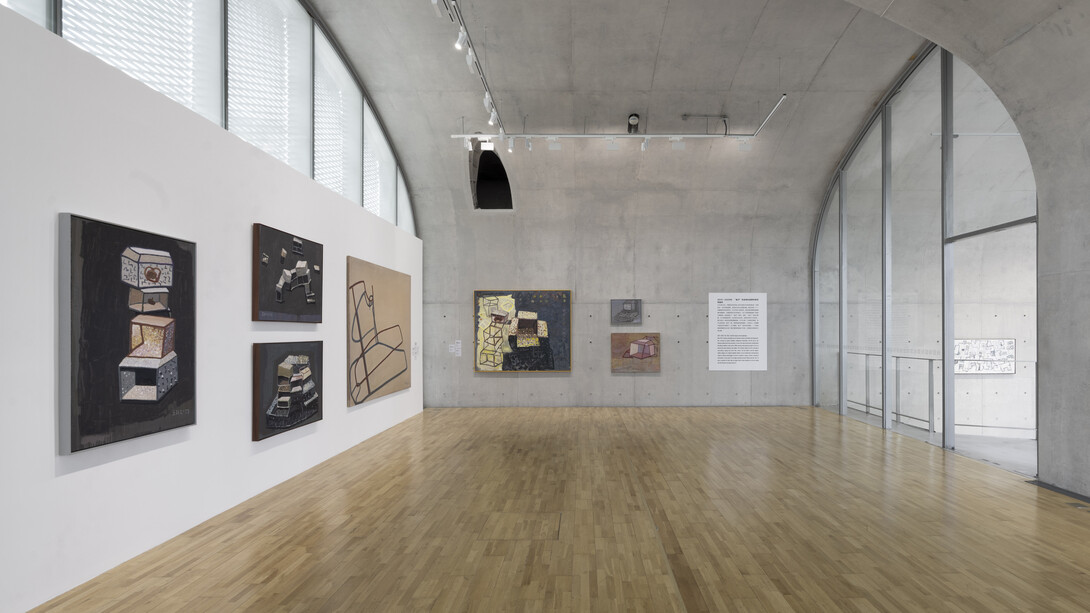
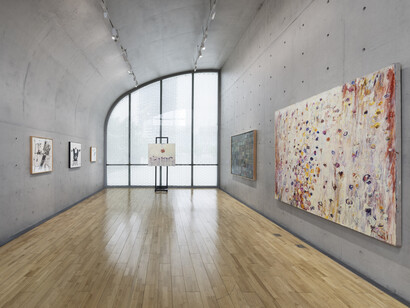
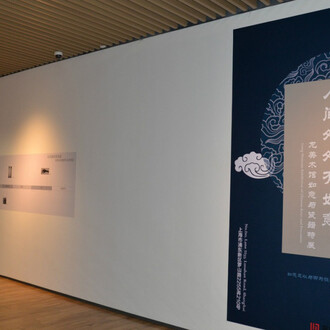
From May 30 to August 30 2026, Long Museum (West Bund) will present a major retrospective, Wang Chuan: four decades of abstraction. Curated by Li Guohua, this exhibition brings together nearly 70 seminal works that chart Wang’s profound journey into abstraction.
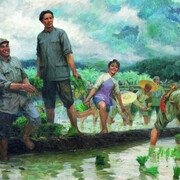
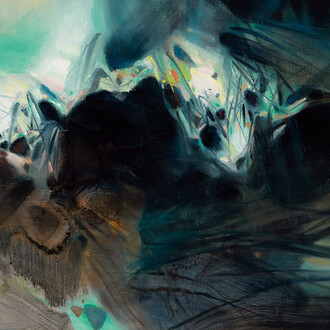
As a representative figure in Chinese contemporary art since the Opening and Reform, Wang Chuan’s career spans the entire transformative arc of the nation’s art scene over the past forty years. He first rose to prominence in the early 1980s as a leading voice of the “Scar Art” movement with iconic realist works like Farewell! The path and The survivor. He subsequently pivoted towards abstraction, moving through phases of ink experimentation and Minimalist inquiry before arriving at his ongoing, meditative Box series, thus forging a unique visual vocabulary and a self-contained spiritual framework within contemporary Chinese art. This exhibition offers the first systematic overview of his abstract work since 1985, positioning him not only as a witness to the emergence of Chinese abstraction, but as one of its essential architects. Through sustained and profound investigation, he constructed the intrinsic spiritual system of Chinese abstract art. In his early abstract period, Wang broke from the conventions of Chinese realism through radically avant-garde “ink dots” and reductive compositions that engaged the formal purity of modernist language. Simultaneously, he pioneered a meditative ink practice on paper, where the interplay of ink, wash, void, and form channels an introspective quality rooted in Eastern thought. A severe illness in midlife initiated a metaphysical turn, leading him to examine the essence of being. His compositions grew increasingly purified and profound, with spare lines and modulated color seeming to approach a truth that lies beyond visible form.
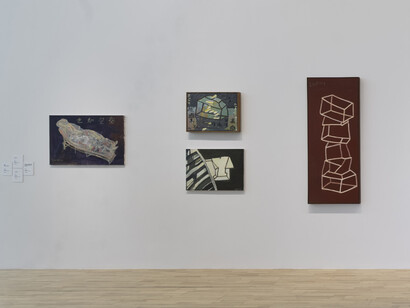
The exhibition unfolds chronologically across four distinct phases: 1985–1989, 1990–1998, 1999–2014, and 2015–2025. Wang Chuan’s formal shift toward an abstract language began around 1985, spurred by a growing skepticism toward the then-dominant realist and narrative conventions. A pivotal moment had occurred in 1981, when he was profoundly moved by original works by Abstract Expressionists such as Jackson Pollock, Willem de Kooning and Yves Klein from the collection of the Museum of Fine Arts, Boston, during their exhibition in Beijing. Deeply captivated, he spent the subsequent years developing his own abstract system. Drawing on his training in Chinese painting at the Sichuan Academy of Fine Arts, he identified a natural affinity between the brushwork, ink, and linear discipline of Chinese ink tradition and the emerging language of abstraction, thus initiating his exploration through ink. In 1990, he organized the seminal exhibition “Ink Dots” at the Shenzhen Museum. This highly conceptual and avant-garde project interrogated the relationship between painting and space, seeking to dismantle the inherited idioms of traditional ink in favor of a purified emphasis on symbol and idea. Concurrently, his experimentation with Minimalist painting further enhanced the work’s symbolic features, firmly establishing his position as one of the pioneers of Chinese experimental ink and conceptual art.
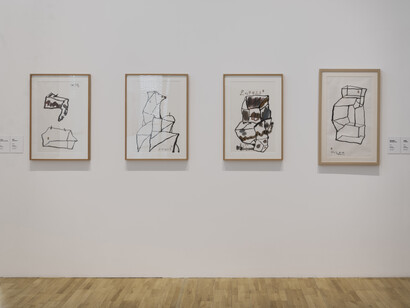
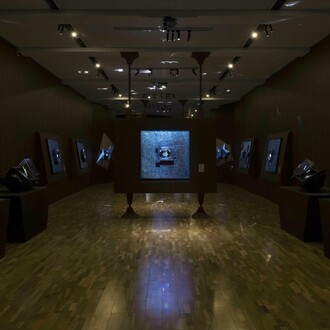
A life-altering turning point occurred in 1998, when the New York-based Wang Chuan was diagnosed with cancer. His subsequent recovery in China precipitated a deep spiritual reckoning, leading to frequent travels to places like Nepal and India, and a heightened conviction in the metaphysical existence. This transformative period is directly mirrored in his art: his brushwork loosened, his lines grew more assured yet fluid, and his palette expanded into more vivid, unconstrained harmonies. Moving beyond a primarily conceptual framework, he embarked on a more intuitive, spiritual excavation of painting’s intrinsic language. This inward journey culminated in 2015 with the inception of his ongoing Box series, inspired by depictions of vessels in Tang Dynasty murals in Xi’an. The “box” operates not as a literal form but as an open receptacle for projection and contemplation. It is a vessel, simultaneously a space, a home, a carrier of informaition or the mind. It invites the viewer to project meaning or to encounter its void. Through this motif, Wang interrogates the nature of worldly realities and pursues the unadorned authenticity of life.
Over four decades, Wang Chuan’s artistic journey has unfolded from formal innovation to spiritual return. He has used painting as a primary means of inquiry, steadfastly mapping a unique trajectory within the language of abstraction. It resonates as deeply personal yet is inextricably woven into the fabric of Chinese contemporary abstract art.