English
 Español
 Français
 Deutsch
 Italiano
 Português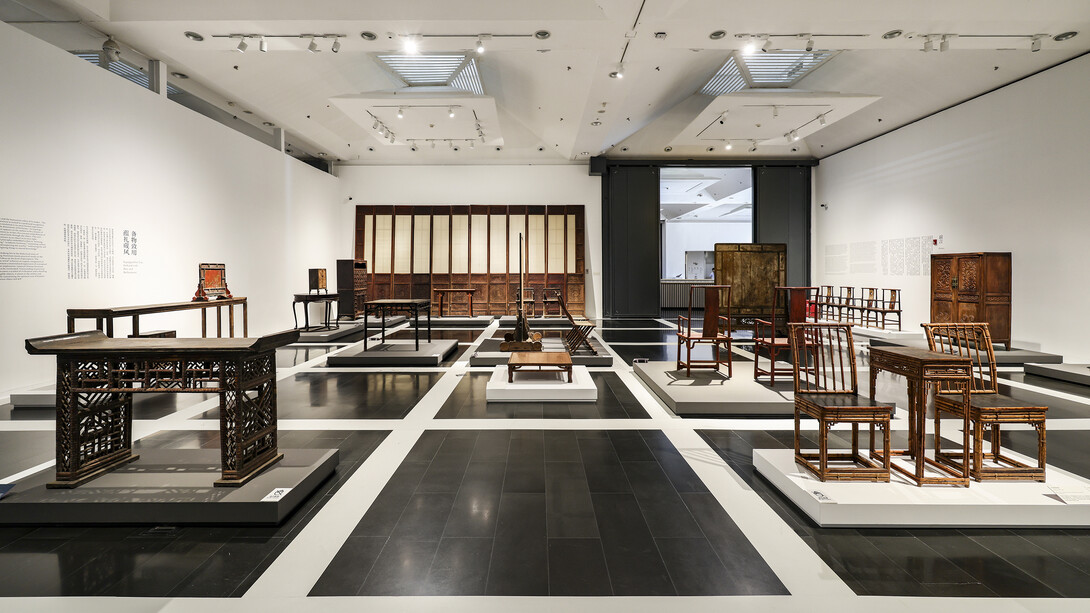
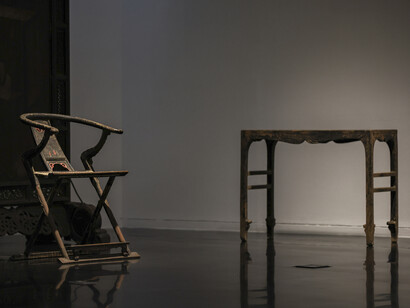
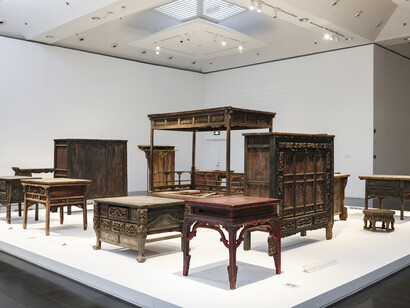
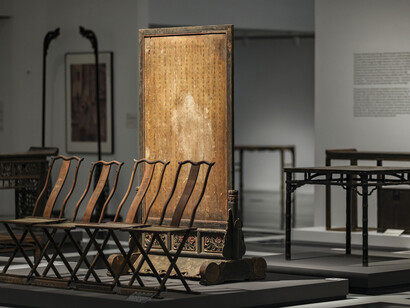
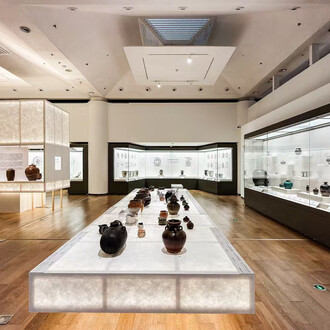
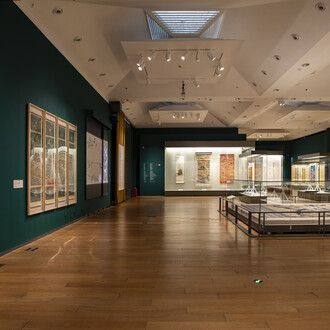
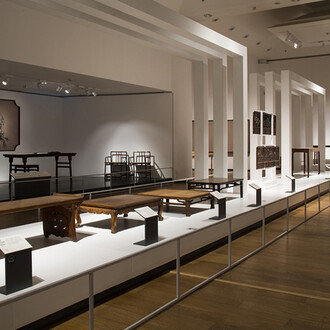
Drawing on the collection of the Tsinghua University Art Museum, this exhibition brings together over one hundred representative examples of Ming and Qing furniture, encompassing six major categories—seating, bedding, supporting pieces,storage, shelves and racks, and screens—and strives to present the cultural and artistic essence of Ming and Qing furniture within a limited space. The exhibition is organized through three interrelated approaches—Reconstructing Lived Contexts, Interpreting Material Expressions, and Translating Formal Symbols—proceeding in a progressively layered manner.
The first section examines the spatial relationships between furniture and architecture, gardens, and interior settings, recreating the ancient ideal of a dwelling that is at once inhabitable and traversable. The second section interprets the material characteristics of furniture in terms of medium, craftsmanship, decoration, and function, revealing the underlying Eastern principles of creation: “learning from nature,” “harmony of yin and yang,” “esteeming culture and education,” “honoring the aged and respecting the worthy,” and “investigating things to extend knowledge.”
The third section traces the cultural DNA of canonical forms and micro-symbols in furniture, exploring the historical narratives they bear—such as the structural homology of woodworking, the fusion of multiple religious traditions, ethnic interactions, and civilizational exchanges. In an arc that moves from the outward to the inward, from the physical to the spiritual, the exhibition seeks to investigate the culture and art of Ming and Qing furniture and to reflect on the humanistic values embedded within these objects.