English
 Español
 Français
 Deutsch
 Italiano
 Português
In the spring of 2026, a massive industrial report revealed that wholesale electricity prices jumped by nearly seventy-six percent. The digital arms race is no longer confined to software development because tech giants are actively outbidding local communities for raw power to keep their data centers running.
For the past two decades, the global technology industry operated under a comforting illusion that the internet was completely weightless. We grew accustomed to treating the cloud as an ethereal, infinite frontier where data could expand forever without leaving any physical footprint on the earth. But the massive artificial intelligence boom has violently shattered that assumption, reintroducing modern Silicon Valley to the unyielding laws of physics and resource limitation. The digital revolution is no longer confined to lines of code on a monitor because it has transformed into a desperate battle for heavy industrial infrastructure and raw electricity. As tech giants accelerate capital expenditures to build unprecedented computing clusters, they collide with a structural bottleneck, turning a software race into a physical conflict over the grid.
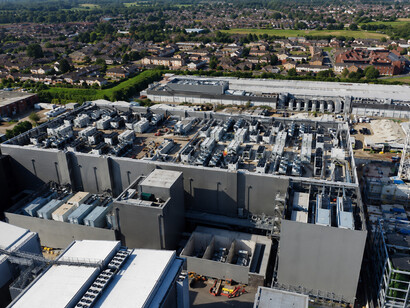
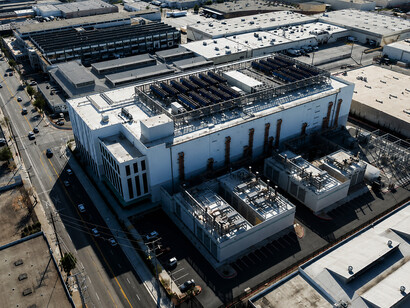
The physical reality of a data center can no longer be hidden behind sleek corporate marketing or abstract terminology. These facilities are massive concrete warehouses packed with high-density server racks that generate extreme amounts of heat, requiring continuous industrial cooling operations. The true scale of this infrastructure crisis became undeniable when a bombshell report from Monitoring Analytics revealed that wholesale power costs jumped by seventy-six percent across the largest electrical grid in the nation. The PJM Interconnection, which manages the power supply for sixty-seven million people, documented an unprecedented rise in baseline energy costs, where the average wholesale price skyrocketed from seventy-seven dollars per megawatt-hour to over one hundred and thirty-six dollars in a single twelve-month window due to insatiable hyperscale facilities.
A single standard artificial intelligence model training cycle consumes more electricity than a traditional town uses in an entire calendar year. In high-density tech hubs like Northern Virginia, the local power grid is being pushed directly to its absolute breaking point by unchecked industrial expansion. Under the current regulatory framework, the astronomical expense of upgrading the shared electric infrastructure is being systematically spread across ordinary ratepayers. Residential customers and local small businesses are watching their monthly utility bills climb significantly faster than the general rate of inflation. While some regional utilities attempt to charge higher premiums to commercial data users, the current pricing models fail to cover the true long-term costs of grid expansion, leaving the public to subsidize major corporate data operations.
This economic strain is deeply impacting the traditional manufacturing sector, forcing factories and heavy industrial operations to scale back production due to soaring energy overhead. Small foundries, chemical processors, and local assembly plants cannot compete with the massive profit margins of major tech firms, who are willing to pay almost any premium to secure immediate power. This growing public backlash and economic strain have turned regional electricity access into a highly contentious political battleground. Local communities are organizing aggressive resistance against new data center construction projects, citing environmental degradation, constant noise pollution, and soaring household costs. To escape this public friction, technology giants are actively bypassing traditional utility grids through unprecedented private acquisitions to secure guaranteed energy independence.
Hyperscalers are transitioning from passive digital service providers into dominant stakeholders in the global energy market, changing the nature of corporate utility ownership. They are targeting the ultimate source of steady, carbon-free baseload energy by purchasing private nuclear capacity directly from power plants. This strategic pivot cuts out the public middleman entirely, routing massive quantities of electricity directly into private server farms instead of serving domestic neighborhood grids. Microsoft recently partnered with Constellation Energy to execute a massive twenty-year agreement designed to resurrect a shuttered reactor at the Three Mile Island facility to power private data centers exclusively. Similarly, Amazon Web Services completed a massive six hundred and fifty million dollar acquisition of a campus connected directly to the Susquehanna nuclear station in Pennsylvania.
The open market monitor has labeled these exclusive corporate power purchase agreements as a significant threat to long-term public energy security. When a technology conglomerate locks up an entire nuclear facility for its private use, that clean energy is permanently removed from the public pool. Regional grids are left dependent on older, dirtier fossil fuel alternatives to meet the baseline needs of ordinary residential communities. Furthermore, the Federal Energy Regulatory Commission has begun rejecting some grid interconnection requests, fearing these deals will compromise grid reliability for everyday citizens. Regulators noted that siphoning massive baseload power directly off a plant shifts the cost of maintaining transmission lines onto the remaining public users, creating an unsustainable financial trap for ordinary households.
To prevent total market destabilization, independent monitors are now recommending aggressive policy changes to force the tech sector to internalize its infrastructure costs. Regulators are suggesting a strict bring your own generation requirement, meaning new data centers cannot connect to the grid unless they build matching power plants. Additionally, grid operators are attempting to establish dedicated interconnection queues that block data center activation until adequate regional generation capacity physically exists. These proposed interventions represent a direct check on the current tech expansion model, which allows corporate facilities to secure grid access before verifying local capacity. Without these strict regulatory boundaries, the unchecked expansion of artificial intelligence will continue siphoning vital resources away from public utilities, threatening the stability of the entire network.
Ultimately, the transition to the sovereign grid forces us to reevaluate the real-world cost of our rapid digital advancement. We are building a stratified energy landscape where the public must compete with corporate server farms for access to baseline electricity. Leaders must recognize that technological progress cannot be sustained by siphoning the fundamental utilities that support human society. If we fail to establish strict boundaries, we will build a future where data centers stay bright while surrounding neighborhoods are left completely dark. True innovation should not require the systemic cannibalization of our public utilities or the financial displacement of ordinary citizens everywhere. By holding technology conglomerates accountable, we can encourage a transition toward efficient architectural models that coexist beautifully with public infrastructure.