English
 Español
 Français
 Deutsch
 Italiano
 Português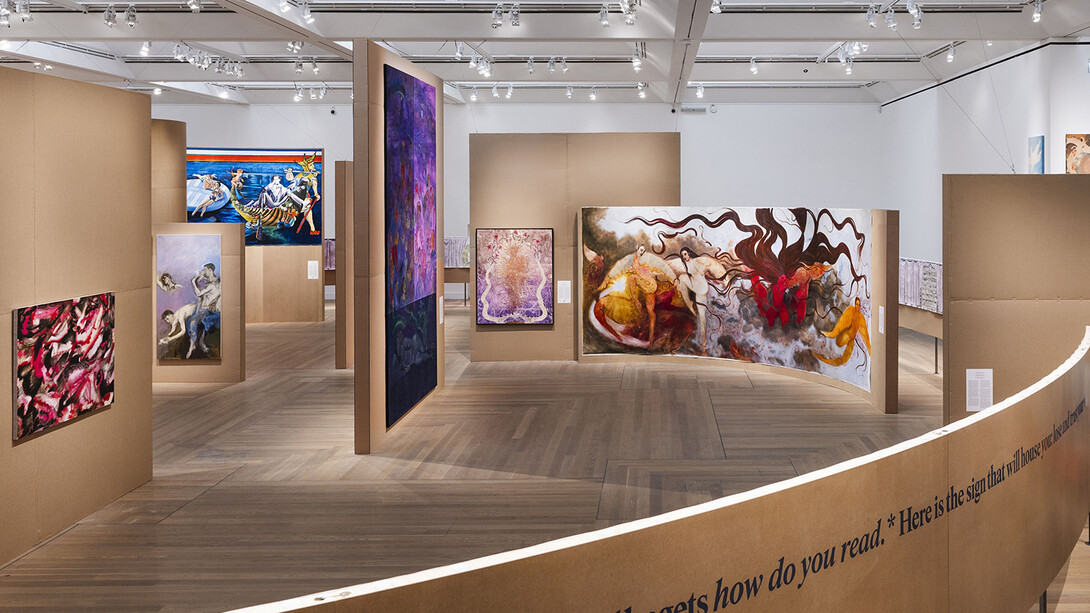
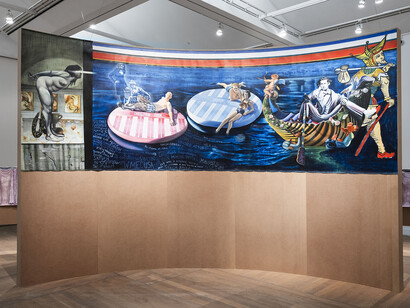
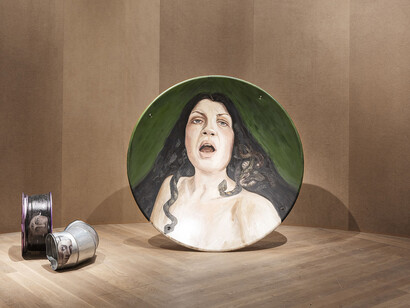
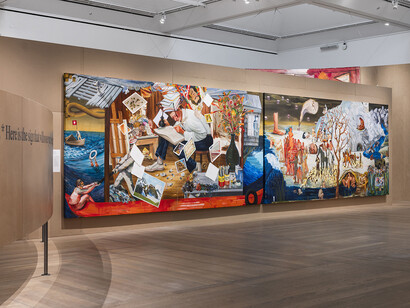
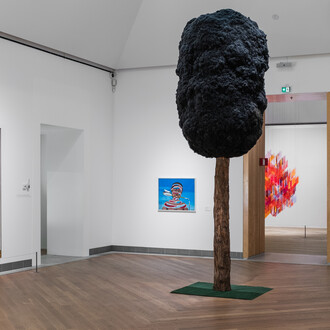
House of Nisaba: new stories of painting signals a return to figurative painting in contemporary art, through the lens of allegory. The exhibition highlights 29 international artists, of whom 25 are commissioned to make a new painting especially for this occasion. What does painting look like and mean today as knowledge transforms, information accelerates and societies splinter? What stories are these artists telling us?
The year is 3100 BCE and writing is invented in ancient Mesopotamia. At first, to count the grain for trading at the market; then to capture human life and imagination in myths, hymns and parables, as language inscribed on clay tablets. The goddess Nisaba presides over this moment when knowledge itself starts to shift, as thousands of years of storytelling begin to take material form. She cannot write herself but speaks through others.
New languages of painting
The year is 2026 and knowledge is changing once again. Information circulates at an unprecedented pace and narratives about ourselves, our communities, and the world at large are becoming increasingly unstable. In this moment, we evoke Nisaba as a new generation of painters emerges. The artists in House of Nisaba are not part of a movement but share a similar approach: they paint allegorically.
In painting, allegory is a way of creating images or figures that express meaning beyond what they literally show, for instance how a human skull in historical still-life painting symbolises the impermanent nature of human achievement in the face of mortality.
The artists in House of Nisaba render new pictorial languages that draw as much from art history, mythology and literature, as from fashion, cinema, news media, science fiction, astrology, and digital platforms like Instagram and TikTok. Information becomes algorithmic, the feed starts to matter. Rather than offering stable narratives, these paintings propose worlds shaped by discontinuity, ambiguity, and multiplicity.