English
 Español
 Français
 Deutsch
 Italiano
 Português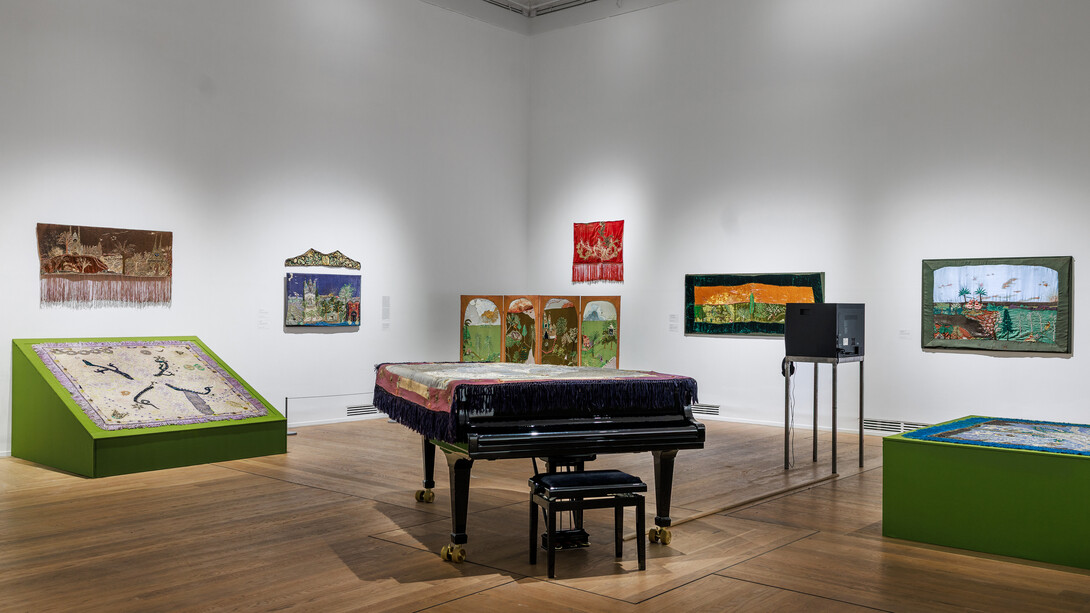
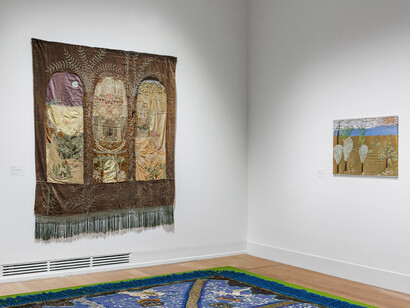
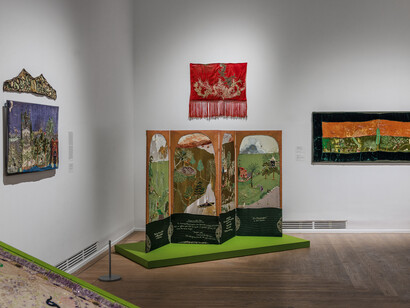
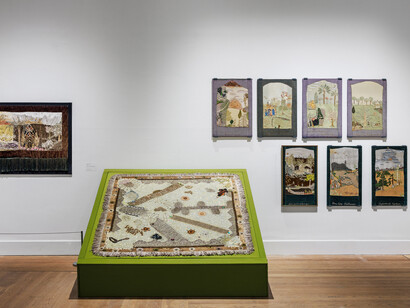
With small stitches, Anna Casparsson embroidered magnificent and wilful motifs inspired by fairy tales, biblical stories and classical music. In the exhibition The isle of bliss, twenty-nine of her textile artworks are presented at Moderna Museet for the first time since 1960.
Anna Casparsson (1861–1961) was a textile artist, pianist and translator. For several decades, her home Villa Snäckan in Saltsjöbaden outside Stockholm was a meeting place for cultural figures, where they used to gather around the grand piano in the salon. Playing the piano was her great passion, but over time embroidery became her main form of expression.
Casparsson’s peculiar embroideries are characterised by opulence, detail and storytelling, and move freely between art and crafts. In her works, she reused materials such as silk and velvet, and embroidered pearls, sequins, shells, silver and gold thread, buttons, antique lace, mirror shards and much more into the works.
Visual worlds
Anna Casparsson created her works in and for the home – embroidered draperies, folding screens, grand piano covers, pillows, tablecloths and bags. The embroideries often grew into their own visual worlds, with elements from folk tales, biblical stories and classical music.
The titles used today for Casparsson’s works are often taken from words and phrases she herself embroidered into the images, not least from the Bible, as well as from fairy tales and stories such as David and Goliath, The ugly duckling and Little red riding hood.