English
 Español
 Français
 Deutsch
 Italiano
 Português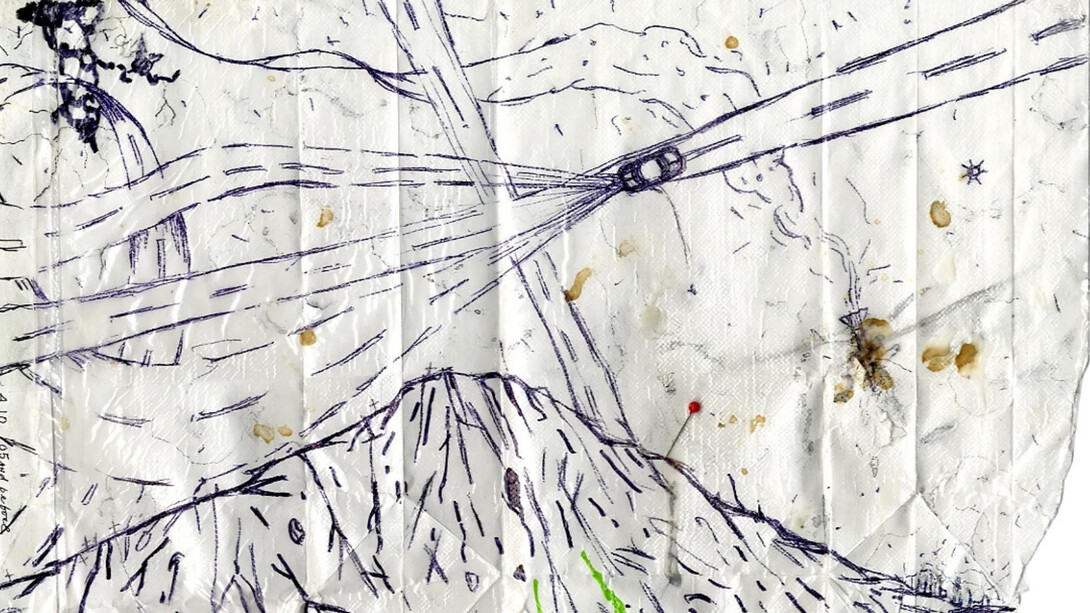
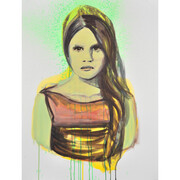
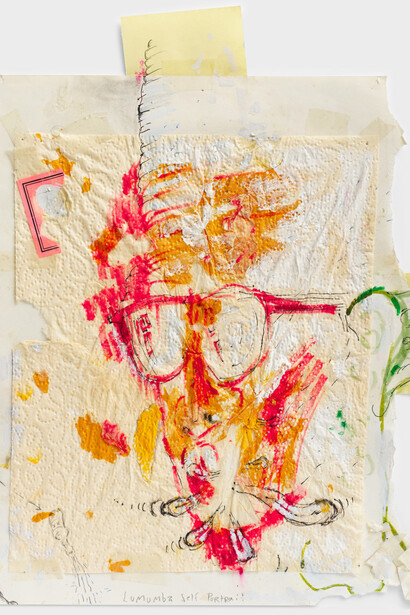
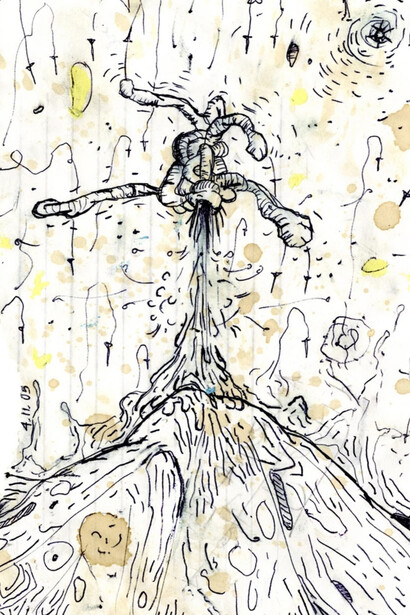
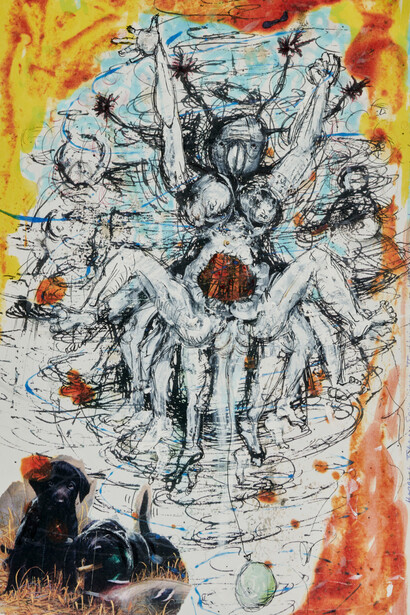
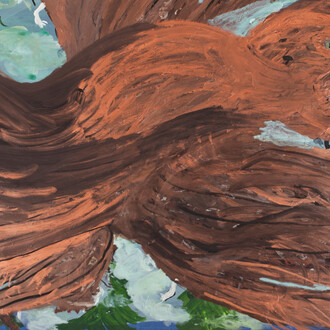
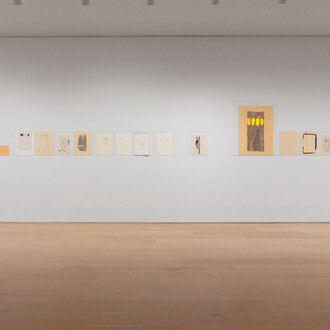
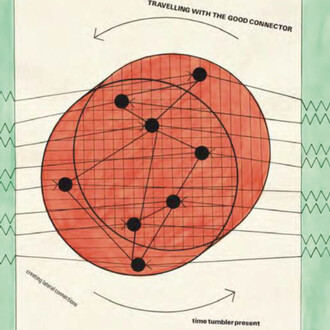
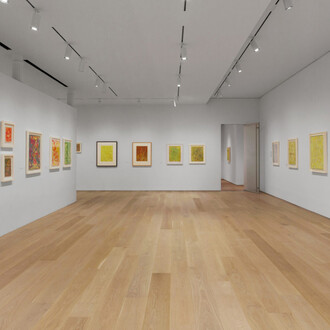
“To mark anything is to create a difference, maybe a world, maybe a wound, certainly an act,” wrote Pope.L (1955–2023), an artist for whom drawing was never merely a medium but a mode of thinking about the world. For more than five decades, Pope.L cultivated an expansive practice spanning performance, writing, installation, painting, collage, objects, and works on paper numbering in the thousands. For him, drawing was not simply making a mark on paper; it was an event unfolding in time. A line dragged across paper finds its analog in the body crawling across asphalt, in language repeated until it collapses, or in everyday substances smeared, scattered, or layered across a surface. Certainly an act brings together several interrelated bodies of works on paper, to make the case that drawing was an activity central to Pope.L's practice and was even, in his hands, a metaphor for artmaking itself.
Born William Pope in Newark, NJ in 1955, Pope.L grew up amid profound instability caused by poverty, addiction, familial absence, and precarious housing. These experiences remained central to his work, not only as subject matter but as a point of view that shaped his enduring interest in the broader conditions through which social bodies are formed and marginalized. A student of Fluxus artist Geoffrey Hendricks and influenced by central practitioners of twentieth-century Conceptual art including Marcel Duchamp, Joseph Beuys, Vito Acconci, and Adrian Piper, Pope.L embraced the proposition that the boundary between art and life is fundamentally porous. He repeatedly restaged, revised, and “versioned” projects, complicating the ways in which institutions traditionally organize artistic production by set categories of medium and chronology.
Throughout his practice, Pope.L returned insistently to the fraught category of race, probing how notions of race are constructed and circulated through texts, images, commodities, and social encounters. Humor and absurdity became critical tools: caricatured faces appear beside word fragments; brand names such as “Wite-Out” echo and complicate ideas of whiteness and Blackness; perishable materials like peanut butter, flour, and Pop-Tarts are employed as metaphors for the body, abjection, consumption, and survival. In Pope.L’s work, racial identity appears simultaneously hypervisible and unstable.
“I am suspicious of things that make sense,” Pope.L once said. Absurd by design, the works in this exhibition are not meant to be decoded. Instead, Certainly an act insists that drawing, at its most vital, remains an act of inquiry—a way of asking how meaning can be made and simultaneously undone.