English
 Español
 Français
 Deutsch
 Italiano
 Português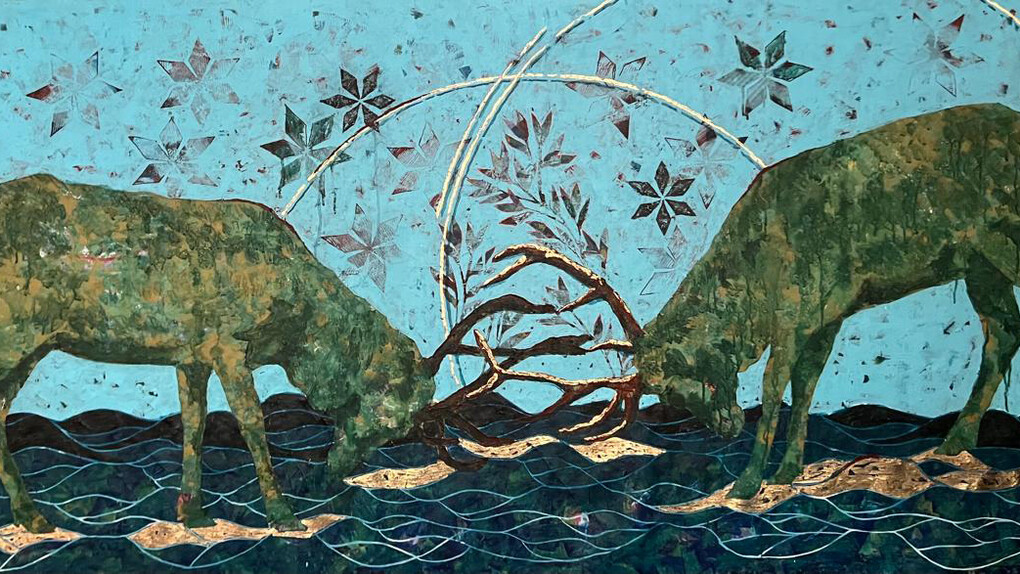
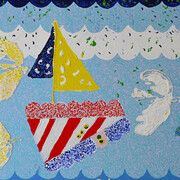
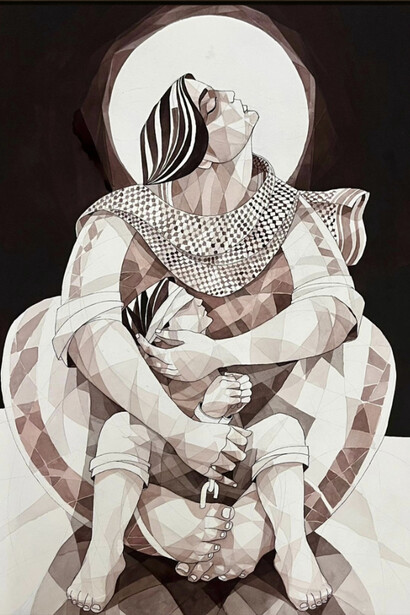
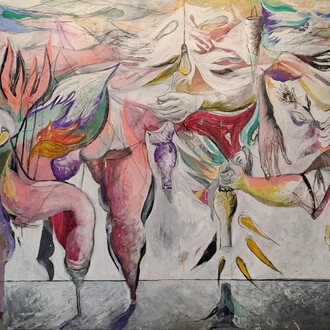
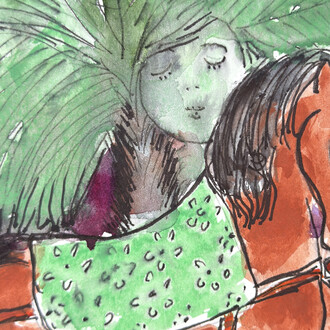
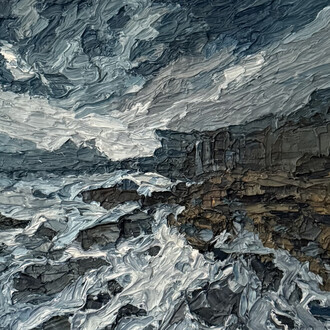
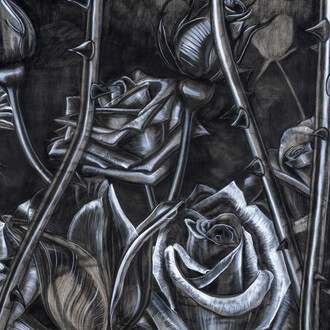
Artbooth Gallery Abu Dhabi, UAE is pleased to announce In transit, a group exhibition featuring works by Wadeei Khaled, Ahmad El Badawi, Bahram Hajou, Hanibal Srouji, Jamal Bassiouni, Rania Amoudi, and Yervant Hawarian. On view from July 9 to August 31, 2026, the exhibition presents a cross generational and cross disciplinary dialogue between artists whose practices span abstraction, figuration, and visual experimentation.
In transit serves as both an introduction and a continuation, bringing together artists who will be featured in upcoming exhibitions throughout the year, alongside others whose works have previously been shown. The exhibition reflects a curatorial intention to trace evolving artistic narratives while highlighting recurring themes of memory, identity, displacement, and visual perception.
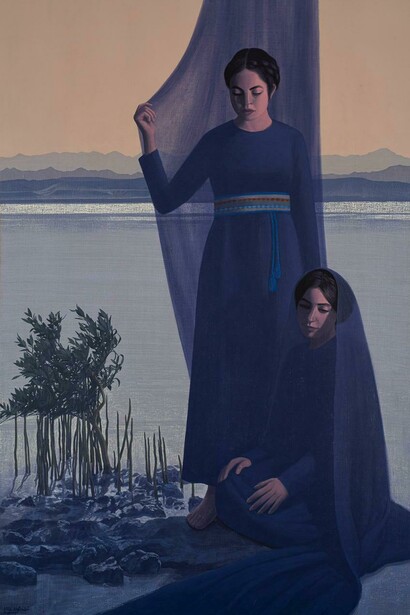
In transit weaves an intricate narrative of belonging and memory. This dialogue begins with the work of Wadeei Khaled, a Palestinian artist based in Ramallah. Rooted in themes of homeland, identity, and memory, Khaled’s work draws from personal and collective narratives. His upbringing in a refugee camp, along with his engagement with Palestinian cultural heritage, informs a visual language that weaves together stories of belonging, resilience, and displacement. This intimate focus on Palestinian identity and resilience is deeply mirrored in the oil paintings of Rania Amoudi. Also based in Ramallah, Amoudi focuses her practice on illuminating the multifaceted personal and collective lives of Palestinian women, creating a vital arena for global empathy and dialogue that beautifully complements Khaled’s poetic exploration of homeland.
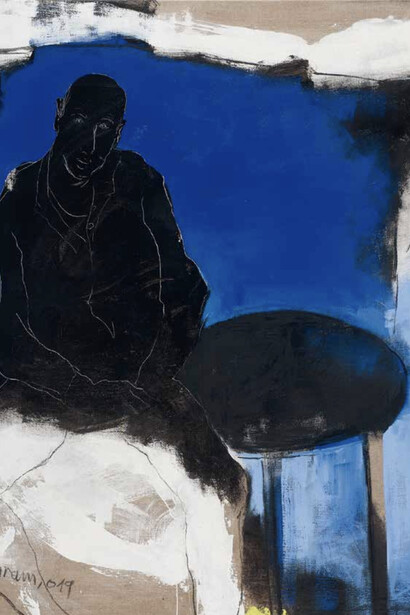
While Khaled and Amoudi ground their narratives in the textures of daily life and enduring identity, the exhibition expands into profound reflections on conflict and displacement through a dialogue between Syrian and Lebanese histories. The powerful figurative works of internationally recognized Syrian, Kurdish painter Bahram Hajou, educated in Germany under Norbert Tadeusz, use the expressive lines of German Expressionism to probe the psychological depths of solitude and human connection. This emotional gravity finds a visceral, structural parallel in the abstract, materially experimental canvases of Lebanese artist Hanibal Srouji. Drawing directly from his experience during the Lebanese Civil War, Srouji uses a blowtorch to burn, cut, and puncture his surfaces, turning the canvas into a scarred urban landscape that echoes the architectural trauma of Beirut while balancing a delicate tension between destruction and renewal.
The themes of time, history, and perception shift from the material to the conceptual as the exhibition transitions into the realms of myth, media, and visual structure. The storied city of Alexandria serves as the catalyst for Jamal Bassiouni, whose highly honored graduation work on chromatic harmony translates into canvases where time behaves as a spiral, blending the echo of ancient coastal myths with the breath of new mornings. This inquiry into form and the layers of history is shared by Egyptian visual artist, Ahmad El Badawi. Working as an assistant professor in Cairo, El Badawi balances documentary sensitivity with conceptual experimentation, using layered narratives and abstraction to interrogate the very boundaries of visual perception. This intersection of documentary history and fine art culminates in the legendary practice of Yervant Hawarian, a Lebanese-Syrian-Armenian painter who began his career at age 15 painting monumental affiches for Beirut movie theaters. Chronicling Arab cinema’s "Golden Age" through bold, graphic figuration and vivid cinematic compositions, Hawarian’s monumental output bridges popular culture and institutional fine art, completing the exhibition's journey through time, memory, and the transience of human expression.
In transit positions these artists within a shared space of movement and transformation. It reflects on artistic practice as an ongoing passage between geographies, histories, mediums, and identities, offering audiences an opportunity to encounter diverse yet interconnected visual narratives.