English
 Español
 Français
 Deutsch
 Italiano
 Português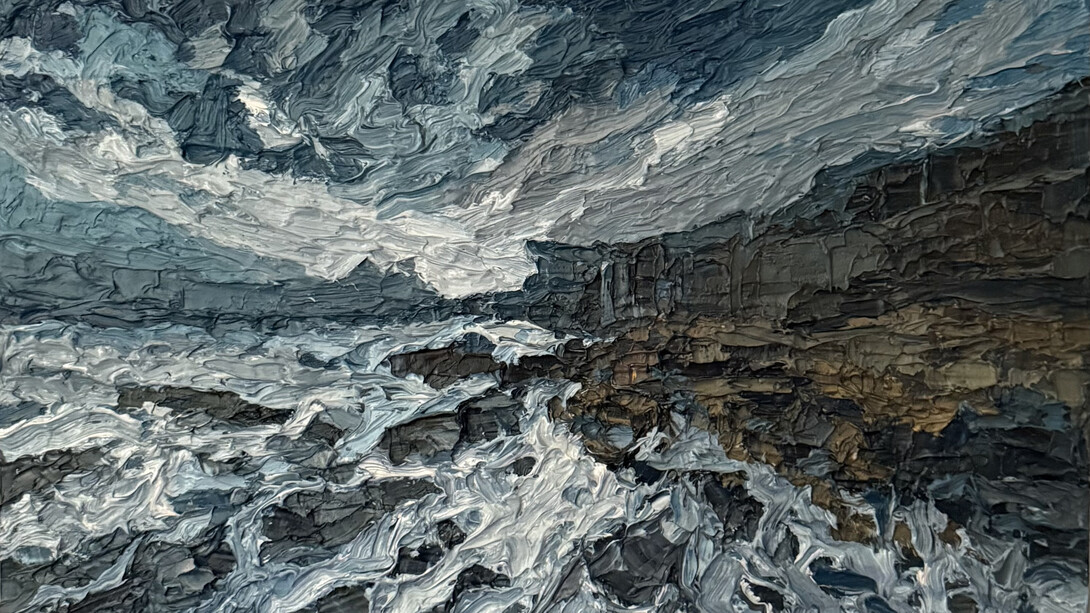
Artbooth Gallery is pleased to present Memoryscape, an exhibition bringing together six remarkable contemporary artists of Arab descent: Gilbert Halaby, Hanibal Srouji, Hussein Baalbaki, Richard Hearns, Sarah Alagroobi, and Soraya Abu Naba’a. The exhibition will be on view from March 12 to April 26, 2026, offering a contemplative journey through landscapes of both place and memory.
At the heart of Memoryscape lies a shared inquiry into how our surroundings shape, hold, and recall our histories. For these artists, the landscape is more than scenery, it is an archive of experience, a repository of emotion, and a mirror of identity. Through abstraction, gestural mark making, layered textures, and multidisciplinary approaches, each artist transforms memory into visual language.
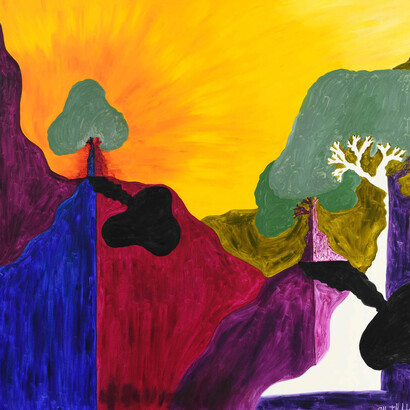
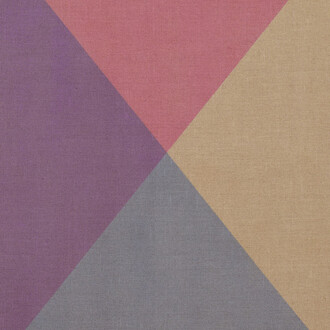
Gilbert Halaby’s paintings read like an autobiographical map. His canvases, constructed from bold geometries and vibrant color blocks, echo the fields, homes, and light of his Levantine childhood. His canvases, shaped by color blocks and flat planes, evoke poppy filled valleys and sunlit homes, balancing abstraction with the narrative weight of memory. The interplay of light, shadow, and color in Halaby’s work creates a visual language that is both intimate and universal.
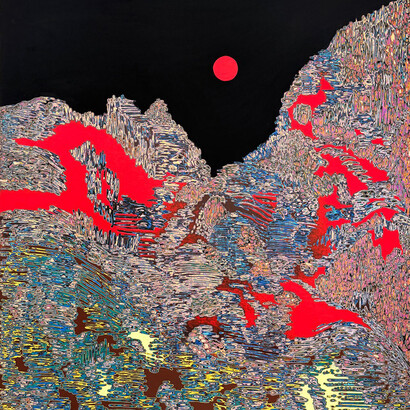
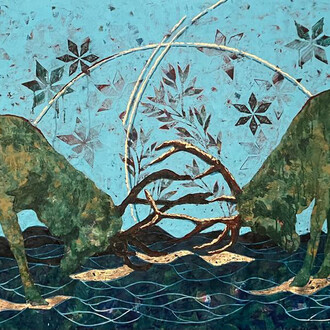
Hanibal Srouji, known for his textured surfaces and poetic compositions, balances abstraction with traces of the familiar. His signature blow torch technique creates delicate marks that evoke both the scars of history and the quiet lyricism of nature. His vertical lines, at once musical and confining, reference human resilience and vulnerability, while his contemplative landscapes suggest the passage of time and the persistence of memory, particularly in the context of Beirut’s troubled past.
Hussein Baalbaki’s work offers an immersive encounter with memory as a physical presence. Thick layers of medium, often carved and shaped rather than brushed, create a tactile landscape of time and introspection. His canvases speak in whispers, revealing the silent echoes of human experience and inviting viewers to navigate thresholds between presence and absence. Baalbaki’s art is at once intimate and monumental, a meditation on how memory sediments itself into the textures of our lives.
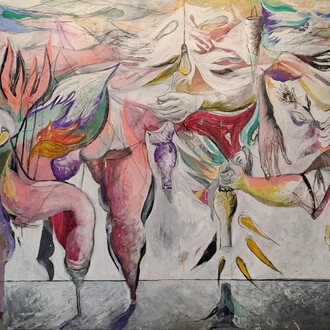
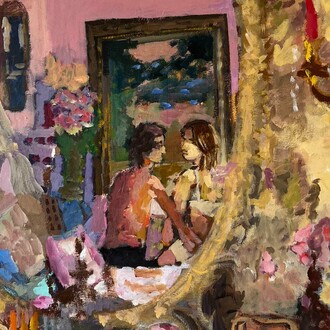
Richard Hearns brings a dual heritage to his explorations of landscape, bridging the ancient terrains of Ireland with the urban and cultural memories of Beirut. His gestural abstractions and figurative works merge spontaneity with precision, marking the space between restraint and freedom. In Hearns’ hands, landscapes are living entities prismatic, rhythmic, and imbued with the energy of both earth and memory.
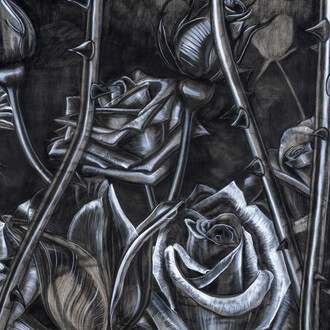
Sarah Alagroobi’s multidisciplinary practice examines identity and place within postcolonial and transnational contexts. Her work extends abstraction into spaces of cultural reflection, using fragmentation as a site of reconstruction and hybridity as a form of resilience. Through painting and installation, Alagroobi navigates the terrains of memory and identity, creating works that resonate with both personal and collective histories.
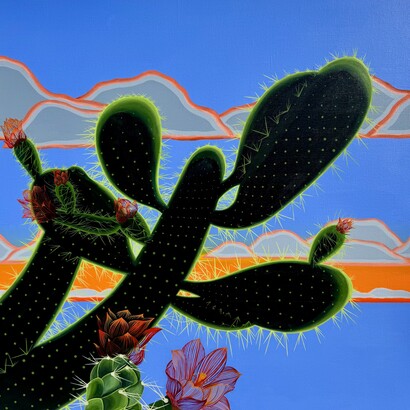
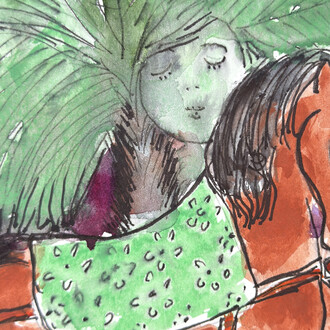
Soraya Abu Naba’a’s work is informed by her lived experience across the Caribbean, the Middle East, Europe, and the United States. She approaches identity as something shaped through movement, material, and sensory memory. Her visual language integrates abstraction, traditional craft, digital aesthetics, and ecological consciousness. Accumulated line work gives shape to petals, textiles unfold as terrains, and craft functions as both archive and continuity, making memory tangible through form and texture.
Together, these six artists invite audiences to reflect on the landscapes that inhabit us, both those we have lived in and those we carry within. Memoryscape is an exploration of memory as terrain, a dialogue between place and self, and an invitation to engage with art that resonates beyond the visual, into the emotional and historical.