English
 Español
 Français
 Deutsch
 Italiano
 Português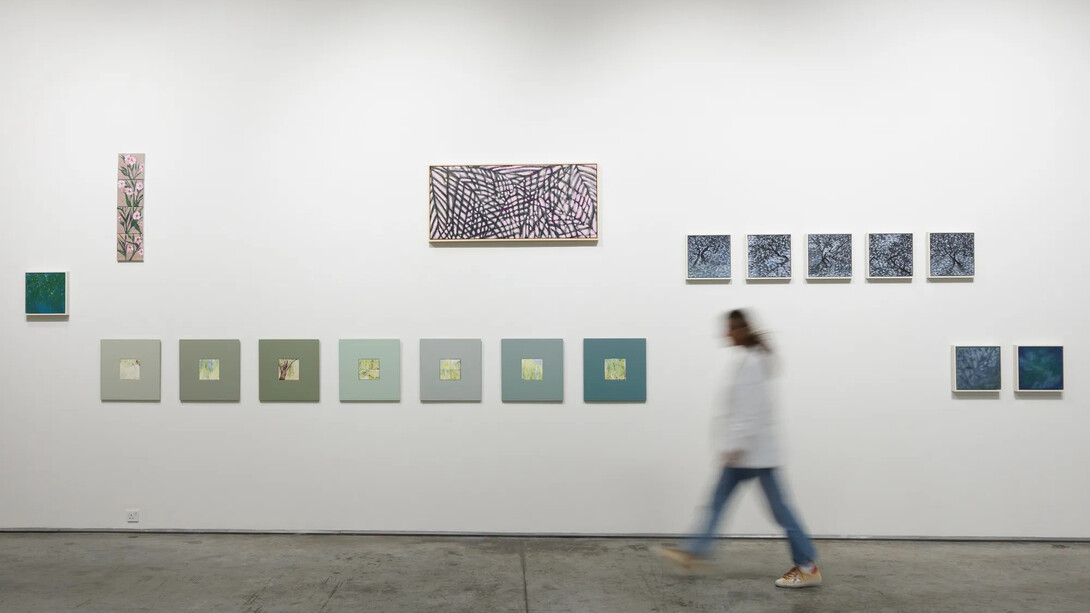
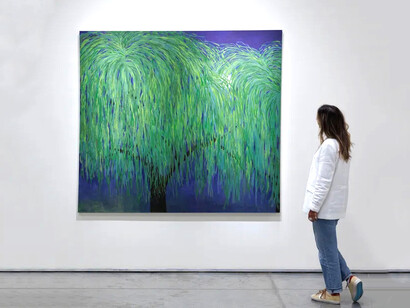
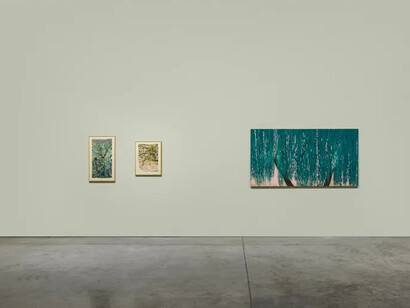
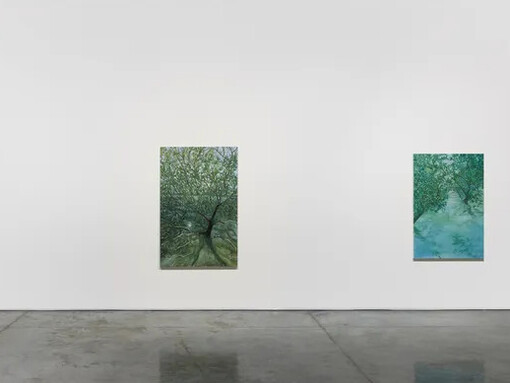
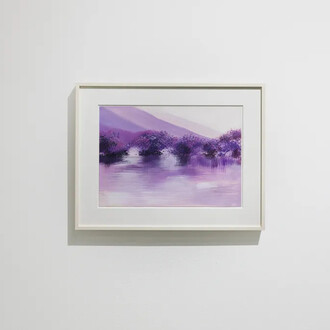
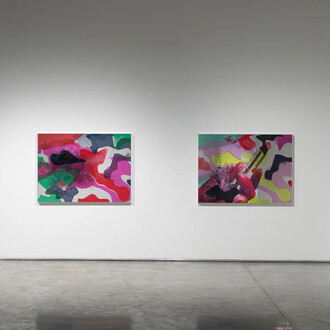
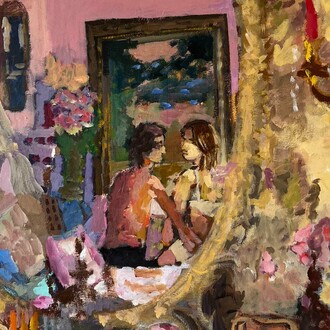
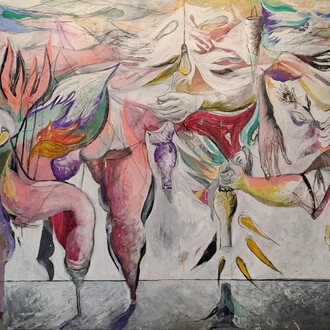
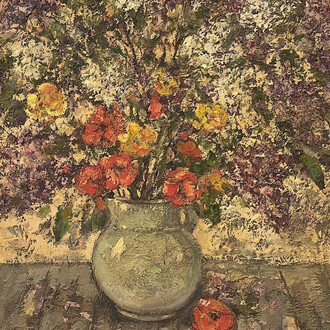
Alia Zaal’s solo exhibition, In plain sight, consists of paintings on canvas, paper, and ceramic tiles that depict intimate fragments and extracts of landscapes beloved by the artist. Highlighting details of familiar plants, trees, and flora from the scrublands of Khawaneej, a suburb in Dubai, and the mangroves and mudflats of Abu Dhabi’s coastline, the works present a mediation on site-specificity and lived experience rather than romantic scenes of territory. Zaal’s paintings depart from traditional landscape portraiture, which is usually marked by elements such as a sweeping horizon line, a majestic sky, or a tree or shrub rendered in its entirety. Works such as Ghaf memory in Biarritz (2026) and Al Shelaylah light (2026) foreground and approximate a subjective, enigmatic reading of the landscape.
For the artist, these fragments of the landscape serve a broader commentary on vision and memory. Hailing an Islamic understanding of vision and optics, the artist, like the foundational Kitab al-Manazir (The book of Optics) by Ibn al-Haytham, proposes that human vision is not a passive, objective reflection of the world but a human-centered creation and transmission. When Ibn al-Haytham broke away from ancient theories of sight in the 11th century, he argued that it is light — an unstable, external entity — that reflects the image into the eye, and that the human mind infers and decodes these images based on the atmospheric and environmental conditions.
Prior to his contribution, Greek scholarship popular at the time, conceived vision as an extromission, meaning that our eyes emitted rays of light to ‘scan’ the world around us. Al Haytham proposed ‘intromission’, wherein sight is an active image-making process based on the subject’s past memories, environmental context, and pattern recognition.
(Text by Ahmad Makia)