English
 Español
 Français
 Deutsch
 Italiano
 Português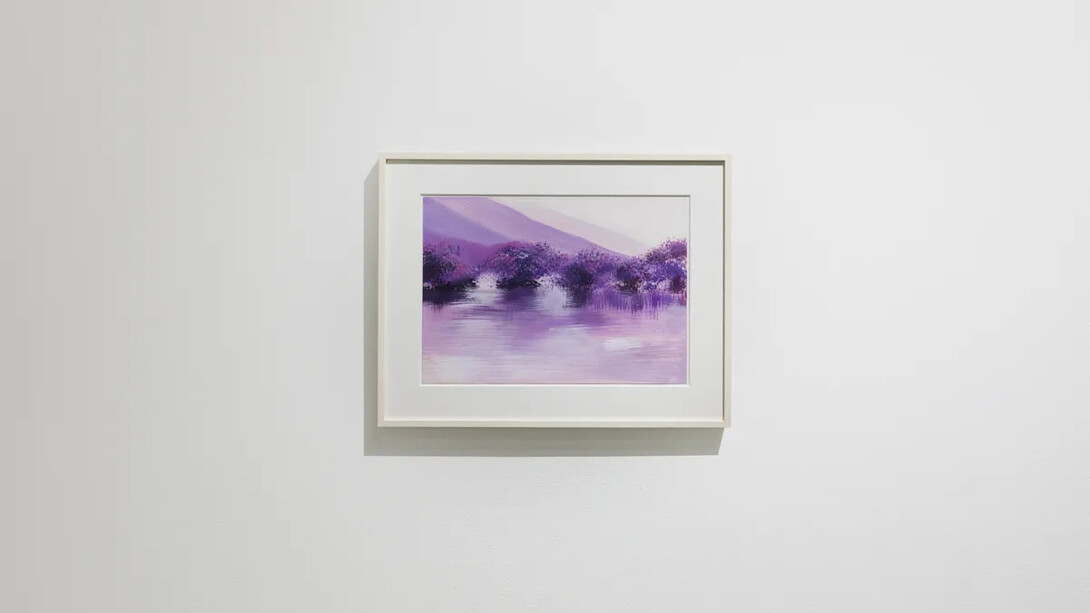
This exhibition brings together a rare group of early works on paper by Mohammed Kazem, dating from the 1990s, a formative period in the career of an artist whose practice has contributed significantly to the development of contemporary art in the United Arab Emirates. Produced at a moment of intense experimentation, these works reveal the emergence of concerns that continue to resonate throughout Kazem’s oeuvre: observation, repetition, materiality, and an enduring fascination with the traces through which we experience the world.
Kazem’s artistic journey was profoundly shaped by his encounter with Hassan Sharif, the pioneering conceptual artist who became his mentor after the young Kazem left school at the age of fourteen. Through Sharif, he was introduced to a mode of artistic inquiry rooted in experimentation, critical observation, and the questioning of conventions. This formative relationship encouraged him to look beyond representation and toward a practice grounded in process, perception, and the possibilities of ordinary materials.
While painting remained a major aspect of Kazem’s early practice, he was already developing an acute sensitivity to the overlooked details of everyday life. As a young artist, he collected discarded objects and became fascinated by the traces left by human activity within a particular environment. This attentiveness would remain central to his work, whether expressed through painting, drawing, photography, installation, or performance.
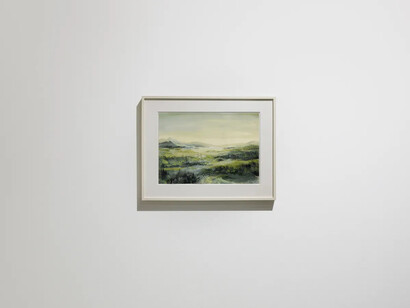
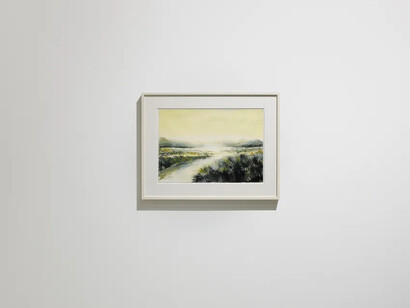
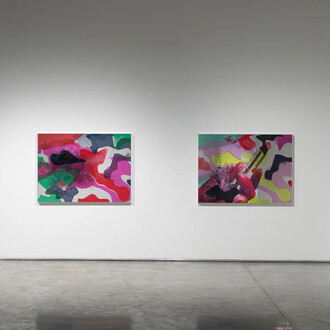
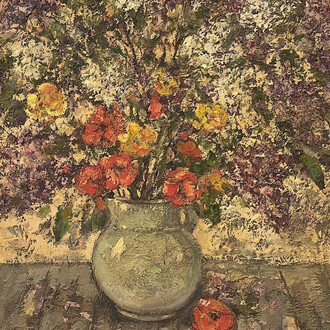
The three Landscape (1999) works painted in Hatha included in this exhibition reflect this early engagement with observation and atmosphere. Yet, as Hassan Sharif later noted, “The meaning or purpose of his paintings lies in the life of the colours and the ways they can be put to use, not in the painted objects themselves.” Rather than depicting a landscape as a fixed image, Kazem explored the sensory and emotional qualities of colour, light, and rhythm, seeking to translate experience rather than representation.
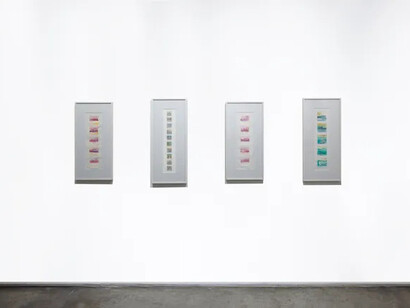
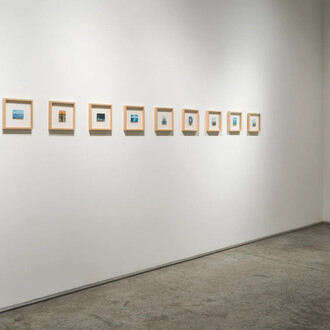
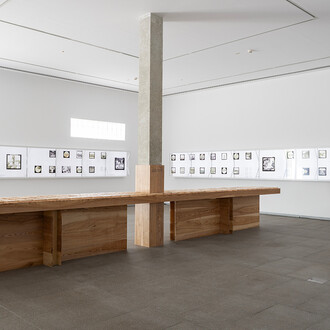
Created in Al Qusais, where Kazem and Sharif shared a studio within the Youth Club, the exhibition includes four collages of tiny works on paper arranged like a scroll and entitled Scene no. 1, 2, 3 and 4 (1993); marking some of the artist’s earliest explorations of the technique that would later become known as his Scratches. Working directly into the surface of the paper through repeated incisions, Kazem transformed drawing into an act of accumulation and duration. Delicate yet rigorous, these compositions hover between image and object, surface and relief, revealing an artist increasingly interested in the material presence of the work itself.
Created during a period in which Kazem was also deeply engaged with music, the rhythmic structure of the Scenes suggests a visual notation of time and sound. Repetition becomes a means of recording experience, while subtle variations in texture and light animate the paper’s surface. As Kazem once observed, “Every material has a secret.” These works embody that conviction, uncovering latent possibilities within the most modest of materials.
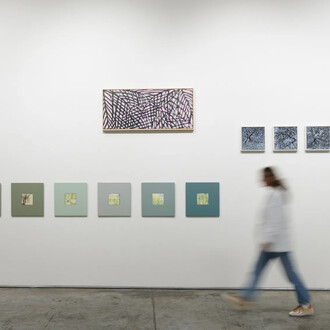
Viewed together, the Landscape (1999) and Scene (1993 and 1998) works reveal an artist already attentive to the relationship between perception and place, gesture and duration, material and meaning.
Quiet and intimate in scale, they offer a compelling insight into the early development of a distinctive artistic language that would continue to unfold over the decades that followed.