English
 Español
 Français
 Deutsch
 Italiano
 Português
The closer you stay to emotional authenticity and people's character authenticity, the less you can go wrong.
(David O. Russell)
When my son was nine, he desperately wanted to watch a video his older cousins had told him was "too scary." I told him no. I hid the laptop. I changed the password. For three days, it was the only thing he talked about: at dinner, in the car, and before falling asleep. The video, which had been a mildly interesting curiosity before my refusal, had become, in his imagination, the most important thing in the world. When I finally relented, he watched it, shrugged, and moved on within minutes.
I think about that episode now when I hear adults, including politicians, school principals, and well-meaning parents, speak with certainty about banning apps, blocking platforms, and protecting teenagers from the internet. The instinct is loving. Unfortunately, the logic is backwards.
The engine that runs on anxiety
To understand why bans fail, you must first understand what you are dealing with. Social media is not a neutral tool that teenagers happen to overuse. No, it's not. It is rather a system deliberately engineered to exploit the teenage brain's most vulnerable architecture. Every notification, every like, and every comment delivers a small, unpredictable hit of dopamine—and it is the unpredictability, neuroscientists will tell you, that makes the reward compulsive. Slot machines work the same way.
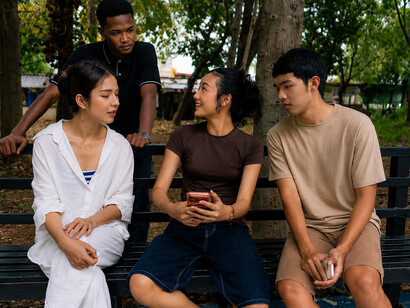
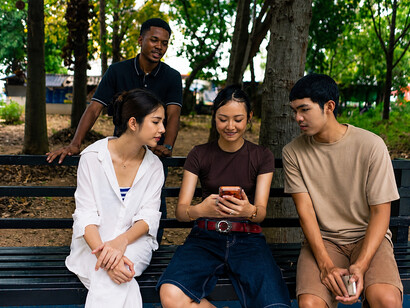
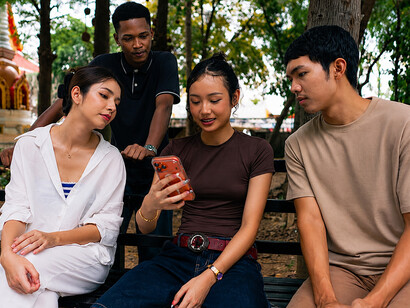
And beneath dopamine runs something older and more painful: FOMO, the Fear of Missing Out. I have seen it in my son's face when he is away from his phone or a laptop—a low, restless anxiety, the sense that somewhere, right now, a conversation is happening without him, a moment is being shared and remembered and laughed about, and his absence from it will somehow mark him as less. It is a fear of social irrelevance, which, for a teenager, is practically a fear of extinction.
These two forces, the dopamine loop and the FOMO anxiety, feed each other continuously, each making the other worse. The phone delivers relief from anxiety, but only temporarily, and the relief itself deepens dependency. It is a cycle with no natural exit.
What suppression actually does
There is a peculiar phenomenon named after Barbra Streisand, who, in 2003, attempted to suppress aerial photographs of her Malibu home legally, and in doing so, ensured that millions of people who had never heard of the photographs went looking for them immediately. Suppression, it turns out, is one of the most powerful advertising strategies imaginable.
When an institution bans something, it makes the thing precious, a banal forbidden fruit. For a teenager already vibrating with FOMO, a banned piece of content converts into a social currency. Knowing about it, having seen it, being part of the inner circle that has access to it: these things confer status, which is the very thing FOMO fears losing.
I was reminded of this writing last year about the Blue Whale challenge. It was the disturbing online phenomenon that spread precisely because attempts to suppress it drove it into private, encrypted channels where the exclusivity of the knowledge became part of the appeal. The more desperately adults tried to eliminate it, the more essential it seemed to young people who had never previously given it a thought. The ban was not a wall. It was a spotlight.
The blackout that proved everything
Last year, a massive power outage swept across Spain, cutting electricity and mobile networks for hours. An entire generation was plunged, involuntarily, into something that wellness influencers are spending thousands of euros trying to sell: a digital detox.
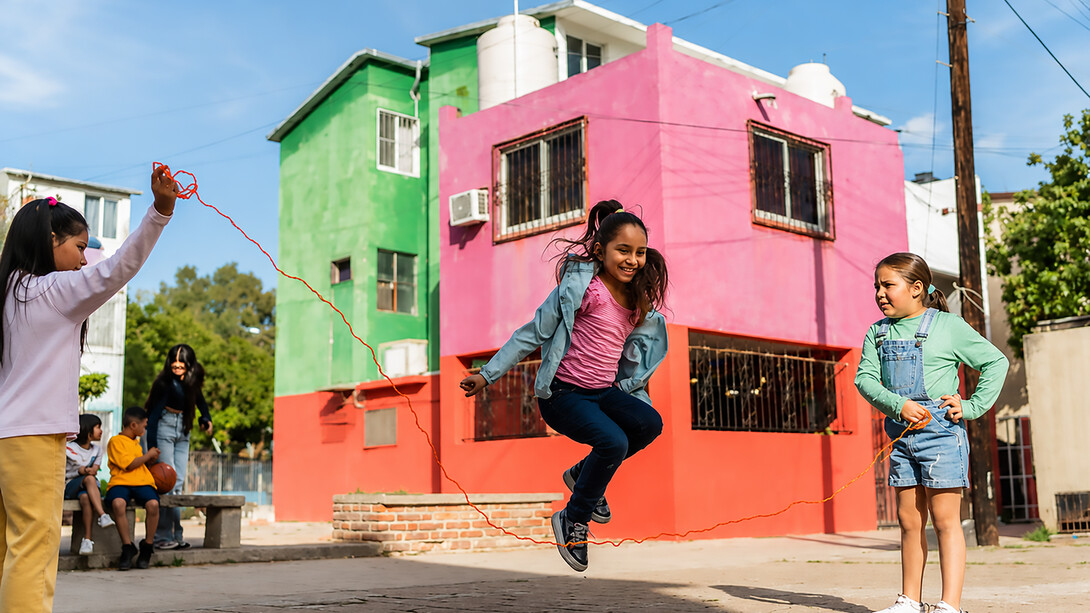
And something unexpectedly beautiful happened. Young people played guitar in the dark. Neighbors spoke to each other across balconies. Children played in the streets with the unhurried quality of an earlier era. The dopamine stream had been severed, and in its absence, the world offered its older, quieter rewards.
I read those reports with something between hope and recognition. It reminded me of summer afternoons from my own childhood, before smartphones, when boredom was simply a condition you lived through until it became something else. An idea, a game, an accidental conversation that you still remember.
But then the electric power returned. And almost everyone went back to their screens, immediately and urgently, as if settling a debt. The anxiety had not dissolved during the blackout. It had simply waited.
The law that arrives, well-intentioned and late
A few months after that blackout, in February 2026, Prime Minister Pedro Sánchez stood at the World Government Summit in Dubai and announced that Spain would ban social media access for all children under sixteen. Speaking at the summit, Sánchez described the current state of these platforms as "a space of addiction, abuse, pornography, manipulation, and violence," CNN, and pledged to protect children from what he called the digital Wild West. The legislation would require platforms to implement mandatory, effective age-verification systems—not symbolic checkboxes but real technical barriers—and would hold executives personally criminally liable for violations committed on their platforms. Spain joined Australia, France, and Denmark in a growing international movement to limit children's exposure to social media.
I am a parent, and I understand the impulse viscerally. When I think of what my son encounters online, the algorithms that serve increasingly extreme content, the anonymous cruelty, and the pornography that arrives unrequested, I want someone to build a wall too. The protective rage is real.
But I keep returning to that April blackout, just months earlier, on the same Spanish soil. The power came back, and the children went back. The anxiety had simply waited. And now I ask myself: will a legislative checkbox — however well-enforced, however earnestly intended — accomplish what a total infrastructure collapse could not?
The ban addresses access. It does not address hunger. And it doesn’t address education and literacy either.
Teenagers who are determined to get around age verification will get around it. They always have, and not because they are delinquents, but because adolescence is, by its very nature, the project of escaping the boundaries adults draw. A fifteen-year-old who desperately wants to be on Instagram will use an older sibling's account, a borrowed phone, and a VPN. The ban, in this sense, risks becoming another Streisand Effect at a national scale: the forbidden network, now officially forbidden, is elevated into something worth circumventing.
What we are actually hungry for
The lesson of the blackout — and perhaps the real lesson behind the legislation too — is not that teenagers are hopeless. It is that you cannot treat a psychological need by temporarily removing the thing that is meeting it, however poorly. FOMO is, at its core, a hunger for belonging—for the feeling that you matter to other people, that your presence is noticed and wanted. Social media offers a cheap, constant, algorithmically optimized simulation of that feeling. The simulation is hollow, but the hunger is real.
The only genuine answer to hunger is nourishment. Not prohibiting.
My son, the one who obsessed over the forbidden video, has a passion now that takes him entirely out of himself: football. There is only the game, his favorite team, and satisfaction.
This is what we should be building toward. Not rules alone, but alternatives alongside them. Not bans in isolation, but better things to want. Activities that demand real effort and return real satisfaction, such as music, sports, making something with your hands, and learning something difficult—teach the brain, slowly, to value a deeper kind of reward. Scheduled, tech-free time with people you actually love as a genuine offering provides the belonging that FOMO is always searching for and never quite finding online.
We are, those of us raising teenagers now, a generation without a manual for this. We were born into an analog world and found ourselves, almost without noticing, in a digital one. We struggle with our own screens, our own compulsive checking, our own late nights scrolling through things that make us feel worse. We, of course, are not authorities. We are fellow travelers, slightly ahead on the same road, trying to figure out which paths lead somewhere worth going.
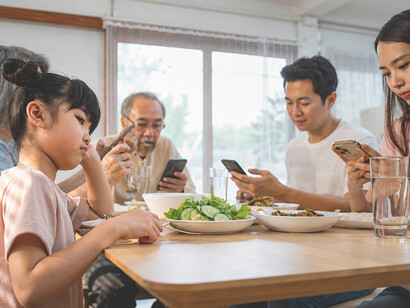
Let the platforms be held accountable, as they should have been long ago. But let us not mistake the wall for the work. The work is slower, quieter, and harder, and it happens not in parliament or at summits in Dubai but in living rooms, on football pitches, and at dinner tables where the phones are, for one hour, face down.
The question that stays with me is this: in a world drowning in synthetic connection, engineered engagement, and the constant low hum of algorithmic anxiety, can we help young people find their way back to the things that are genuinely, irreplaceably theirs?
Not by taking their phones away. But by giving them something real enough to put them down for.