English
 Español
 Français
 Deutsch
 Italiano
 Português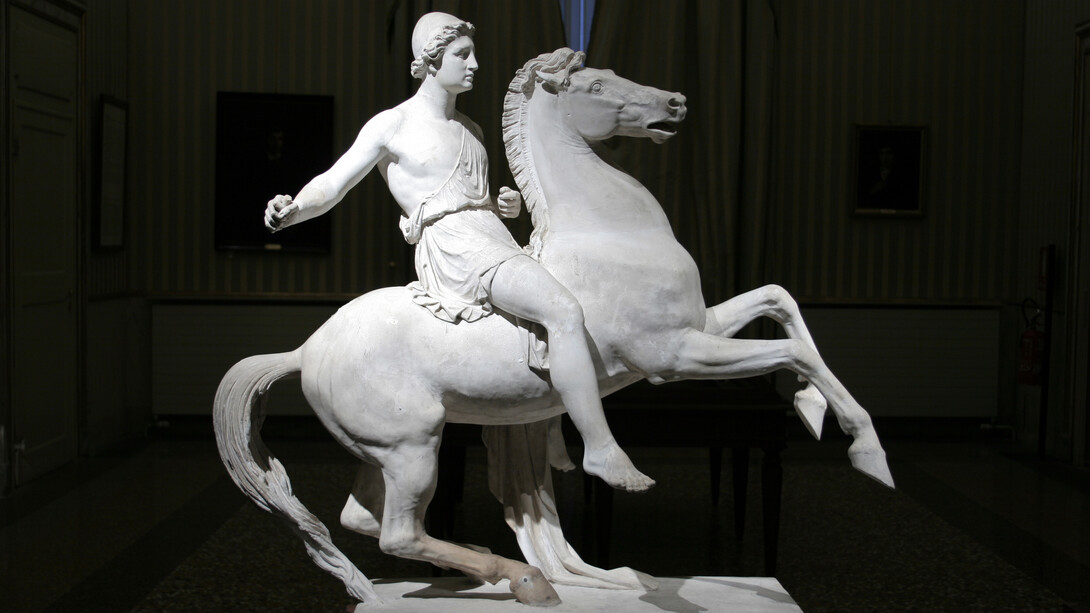
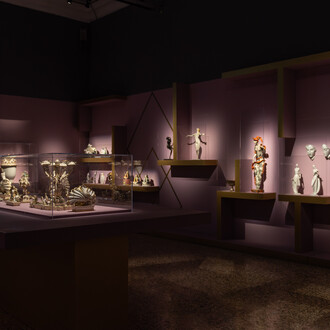
In every great city, monuments serve as more than decorative elements of the urban landscape. They are repositories of collective memory, visual narratives through which communities remember their past, celebrate their heroes, and negotiate their identity. The exhibition MonumenTo. Turin capital: the shape of memory, hosted at Palazzo Madama, offers a compelling exploration of this relationship between public sculpture, urban space, and historical consciousness. Running from February to September 2026, the exhibition invites visitors to rediscover Turin through the silent yet eloquent language of its monuments.
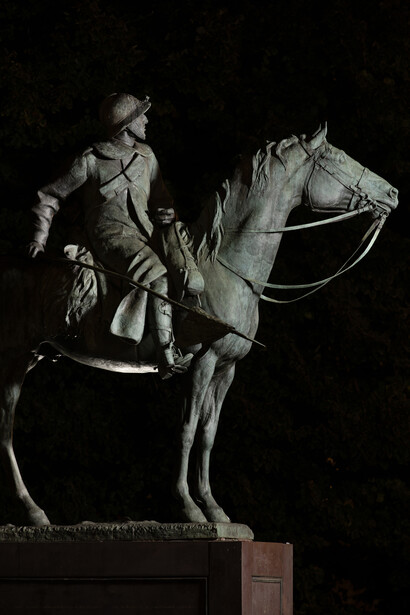
The project was conceived by Palazzo Madama in collaboration with the municipal administration of Turin and emerged from a desire to reinterpret the city’s monumental heritage through contemporary eyes. At the heart of the exhibition lies an extensive photographic campaign conducted by photographer Giorgio Boschetti, whose images transform familiar statues into unexpected protagonists of a visual and historical journey. Rather than presenting monuments as static objects embedded within the urban fabric, Boschetti isolates them through dramatic nocturnal photography, allowing viewers to encounter them anew.
The exhibition’s title, The shape of memory, points to one of its central themes: memory is not an abstract concept but something given physical form through art and architecture. Throughout the nineteenth and early twentieth centuries, Turin developed an extraordinary network of public monuments that helped define its identity as the first capital of unified Italy. These sculptures populated squares, avenues, and public gardens, transforming the city into a vast open-air museum and a stage upon which the narratives of nationhood, civic pride, and historical remembrance could unfold.
Boschetti’s photographs reveal the emotional power of these monuments by removing them from their everyday context. Captured at night, the statues emerge from darkness as solitary figures, detached from traffic, crowds, and urban distractions. Faces, gestures, and sculptural details that often go unnoticed during daily life become strikingly visible. Through carefully controlled lighting and composition, the photographer encourages viewers to engage with these works not simply as historical artifacts but as living presences within the city’s cultural imagination.
This approach transforms photography into an interpretive medium rather than a documentary one. The exhibition does not merely record Turin’s monuments; it reactivates them. In doing so, it raises important questions about how societies remember. Why are certain individuals commemorated while others are forgotten? How do monuments shape public understanding of history? What role do they continue to play in contemporary urban life? These questions resonate strongly today, at a time when monuments around the world have become subjects of renewed debate and critical reassessment.
One of the most fascinating aspects of the exhibition is its exploration of Turin as a “Theatre of memory.” This concept suggests that the city itself can be read as a vast historical text. Every square, avenue, and monument contributes to a larger narrative that unfolds across urban space. Turin’s public sculptures are not isolated works of art but interconnected elements within a carefully constructed symbolic landscape. Together, they tell the story of political ambitions, civic ideals, cultural transformations, and national aspirations.
The exhibition further enriches this perspective through the inclusion of an extraordinary cartographic work by artist Alessandro Capra. His large-scale ink drawing presents a hybrid vision of Turin, combining a traditional plan view with a bird’s-eye perspective that stretches toward the distant Alps and the silhouette of Monviso. Within this intricate representation, the city’s seventy-nine public monuments are carefully mapped and individually illustrated. The result is both a work of art and a scholarly instrument, allowing visitors to grasp the geographical distribution and symbolic network of Turin’s commemorative landscape.
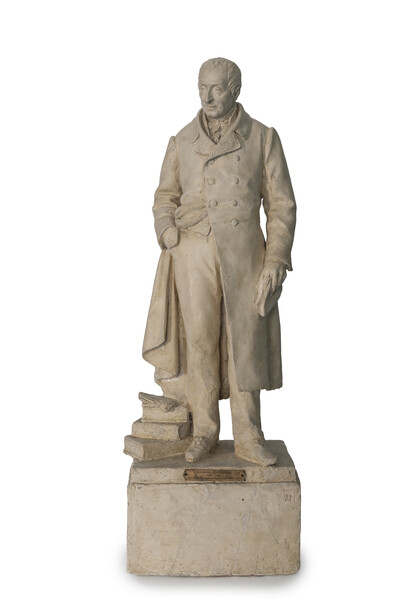
Historically, the exhibition focuses on approximately a century of commemorative sculpture, from the inauguration of the equestrian monument to Emanuele Filiberto by Carlo Marochetti in 1838 through the decades leading to the 1930s. This period witnessed profound political and social change. Turin evolved from the capital of the Kingdom of Sardinia into the first capital of a unified Italy, while public monuments became increasingly important tools for expressing civic values and national identity. Sculptors, politicians, and patrons collaborated to create works that could embody ideals of patriotism, sacrifice, progress, and collective memory.
The exhibition also situates Turin within a broader Italian tradition. Italy possesses one of the richest monumental heritages in the world, a legacy that extends from ancient Rome through the Renaissance and into the modern era. Public sculpture has long played a crucial role in shaping civic identity across the peninsula. Turin’s monuments participate in this tradition while simultaneously reflecting the city’s unique historical role in the process of national unification. As visitors move through the exhibition, they gain insight into how local memory and national history intersect within the urban environment.
Beyond its historical significance, MonumenTo offers an important reflection on the contemporary relevance of monuments. In an age dominated by digital images and rapidly changing social landscapes, public sculpture may appear to belong to another era. Yet the exhibition demonstrates that these works continue to possess remarkable communicative power. Their meanings evolve as successive generations reinterpret them, bringing new perspectives to familiar symbols. Far from being relics of the past, monuments remain active participants in cultural dialogue.
Ultimately, MonumenTo succeeds because it encourages visitors to look more carefully—not only at monuments, but at the city itself. Through photography, cartography, historical research, and visual storytelling, the exhibition reveals Turin as a place where memory is inscribed into stone, bronze, and urban space. It reminds us that cities are not merely collections of buildings and streets; they are living archives, shaped by the stories societies choose to preserve.
In rediscovering Turin’s monuments, visitors rediscover the city’s past, but they also gain a deeper understanding of the present. The exhibition shows that memory is never fixed. It is continually reshaped through acts of looking, interpreting, and remembering. In this sense, the true subject of MonumenTO is not simply the monument itself, but the enduring human desire to give form to history and meaning to collective experience.
An essential companion to the exhibition is the richly illustrated catalogue. More than a simple record of the exhibition, the volume functions as an independent scholarly resource, bringing together essays, historical documentation, and the complete photographic project developed by Giorgio Boschetti. The catalogue offers readers the opportunity to extend the exhibition experience beyond the museum walls, providing deeper insights into the origins, meanings, and urban contexts of Turin’s public monuments.