English
 Español
 Français
 Deutsch
 Italiano
 Português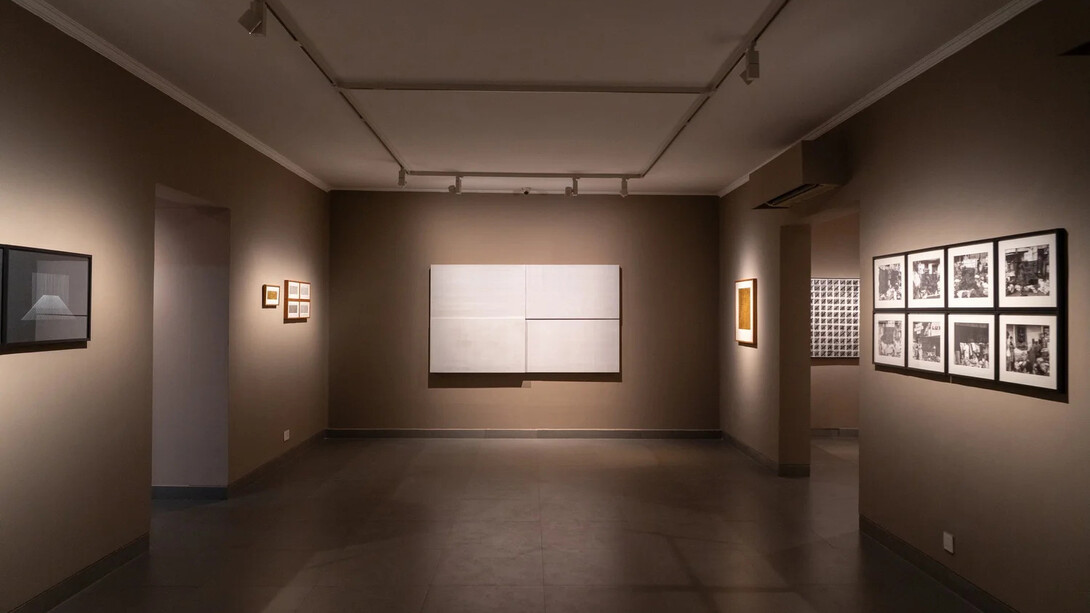
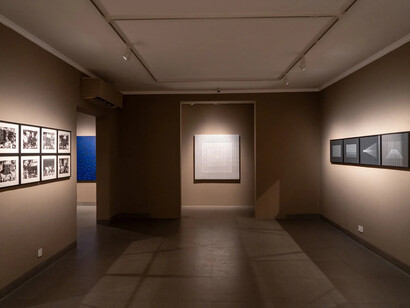
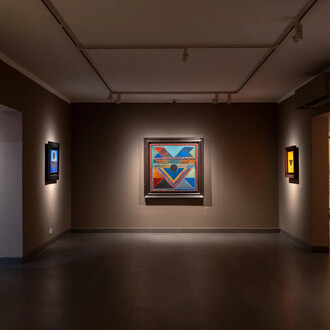
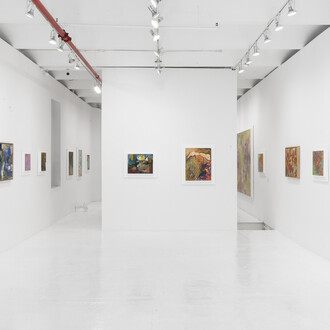
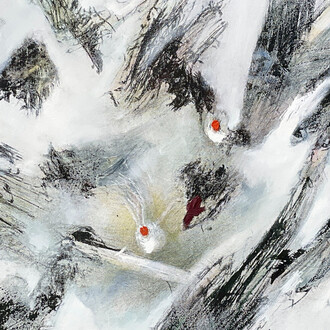
The works of artist Aditya Krishnamurthy and Supriyo Karmakar draw us into a meditative state of slow and deliberate conversation with the line. Their practices present a visual coalescence, while one is rooted in the philosophical experience of time, the other is a sociological study of societal hierarchies. And yet, when they come together, they reveal a deeper understanding of the in-between.
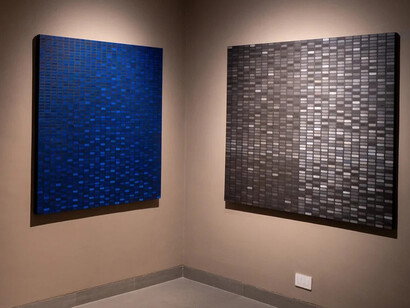
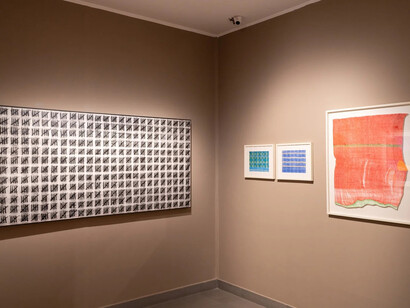
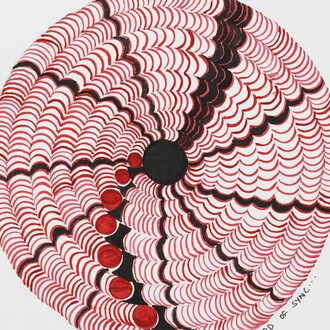
At the centre of Aditya’s practice lies an intimate engagement with the nature of time and our experience of it. The grid, as a recurring motif in his works, does not aim to define time but instead tries to scaffold its passage. Each cell in his grid, therefore, tries to capture the change in our physical state from one moment to another. And the continuity of this shift is best represented through the lines of the matrix. His choice of texture within his practice is equally deliberate. The use of wood and stucco brings forth a stark clarity in which the void in between makes the lines more legible. The cell formed at the intersection of two lines is both a unit of measure and a moment of pause. The infinite thus becomes habitable, one mark at a time.
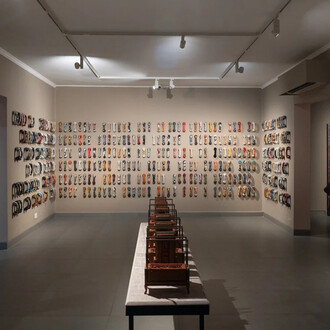
Supriyo’s practice, in contrast, considers the sociological implications held within a piece of clothing. Each thread of yarn painted individually might be neutral materially, but the garment made out of the same thread could be received unequally. Our clothing is not just functional but a deep manifestation of our cultural capital. His work highlights how the markers of cultural capital and class attached to our choice of clothing give way to inequality. The gamcha is just cloth. What we make of it depends entirely on our perception.
The common inquiry between both practices is similar. What does the space between two lines hold? Is there any inherent quality to that interval, or does meaning only arrive through perception? For Aditya, the in-between is where the passage of time is felt, where the momentary makes space for all our simultaneous realities. For Supriyo, it is where social judgment quietly takes hold, where an equal measure becomes an unequal one.
In-equal Measure seeks to consider these propositions without resolving them. Both artists ask us to deeply ponder and look at the line before we assess what it constructs. In doing so, they invite us into a space that is at once contemplative and critical. The title, thus, makes space for both the subjectivity of measure and the inequality that it conceals.
(Text by Siddhi Shailendra)