English
 Español
 Français
 Deutsch
 Italiano
 Português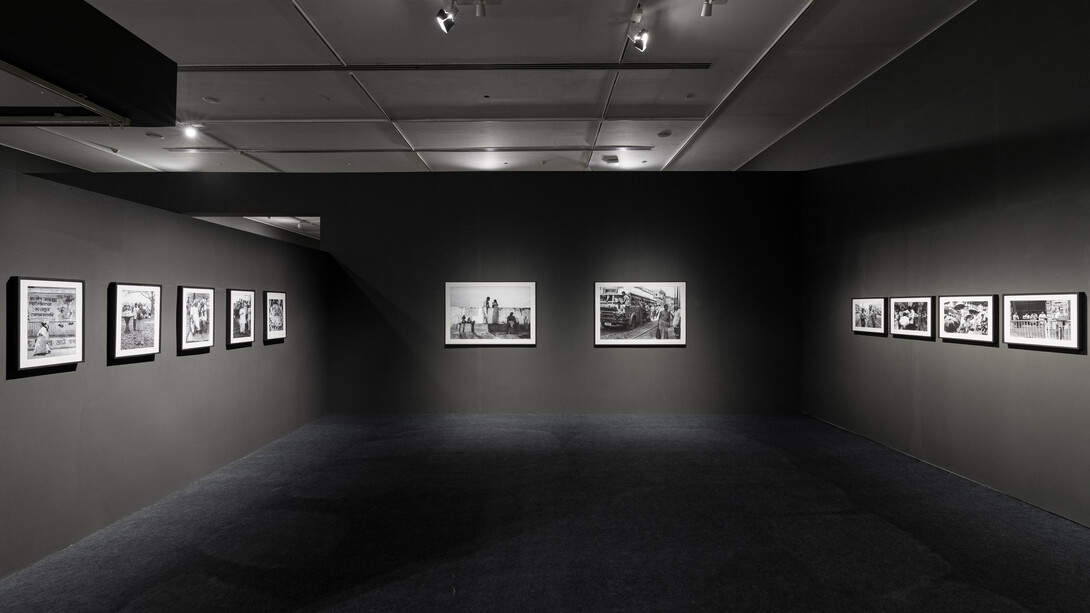
Delete Calcutta from the guide books.
(Günter Grass)
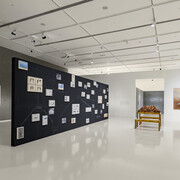
An epithet is a way of holding a place still long enough to be addressed, and Calcutta has been addressed too many times to stay still. City of Joy, City of Palaces, the dying city, the rebel city, the second city of a dead empire. Each name is offered as an act of love or of dismissal, and each one, in the saying, replaces the thing it meant to fix. Grass wanted the city struck out from the guide books because he had tried, seriously, to understand it, historically, politically, culturally, emotionally, and found every existing account inadequate to what he had walked through. To delete is not to dismiss. It is to ask for a blank page, so the city might be met without the words that stand in its way. To photograph such a place in the early 1990s was to work against the grain of a subject already thick with meaning, already claimed, already mourned before its disappearance. The question was not what a photographer could still find in a place so comprehensively written. The question was what it would take to see it as though the writing had not yet begun. শহরনামা is Kushal Ray's seeing, the city's account of itself kept by a man who turned his flânery into discipline.
Formed by a decade in the city's newsrooms as a sports journalist, close to the machinery of the image and increasingly unwilling to serve it, Ray set his salary down in 1991 and gave the years to the street instead. He worked a single Nikon FM with a 35mm lens held near the reach of the unaided eye, and refused the motor drive that lets a photographer take a scene by volume and choose later. He borrowed his film. He rationed the money for paper and developer. A whole image, its light and its geometry and its one passing gesture, had to be seen and settled in the mind before a frame was spent on it. Almost nothing here was taken by chance.
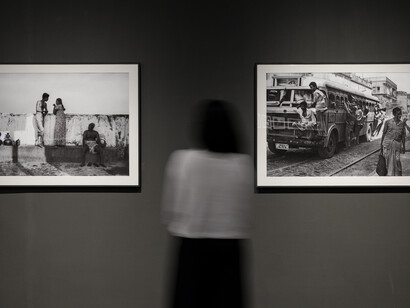
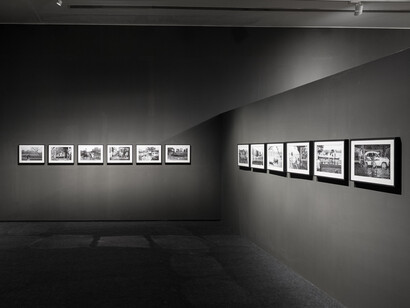
What he chose to look at was, by the ruling hierarchy of subjects, beneath notice. "I was fascinated by people," he says, "different kinds of people." He does not lift these moments above the ordinary. He trusts the ordinary with everything, and finds that a single day, watched without impatience, is never twice the same day. And, this record is enormous. In 1991 alone Ray exposed more than two hundred and sixty rolls, most of them unprinted until now. That volume is not abundant in the usual sense. It is the measure of how completely one person committed to a single method, and it changes what the work can be asked to do. An archive this large, made this consistently across one brief span of years, stops being a set of photographs and becomes a body of evidence about how the city actually conducted the business of being itself. And, three years is nothing.
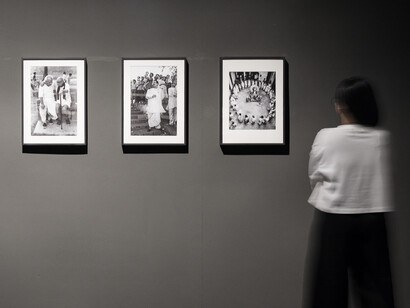
Against a city three years isn’t even a breath and yet everything here is gone. Raghupati the rickshawpuller has died from a terrible fever. The courtyard in Chetla with the cow stood in the afternoon light has been built over. The Sen-bari dalan where women circled the courtyard in worship is gone. What these frames hold hasn’t aged so much as been abolished, or pulled indoors into a life now lived behind private screens. It survives nowhere on earth but here. For thirty years these negatives waited in the dark. What returns from them is not the city as it was, but the fact of its having been, held against the day it stopped being so. These photographs are the evidence of what remains, kept by one man on foot, and standing after the city it names has gone.
(Text by Tirna Chatterjee)