English
 Español
 Français
 Deutsch
 Italiano
 Português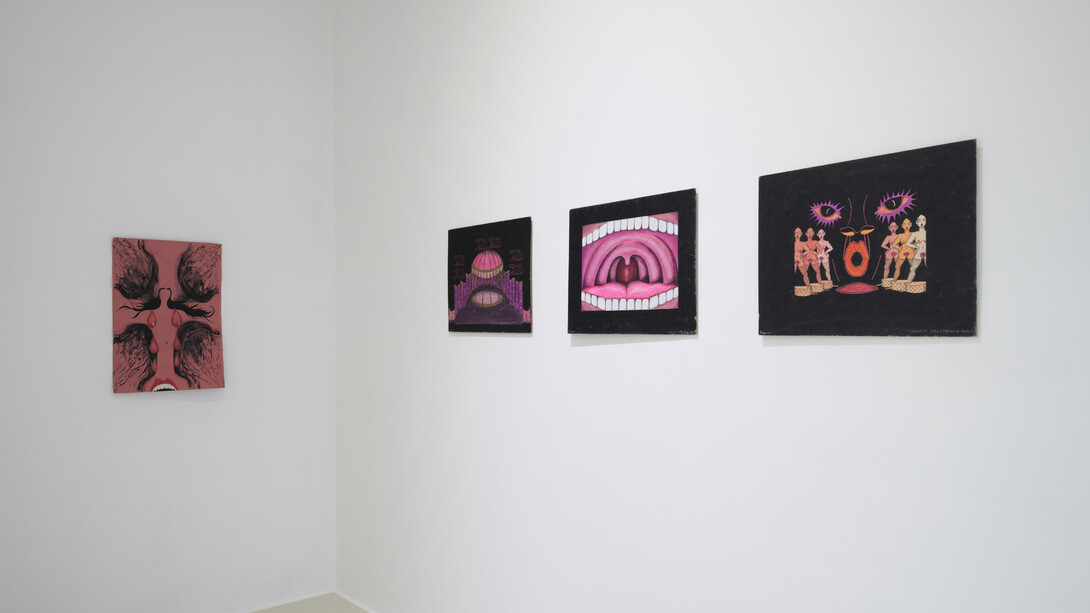
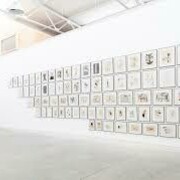
A remarkable woman in Kraków and there aren't many such women in Kraków. The words of Jan Polewka, a fellow theatre director and set designer, ring quite true as we begin to tell the story of artist Joanna Braun. An extraordinary figure, active on the arts scene for close to six decades... and yet her show at the Leto Gallery isn't intended as a retrospective of works by a veritable dame of Polish scenography, nor is it even meant to be limited to her set design work. Rather, it's an attempt, without unnecessary fanfare, to exhibit a selection of works by an artist whose greatest passion has always been the stage.
A graduate of the Academy of Fine Arts in Kraków, her artistic maturity developed in opposition to her scholarly institutions, more so drawing on the ambiance of the city's famous cellars and their hidden spaces: from stints at the Krzysztofory Gallery to shows at the Cellar under the Rams at the peak of its heyday or indulging in avant garde pursuits at Teatr 38. It is no wonder that her diploma project was a piece by Witkacy, titled Mad locomotive. Braun's fascination for his works continued for many years after she'd graduated from the academy. The exhibition also reveals the details of costume and set designs that had never come to fruition, for instance, created for Miss Tutli Putli, devised by Witkacy as the libretto to an operetta. It tells the tale of a clash of civilizations through the romantic vicissitudes of colonizers and so-called savages. This piece inspired Joanna Braun to create a set of costumes and a set that would seamlessly join the fashion impulses of the 1970s with a historical spin that would serve as the backdrop for this unhinged, tropically themed production.
The concept behind this enigmatic operetta by Witkacy meshed well with her own anthropological investigations. As she once noted, she'd always been drawn to non-local, non-European cultures, from Japan and across the world to Mexico, where she'd spent two years working in the local theatrical milieu. Joanna Braun's consideration of a panoply cultures was never monolithic. She appreciated eclectic, hybrid approaches to design and so, her costumes and sets were never easily placed at first glance.
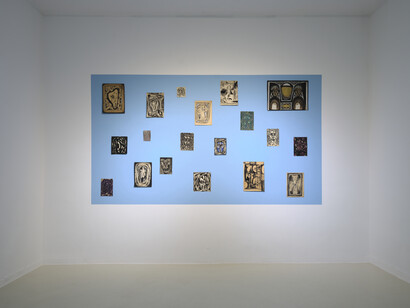
This tendency is brilliantly reflected in, for instance, the costume design for a production of Ionesco's Exit the king at the Teatr Lalek Banialuka in Bielsko Biała. It presents the figure of the king in a sort of shamanic getup, hiding his face behind a fanciful mask. Masks appear to be an obsession, which comes as no surprise given the key role the mask has played since the advent of theatrical performance. The mask included in the show comes from Braun's Self portraits series, where the border between the portrait and the mask appears inscrutable and even downright irrelevant. Sebastian Gawłowski likens them to curated garden designs: the outline of an eye, mouth and nose suggestively taking their shapes from a set of abstract forms resembling a landscaped garden. The head appears to take its shape from the edge of a small stream, the hedges adorned with a flurry of tresses, hills and islands marking the cheeks, chin and parted lips. In Braun's hands, a human face offers the space for artistic experimentation, much like the body.
This series of gouaches, titled Monuments, consider this bodily aspect in a way that doesn't shy from the conventions of dark humour; said monuments were splayed out on the green stretch of Krakow's Planty Park, shyly hiding their bodies away beneath plastic or fabric shrouds while they undergo renovation. Reminiscent of Wyspiański's straw cover Mulchs or Christo and Jeanne Claude's Wrapped installations of famed architectural structures, their original character has been stripped away. Joanna Braun's Monuments offer the impression of enigmatic fetishistic objects, tempting us with a casually outstretched hand or foot; perhaps these appendages might come alive again one day, animated by another theatre show played out in the green spaces of the city?
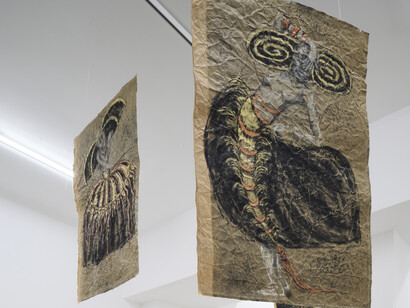
Deliberations on the human body, torn away from the limitations of clothing or costume and all the affiliated societal insinuations, make up the main thread underlying Braun's Infamki series. Drawing from Diego Velázquez and his Spanish princesses, Braun "turns back" their destinies. The infantas depicted on these canvases, with their perfectly vague expressions, disappear beneath the heft of layers of crinoline, trapped in the bounds of courtly etiquette and a predetermined future. Braun lets them loose, setting them on the dance floor in a rebellious flurry of fantastic poses, casting off the curse that had befallen them. This is an example of Braun's technique on paper, whose character (its softness, flexibility, absorptive capacity) is ideal for exploration. She believes quite deeply that all that is haptic contains the whole body1, the body on paper and of paper all at once, fully deserving of touch.
Braun reaches for a varied assortment of paper, at times patinaed, wrinkled, even smeared with tar, and armed with a soldering iron, she proceeds in her experimental pursuit of alternative histories. Pulled in by stage choreography, novel approaches to paper and puppet theatre, she has forged a new path in non-standard approaches to interpreting classical works for the stage. This remarkable woman in Kraków has produced works of art and performance all over the world, with an unmitigated imagination, who jokingly taunts and warns us with the show's title: hand, foot, brains on the wall. What is she warning us against? Or whom, rather? Is it the very realm of theatrical illusion? We must get her to answer the question.
(Text by Agnieszka Jankowska-Marzec. Translation by Agnes Monod-Gayraud)
Notes
1 Cited from M. Smolińska. Haptyczność poszerzona. Zmysł dotyku w sztuce polskiej drugiej połowy XX i początku XXI wieku [trans. Expanded hapticity. The sense of touch in Polish art of the late XX and early 21st centuries]. Kraków 2020 (p. 9).