English
 Español
 Français
 Deutsch
 Italiano
 Português
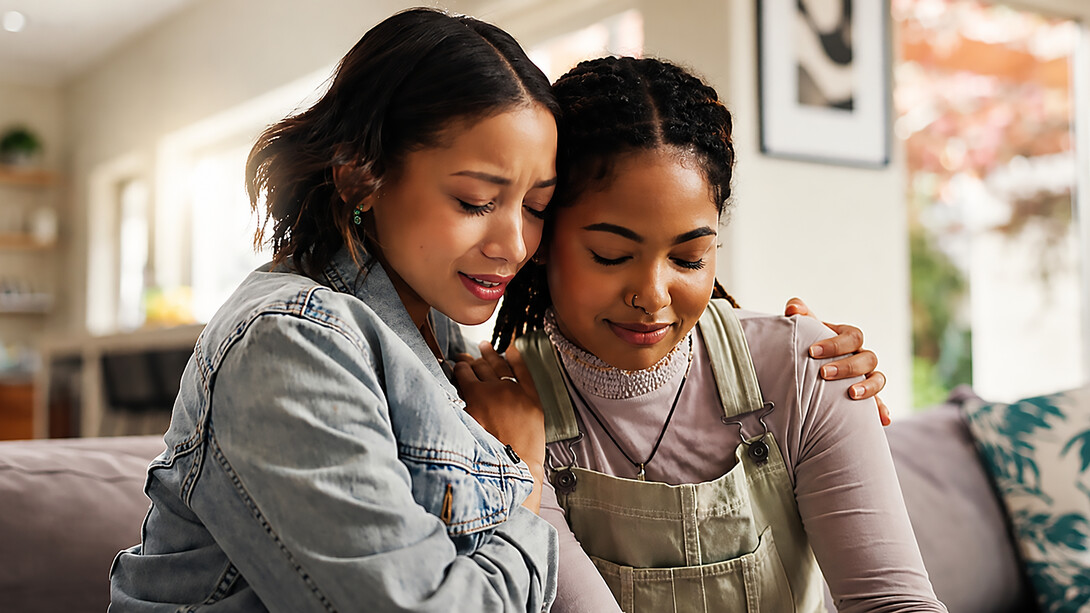
Often, before any woman walks through a doctor’s office, a space where she is frequently expected to advocate for her health, she has likely spoken to another woman about her health.
She could have done this on a Reddit thread, in a WhatsApp group, or in a Substack comment section. A study1 conducted by Weber Shandwick Collective’s Women’s Health Center of Excellence found that Reddit is empowering women to openly discuss their health. During 2023 to 2024, the r/WomensHealth Reddit thread experienced a 91% community growth.
These peer conversations, informal and often invisible, are quietly reshaping how women make their health decisions.
Why are women turning to other women first?
Women thrive within communities. As is true with any community, the expected behaviour pattern is that women share information among each other. Because of the limitations of the healthcare system for women and the systematic rise in the adoption of technology, these communities have changed the scale, speed, and reach with which health information, both right and wrong, can be shared.
Research2 highlights that many women visit their primary care providers more frequently than men, for both physical and mental health concerns. However, while the frequency of contact is high, women do not receive the same quality of care as men.
Today, women arrive at their appointments having done significant peer-led research. This has helped them triangulate their symptoms against the experiences of others. More often than not, most women have a basic idea of what might be a possible list of underlying causes of what they are experiencing.
This shift is important when we consider the traditional model of healthcare communication. What initially involved patients receiving information about their health from their provider has now moved laterally. Patients, especially women, are understanding their conditions through women within the communities they belong to. For women, these communities help in managing conditions that are often dismissed or overlooked. So in essence, these communities are not a workaround; they are a lifeline.
The stats behind the shift
A 2025 cross-sectional study3 found that online health information seeking was linked to the desire for health service utilisation. In simpler terms, women were searching for information for their health online, including peer communities, to find ways to receive healthcare. A notable mention here is that women were not seeking solutions to replace clinical care. But more for the right prompts or nudges to confirm for them that they need medical attention.
A Cureus review4 highlighted that social media and online communities are playing central roles in patient education, empowerment, and support. The scale of impact of these communities is increasingly significant in the healthcare ecosystem. When used right, they are seen to improve how health information is delivered, which in the long run can improve patient outcomes.
For women specifically, a 2023 survey5 of over 600 participants found that nearly two-thirds searched for cancer information online. A key observation is that the Black and Asian women respondents had notably higher numbers of this behaviour. And if we correlate this finding to the present reality, these are the groups of women who have historically documented clinical inequalities. Peer communities are closing the gap here.
A notable aspect of these reviews is that a trust differential is being built. Women, who have historically experienced more dismissal, misdiagnosis, and structural barriers to care, are finding solace within these communities. A space where they and their concerns are finally being heard.
How women’s health communities are advocating for conditions that medicine sidelined
Perhaps nowhere is the peer effect more visible than within the reproductive and hormonal health space.
According to the World Health Organization (WHO), endometriosis affects 10% of women in their reproductive ages. The average time for receiving a diagnosis is estimated to range between 4 and 12 years. Despite its high prevalence, almost 47% of women receive a non-endometriosis diagnosis. This is a significant rate of misdiagnosis for a condition that should be diagnosed at a higher rate, considering its prevalence.
These women, however, are not waiting passively for their diagnosis. They can today be found online within health communities, comparing notes, finding names for their symptoms, learning what questions to ask, and, more critically, receiving the validation for what they are experiencing.
This last piece matters the most. The normalisation of pain, especially for women, is the primary reason diagnosis is usually delayed. And this is both by the women themselves and by clinicians. Studies6 have shown that regardless of the gender of the doctor, women’s pain is often overlooked. As a direct consequence, women are prescribed analgesics less frequently than men who also present with pain.
A similar pattern exists for PCOS as well. Approximately 10-13% of women are thought to have PCOS, according to the WHO. 70% of women remain undiagnosed.
A 2024 qualitative study7 in BMC Women’s Health followed women using online community platforms such as Reddit to navigate their PCOS diagnosis. One such instance of community impact was seen when other women expressed dissatisfaction with their gynaecologists, which directly prompted one participant to seek a reproductive endocrinologist instead. She got there not because of a clinical referral, but because of peer knowledge.
Online peer communities make women suffering from debilitating symptoms feel less isolated. Additionally, they gain access to practical information, all the while taking notes on how to navigate through their doctor appointments. These are real clinical outcomes that are achieved outside the clinic.
Another study from India8 showed that treatment-seeking behaviour for women with PCOS can be influenced by social media. This reinforces that the peer effect for women’s health crosses both geographic and cultural contexts.
Are there risks for women within these communities?
While online communities provide significant benefits by filling gaps overlooked by the healthcare system, there are notable downsides to consider as well.
Within communities, especially ones without moderation, it is relatively easy to spread misinformation. A 2025 Oxford Academic article9 highlighted that wellness marketing content on social media frequently contained misinformation. The largely unregulated environment within social media allows influencers and brands to continue monetising content that can contradict clinical guidance. Health misinformation, the review noted, spreads faster on social media than factual corrections.
A mixed-methods content analysis of women's health misinformation on social media found that reproductive health misinformation is diverse in its sources and ideological framing. Misleading claims often rely on subtle exaggeration rather than outright fabrication. This makes them harder to identify and correct, especially within larger online forums or communities.
The BMC Women’s Health PCOS study10 noted this tension directly. Women in the study recognised that not all online information was accurate. Yet, they still felt informed enough to make decisions about their treatment. That is a complicated finding. It speaks to a real need being met imperfectly, rather than not being met at all.
Women are not turning to peer communities because they prefer misinformation. They are turning to peer communities because the clinical system has not adequately served their need for accessible, credible, condition-specific information.
How findings within health communities can shape clinical practice
What’s happening within women’s health communities is not a threat to evidence-based medicine. If studied and handled well, it can provide an entry point for how healthcare systems operate for women.
Women who arrive at appointments are likely to have already engaged with other women online and often come to their appointments with better-articulated symptoms. They are observed to have specific questions and a clearer sense of their own health history. A qualitative study on women's health information-seeking identified four central outcomes of this health-seeking behaviour. Among the outcomes, effective interaction with health professionals and greater participation in health decision-making were observed. Both of those outcomes are good for clinical care.
The challenge for clinicians is to engage with this reality rather than dismiss it. There can often be a preconceived notion that most information online is likely false. However, appreciating women and being prepared for women themselves to lead how their health journeys are shaped could help restore the lost trust in the healthcare system.
Healthcare providers can ask patients where they have been getting their information, without judgement. This then opens a conversation. It allows providers to correct misinformation directly, to validate what is accurate, and to understand what the patient already knows.
To wrap up
The peer effect, especially among women, is not a new revelation. Women have always shared what they know about their bodies with women around them. What is new is the scale of that sharing, the evidence of its impact, and the growing recognition that it is changing care-seeking behaviour in real, measurable ways.
For every woman who booked an appointment because someone in an online community told her that her symptoms were worth investigating, the peer effect worked. For every woman who delayed care because she received inaccurate information dressed up as lived experience, it failed her.
The goal is not to have clinical authority replaced with online health communities. Rather, it is to build healthcare systems that earn the same trust those communities have. That starts with listening to why women are turning to each other and taking that answer seriously.
References
1 Built for the Era of Earned.
2 Do men consult less than women? An analysis of routinely collected UK general practice data.
3 Associations Among Online Health Information Seeking Behavior, Online Health Information Perception, and Health Service Utilization: Cross-Sectional Study.
4 Connecting Health and Technology: A Comprehensive Review of Social Media and Online Communities in Healthcare.
5 Social Media as a Platform for Cancer Care Decision-Making Among Women: Internet Survey-Based Study on Trust, Engagement, and Preferences.
6 Sex bias in pain management decisions.
7 Women’s use of online health and social media resources to make sense of their polycystic ovary syndrome (PCOS) diagnosis: a qualitative study.
8 Treatment seeking behavior among patients with polycystic ovarian syndrome (PCOS)—A cross-sectional study from Northern India.
9 Social media and the spread of misinformation: infectious and a threat to public health.
10 Women’s use of online health and social media resources to make sense of their polycystic ovary syndrome (PCOS) diagnosis: a qualitative study.