English
 Español
 Français
 Deutsch
 Italiano
 Português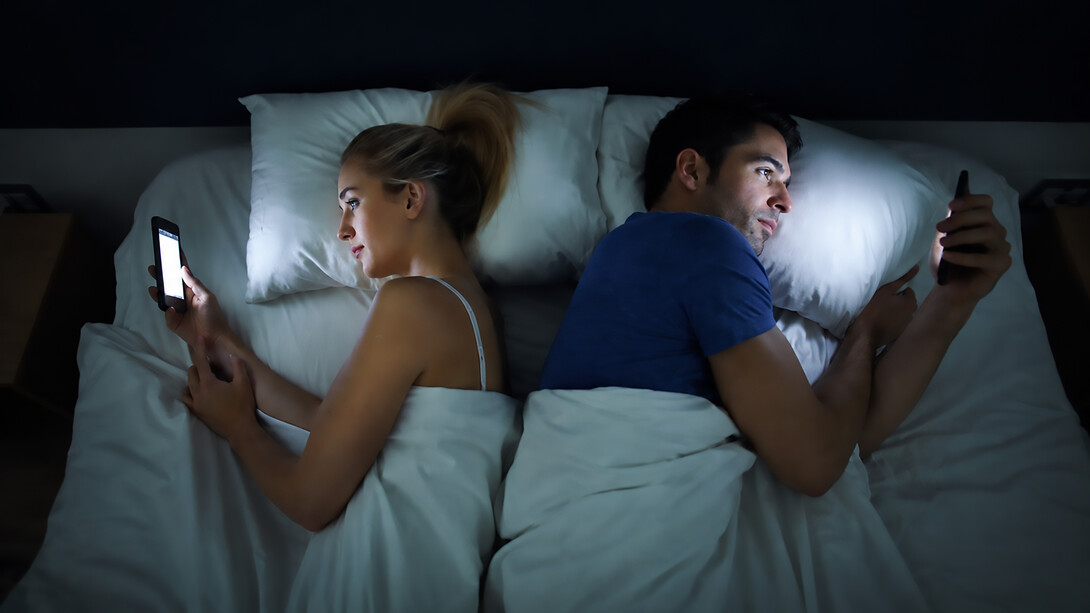
In the modern world, with the advancement of technology, people may no longer get physically tired the way they used to. Many jobs are now done in front of a screen rather than through physical labour. On the surface, technology simplifies daily life, saves time, and leaves people with more — in the words of sociologists — “leisure time". Despite all these opportunities and the fact that we no longer need physical labour as we used to, why do people always say the same thing: “I’m so tired"?
Moreover, this feeling of tiredness is not limited to those with demanding work lives; outside of mandatory activities like work and school, the time set aside for rest often does not feel truly restful. It applies even to those on vacation, relaxing at home on weekends, or working in non-physically demanding jobs.
The problem is not that people today do not have enough free time; it is that there is almost no time left when we can truly be at rest, both physically and mentally. Here, rather than physical tiredness, another problem of our age comes into play: mental exhaustion and a feeling of burnout.
Being constantly “online”
The concept of “leisure time” used in sociology does not merely refer to the hours when we are not working or in school. It also describes a time when an individual can create a personal mental space, relax, reflect, spend time on hobbies, and step away from the pressures of daily life. In the past, leisure time was associated with experiences such as going for a walk, thinking, feeling bored, having long conversations, engaging in hobbies, or simply passing the time doing nothing.
People now experience almost no moments of silence throughout the day. Whether waiting for a bus, eating a meal, before going to sleep, or even during brief intervals of just a few minutes, we turn to our phone or computer screens. Social media feeds, short videos, notifications, and an endless cycle of content constantly stimulate the mind. As a result, the human brain never truly gets a chance to rest.
In such a lifestyle, the tiredness experienced by modern individuals is largely mental rather than physical. This is because our minds remain constantly active even during downtime; the hours we set aside for rest are often consumed by new content. Consequently, despite minimal physical activity throughout the day, we end up feeling utterly exhausted mentally.
Forgetting boredom
One of the most striking aspects of this lifestyle is our growing intolerance of boredom. In the past, boredom was a natural part of everyday life; while waiting, people would daydream, think, or simply observe their surroundings. Crucially, this downtime served as a vital way for the mind to rest, as the human intellect often begins to create and connect with itself precisely when doing nothing at all.
Today, however, digital culture has normalised constant stimulation. Even the briefest moment of free time is instantly filled with a screen, and many feel an urgent need to reach for their phones during just a few minutes of silence.
Consequently, people may appear ‘free’ during the hours they are not technically working; however, a significant portion of this time is captured by an attention economy driven by algorithms. Social media applications constantly engineer new features to keep users engaged. Thus, free time is increasingly moving away from being a space that truly belongs to the individual.
Driven by this loop, the brain now perpetually expects fresh images, information, and content, making silence an increasingly uncomfortable experience. As a result, individuals not only struggle to find moments of genuine stillness, but they also find it difficult to slow down in a life saturated with constant stimuli.
At this very point, the issue transcends mere technology usage. Modern digital culture does not just keep people online; it actively conditions them to consume everything at an unsustainable pace.
The new pace of consumption: everything has a very short shelf life now
When people hear the term “consumer culture", most think only of material matters like shopping. Yet, in the modern world, consumption is no longer limited to physical objects. Today, we rapidly consume content, images, music, trends, fashion, relationships, and even experiences.
This cultural transformation explains why a video longer than a few seconds is quickly deemed "boring", or why a newly released song loses its impact within days. Even a newly purchased piece of clothing starts to feel ordinary almost immediately; everything moves incredibly fast and becomes outdated just as quickly.
Driven by this pace, the human mind is now constantly directed toward the next novelty. Social media algorithms are engineered precisely for this: more content, shorter attention spans, and a perpetual stream of notifications. As a result, people are beginning to consume not just products, but emotions and experiences as well. Today, even free time itself has turned into a zone of constant consumption.
Consequently, taking the time to reflect deeply on a movie, listening to the same song for months, or maintaining a habit for years is becoming increasingly rare. This is because digital culture constantly demands our attention for "what’s next".
This shift is not merely an individual habit; it is deeply tied to the mechanics of modern consumer society. Decades ago, Thorstein Veblen noted that consumption is not just about meeting needs but has also become a status symbol—a phenomenon now far more visible in the digital world.
People no longer just consume products; they constantly update their lifestyles, aesthetic sensibilities, and identities. Because consumer culture is fuelled by speed rather than continuity, trends have become inherently short-lived.
Perhaps this is why modern individuals grow bored of things so quickly. A mind constantly exposed to a deluge of new content naturally begins to view the slow and repetitive as worthless. Thus, it is not just objects that are being depleted, but our attention spans, patience, and very capacity for commitment—all being consumed at an ever-accelerating rate.
Conclusion: the lack of mental silence
It is possible to see that all these transformations come together at a common point. The state of being constantly online, the disappearance of the experience of boredom, and the accelerating culture of consumption actually appear to be different faces of the same structural change.
Ultimately, the problem facing modern humans is not a lack of time but a lack of empty space. We may have free moments during the day, but these moments are quickly filled with screens and information. By shrinking the spaces where we can be alone with our thoughts, digital culture keeps the mind constantly active — leaving us mentally exhausted by the end of the day.
Therefore, rest no longer simply means stopping work. If the mind remains active, physical rest is simply not enough. This is exactly why people feel exhausted even when they have more free time.
Perhaps the defining feature of the modern age is not that everything is accessible but that nothing ever truly stops. We live in a world that is constantly accelerating. Trying to keep up with a reality where everything changes and is consumed so rapidly has become exhausting.
In this endless flow, the thing we have lost the most is silence. Ultimately, our deepest need is not more content or faster consumption. What we truly need is the ability to disconnect, create a space where the mind can rest, and simply allow ourselves to be bored.