English
 Español
 Français
 Deutsch
 Italiano
 Português
Everywhere around the globe, the democratic tradition seems to be under threat, or at least serious questioning. This is due to multiple factors. Pandemics, economic crises, wars, global warming, social media, and the fear of AI – all have contributed to the general scepticism. But mostly it’s because of incompetent governance.
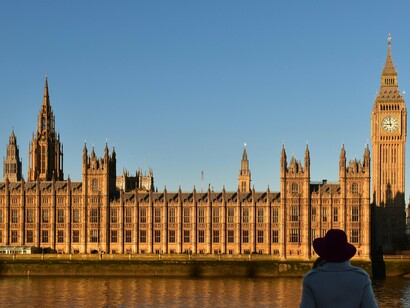
In the UK a series of unlucky circumstances and uninspired leaders have devalued the whole concept of democratically created ministry. Britain’s standing in the world appears to be diminishing exponentially, and no one seems able to correct it. Elsewhere around Europe similar conditions have developed. And in the USA, a president who is more of a loose cannon than a ship’s captain has undermined the relevance of Lincoln’s "government of the people, by the people, for the people."
Of course politicians have always been the butt of the electorate’s criticism, simply because they are never able to fulfil their electoral promises to create a perfect world. But even so, when the apparent success of China’s authoritarian regime seems to be triumphing, the whole democratic method appears by comparison to be inefficient and even impotent.
We should not be fooled.
Take a cursory study of autocracies throughout history, and it is clear that the idea of ‘the benevolent dictator’ has very rarely applied. Lord Acton’s famous dictum that "all power tends to corrupt, and absolute power corrupts absolutely" has rarely been disproved. The image of modern China under President Xi Jinping might seem to be successful, but, as with all his predecessors, beneath the carefully controlled media image, the vast mass of the Chinese people live under conditions of poverty, apprehension, and state domination. History has lost count of the millions who have perished over the centuries under such regimes in that vast country.
Then observe the effects of other non-democratic systems – from communism to theocracies to military juntas to absolute monarchies – it is difficult to find a single example amongst major nations where the economies and the welfare of populations have surpassed those of the modern democracies. Perhaps that of today’s Arab states might be quoted, and certainly if one visits such centres as Qatar, Dubai, or Abu Dhabi, the appearance of astounding affluence and orderliness is impressive. However, this is largely due to the freakish dependence of the modern world on a single commodity, oil, and the omnipotence of the ancient monarchical oligarchies – some benign, some not so much – rather than to the inherent merits of their administrations.
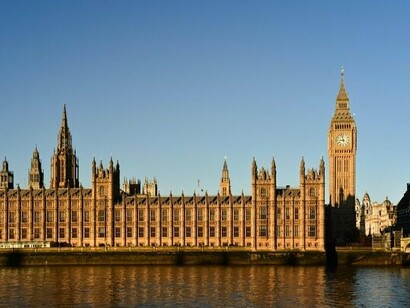
When one examines the broad example of the British Westminster system, throughout the centuries of development since Magna Carta, it seems clear that it has been by far the most successful, despite the various hiccups and aberrations. It has led to the greatest empire ever created (and before the critics start shouting, the benefits to subject nations on the whole far outweighed the failings. Witness the decline into poverty and corruption amongst African nations since the Europeans left). It has installed similarly enlightened structures in all the large Western nations, and it has found a way to make monarchy the bedrock of its constitution without it being a despotism.
The mere fact that genuinely democratic economies have quite obviously outperformed all others, and that their inhabitants live under relative conditions of liberty, good health, and the freedom to shout rude insults at their rulers, is surely evidence of their superiority. Why else would the armies of refugees from less fortunate lands risk life and limb to emigrate to such places?
One only has to walk without fear down leafy avenues to one’s favourite eatery or picnic spot, or to visit a theatre where the dramatic theme is scrutiny of the government, the police, the health system, and celebrity sex life, or, in extreme circumstances of penury, to find food and shelter somewhere within the system, and then compare it with the alternatives in non-democratic countries to realise how fortunate one is.
The world has still a long way to go to achieve universal satisfaction, and humankind, if it does not succeed in destroying itself, needs many aeons of evolution to reach a psychological sophistication that matches its technological prowess. But nevertheless, those existing within the democratic tradition need constantly to recognise their good fortune.
Churchill’s dictum, "Democracy is the worst form of government, except for all the other forms that have been tried," ever holds true, even though his other attributed comment – "The best argument against democracy is a five-minute conversation with the average voter" – is a powerful argument in the other direction. It is certainly true that the individual intelligence of populations is often deficient. The interest of the masses rarely extends beyond their pay packets and the efficiency of the local bus services.
However, amongst the democracies at least – unaffected by state-controlled propaganda – there is, in most cases, a general underlying instinct as to which rulers and which political philosophies will most benefit society, however disappointed people may be with the imperfect outcomes.