English
 Español
 Français
 Deutsch
 Italiano
 Português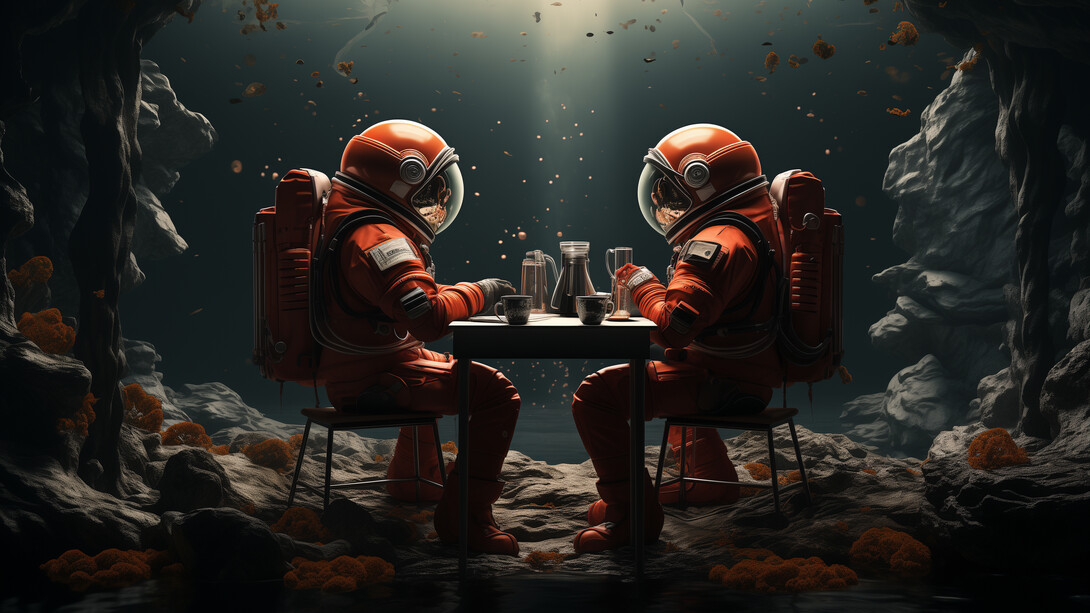
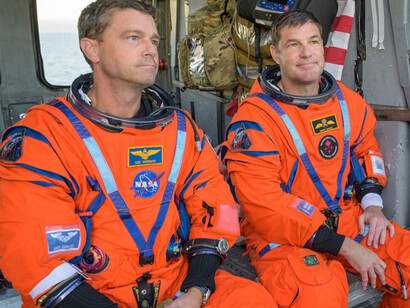
After fifty years, we are going back to the Moon. That mesmerizing satellite will finally see us return. The journey began with an uncrewed test flight in 2022 and has now carried four astronauts farther from Earth than any human has ever ventured, aboard Artemis II.
During this ten-day mission, the crew lived inside NASA's Orion capsule. The odyssey covered 1,118,624 kilometres from launch to splashdown, and the astronauts shared a pressurized living space roughly the size of a minivan. The director of the lunar exploration program said that the capsule was "bigger than it might look," and that may be true in volume. In practice, sharing a minivan with three colleagues for ten days demands a kind of psychological endurance that no training simulation can fully replicate. The real convivial challenges, I suspect, won't come from competing for window seats. They'll come from the logistical reality of eating.
This is why comfort food is so critical on a mission of this scale. As a dietitian, the question that immediately came to mind when I watched the launch was: what, exactly, are they eating up there?
In the high-stakes culture of space exploration, the food an astronaut carries is more than caloric fuel; it is a cultural flag planted in the galley. For Jeremy Hansen, the first Canadian to travel to the Moon, bringing maple syrup to the lunar far side wasn't just about the pancakes. It was a calculated choice to address some of the most unusual biological and psychological challenges of deep-space travel.
Today’s special: rehydrate and reheat pouches
The interior of the Orion spacecraft is a masterpiece of sterile functionality, but eating in space is no piece of cake. Food must be compact to fit within tight storage constraints and lightweight, because every gram adds significantly to launch costs. Above all, it must be highly nutritious: astronauts' bodies are under extreme physiological duress, and their mental and physical performance must remain at peak capacity throughout the mission.
Food also cannot produce crumbs. In microgravity, crumbs don't fall onto your lap; they float freely, posing a real threat to both sensitive equipment and human eyes and lungs. Every item must also be shelf-stable for the full duration of the journey.
Astronauts typically eat three meals and one snack per day, consuming between 1,900 and 3,200 calories depending on their individual needs and activity levels. The diet is designed to maintain health while counteracting the specific effects of microgravity on the human body.
Meals are prepared in vacuum-sealed pouches using two primary methods. The first is reheating in a food warmer, a device that resembles a briefcase and takes about an hour to deliver a warm meal. Because the Orion capsule has limited power and storage capacity, the crew ate much of their food at ambient temperature. The second method is rehydration: pouches are filled with either hot or cold water, a precious resource that is recycled aboard the spacecraft from the crew's urine, perspiration, and exhaled breath.
The menu is organized into six categories: fresh foods (fruits and vegetables); natural-form foods (nuts and tortillas); dried foods (fruits and beef jerky); irradiated foods, which are treated with ionizing radiation to eliminate microorganisms (chicken breast and smoked turkey); rehydratable foods such as spinach, juices, and beverages; and thermostabilized foods, heat-treated items like tuna salad and vanilla flan. Seasonings are entirely liquid-based. Salt is dissolved in water; pepper is suspended in oil. This prevents loose granules from floating into machinery or airways.
Fresh fruits are rationed with extraordinary care, because they are virtually the only items on the menu that offer any textural contrast. In an environment where nearly everything is soft or mushy, the sensory monotony, or what dietitians call "sensory boredom," is a genuine operational concern. Similarly, the maple cookie Hansen carried wasn't chosen only for its sugar content. It provides a mechanical snap that serves a real physiological function: stimulating the jaw muscles, which, like all muscles in a microgravity environment, are vulnerable to atrophy. Crews can lose up to twenty percent of their muscle mass in just five to eleven days. Even chewing counts.
Once food is ready, eating requires coordination. There are no tables in the Orion capsule, so astronauts use Velcro to secure their pouches. Food, like everything else in microgravity, behaves unpredictably, and eating requires constant attention to keep it from escaping.
The biology of "space anorexia"
As a dietitian, I spend a great deal of time thinking about how the environment shapes appetite. Airline food, for example, is typically loaded with extra salt and sugar to compensate for the dry cabin air that partially desensitizes taste buds at altitude.
Space introduces a different set of complications. While the pressure inside the Orion capsule closely mirrors that of Earth's atmosphere, the absence of convection in zero gravity produces a physiological phenomenon known as fluid shift: without gravity to pull fluids downward, blood and water migrate toward the head, physically blocking the sinuses and dramatically reducing the ability to smell. Additionally, aromas don't disperse in microgravity the way they do on Earth; they linger in a stagnant cloud around the food itself. The result is a sensory experience that can make even a carefully prepared meal taste like very little at all.
To compensate, astronauts tend to favour bold, high-intensity flavours, like acidic and spicy rather than the sweet and salty profiles favoured at altitude. Sriracha, horseradish, and maple syrup all share molecular structures that stimulate the trigeminal nerve, which governs the sensation of heat and pain, effectively bypassing the taste and smell receptors that microgravity has dulled.
"Space anorexia," a documented phenomenon in which astronauts gradually lose interest in their food rations, is a serious metabolic risk. In a sensory vacuum like the Orion capsule, the flavours that cut through are not a luxury. They are a clinical necessity.
On the other side, recent research published in Nature and on ScienceDirect suggests that the Artemis pantry must function almost like a pharmaceutical formulary. During Hansen's lunar orbit, his body was continuously bombarded by galactic cosmic rays, triggering intense oxidative stress at the cellular level.
This is where the concept of precision nutrition becomes relevant. Every gram of food on the manifest was analyzed for its effects on the gut microbiome and immune response. The antioxidants in maple syrup (manganese and zinc in particular), along with the omega-3 fatty acids in the salmon jerky Hansen reportedly carried, are now considered potential "radioprotectors": nutrients that may help mitigate the cellular damage caused by deep-space radiation exposure. These same compounds are also thought to help stabilize circadian rhythms disrupted by the artificial light environment inside the Orion capsule, where there is no sunrise and no sunset to anchor the body's internal clock.
M for meal and morale
When Jeremy Hansen reached for that specialized silicone pouch somewhere beyond the Moon, he was doing more than eating. He was invoking something, a sensory memory, a cultural continuity, a small act of being human in an inhuman environment.
Commensality, the act of eating together, produces measurable psychological benefits on Earth. In space, those benefits are amplified. A varied, palatable diet is not merely a comfort on a mission like this; it is a performance variable. Crews who skip meals or eat mechanically are at elevated risk for fatigue, cognitive impairment, and mood disruption. In the vast, sterile silence of the lunar far side, flavour is infrastructure.
A bit of maple syrup, floating somewhere past the far side of the Moon, turns out to be a great deal more than a condiment. It is, in the truest sense, a biological anchor. No matter how far we travel into the unknown, we remain, chemically, neurologically, and emotionally, tethered to the Earth that made us.