English
 Español
 Français
 Deutsch
 Italiano
 Português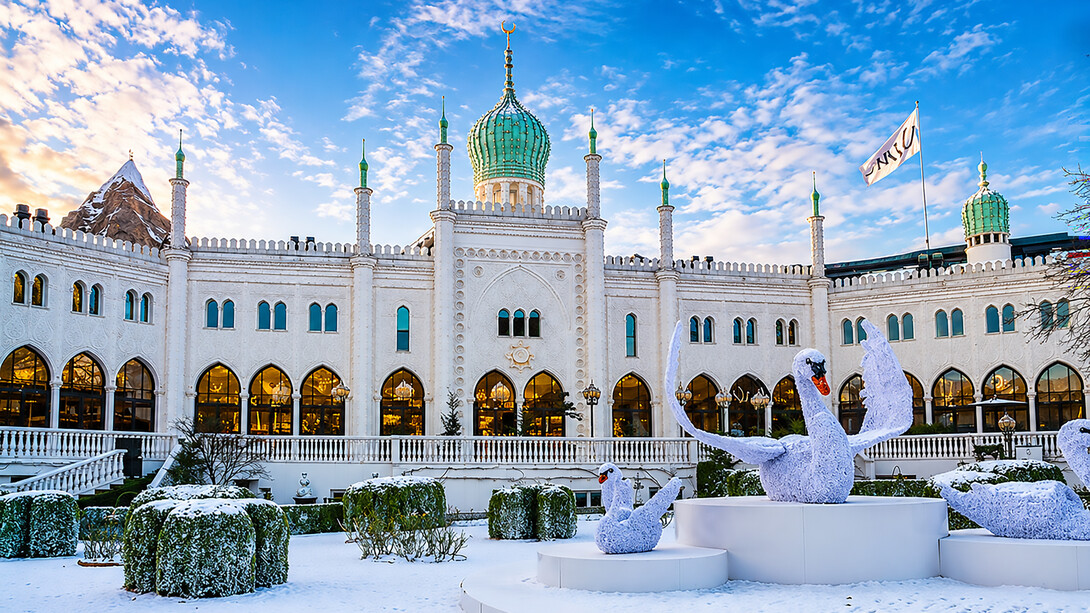
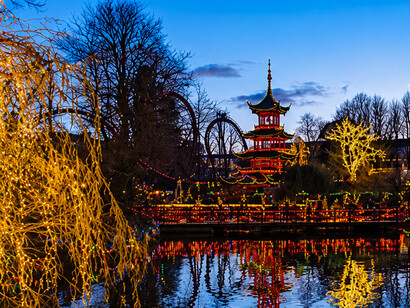
Approaching Nimb Hotel from within Tivoli Gardens, the building feels improbable. White, ornate, and faintly theatrical, it draws on Moorish and Byzantine forms that sit far from the architectural language of Copenhagen. Arches, domes, intricate detailing. It carries the same sense of displacement as Brighton's Royal Pavilion, something imagined elsewhere and placed here with complete confidence.
Within the Tivoli Gardens, it makes its own kind of sense, though most guests do not arrive this way.
Arrival by car is, of course, from the street directly opposite Copenhagen Central Station, and it is a far less composed experience. The road is busy, taxis hesitate, and drop-offs feel improvised. Doors open into a fast-moving cycle lane, with cyclists passing at speed. You step out quickly, gather yourself, and move inside. It does not feel like the entrance to a grand hotel.
And then you cross the threshold.
The shift is immediate. The fragrance arrives first, carefully chosen and unmistakable. Sound softens, the pace drops, and within seconds the exterior disappears.
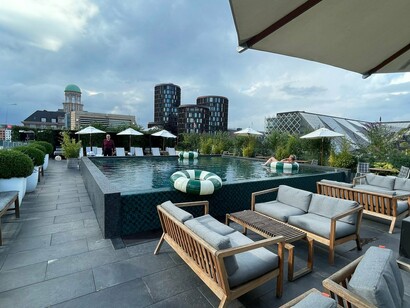
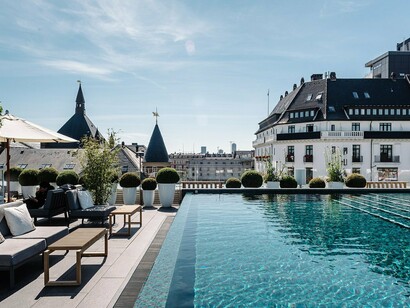
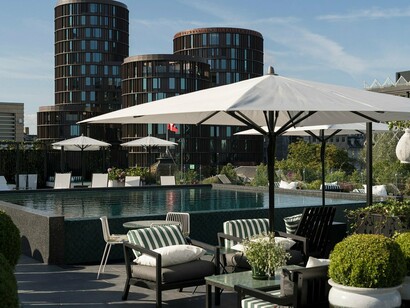
The building dates back to 1909, designed by Knud Arne Petersen in a Moorish style that still feels improbable in Copenhagen today. What defines the hotel now is how that original structure has been extended. A modern wing, added by Pei Cobb Freed & Partners, sits quietly behind the historic façade. The language shifts to glass, openness, and a strong relationship with light. Tivoli is drawn into the building through carefully judged glazing so that the gardens remain present even when you are inside.
The original structure holds its theatrical identity, while the extension brings clarity and calm. The balance between the two gives the building its particular character.
The interiors, shaped by René Jasper, follow the same thinking. Antique pieces appear sparingly, placed with purpose and then left alone.
We stayed in a junior suite with a terrace. The room opens outwards through pale tones, quiet materials, and a sense of space that feels settled rather than styled. Glass doors slide away, and the terrace becomes part of the room.
There are details that stay with you: a dark wood escritoire, properly weighted and placed where it can be used; fresh lemons within reach; and flowers from the hotel’s florist, muted in colour and lightly scented so that they sit within the room rather than announcing themselves.
The bathroom continues that thinking. Generous, calm, and practical, with bath products, a loofah, and everything arranged with functionality in mind.
On arrival, the concierge mentioned that a rock concert would be taking place in Tivoli that evening, beginning at 10:30. The prospect was not encouraging. In practice, however, it made little difference. Once inside the room, the outside world receded almost entirely. The concert continued somewhere beyond the glass, but it was barely noticeable.
Below ground, the hotel opens out again in a different way. A large hammam sits in the basement among warm stone, soft light, and quiet surroundings. During our visit, the space remained largely empty. Alongside it is a fitness centre, laid out with a wide range of equipment covering different muscle groups.
Dining forms a significant part of the hotel experience.
Breakfast, served in the main restaurant, establishes the general approach of the kitchen. One of the first details that stood out was the hollandaise: warm, balanced, and carefully prepared. Small details like this often shape first impressions of a kitchen.
Across several mornings, the approach remained consistent. Ingredients were handled carefully, flavours remained restrained, and the kitchen maintained a steady rhythm.
We had two lunches at Fru Nimb. A lobster bisque stood out for its concentrated flavour and richness. A Wiener schnitzel followed, evenly cooked with a light coating. The open-faced shrimp sandwiches reflected a similarly restrained approach.
Afternoon tea at Cakenhagen moves into a different register. Danish pastries are already familiar to many visitors, but the versions served here take a more delicate approach. Layers of butter and pastry are handled lightly, with subtle notes of cardamom and restrained sweetness.
One evening, we ate at Goldfinch and were reminded of the wider range of dining experiences across the city. We ordered Peking duck expecting something more traditional in character. Although competently prepared, it felt somewhat distant from the depth usually associated with the dish.
What anchors the experience, though, are the people.
Under the direction of Maria Oldenbjerg, the hotel has developed a distinct internal culture. She was brought in over a decade ago and has built a team around her that feels cohesive and stable, drawing on colleagues she has worked with before while also developing others within the hotel.
There is a collegiate spirit to the staff, a sense of people working together rather than performing roles in isolation. Interactions feel attentive without becoming overly formal. There is also a noticeable awareness of the hotel’s identity and atmosphere.
Nimb carries a certain theatricality, and the staff appear comfortable within that setting.
Copenhagen provides the wider context.
We spent a morning at the Thorvaldsens Museum, one of the more distinctive spaces in the city, both for its architecture and for what it contains. Before visiting, I knew little of Bertel Thorvaldsen (1770–1844), who spent much of his career in Rome before returning to Copenhagen late in life to considerable acclaim.
What struck me most was not scale or reputation, but sensitivity.
His work holds something quieter, a way of expressing feeling through posture and gesture rather than drama. The placement of a hand on a shoulder, the slight turn of a head, and figures that seem aware of one another in a way that feels almost contemporary despite their classical form.
There is restraint in it and a kind of emotional clarity.
The museum itself reinforces that experience through strong colour, ordered space, and a sense that everything has been arranged to slow visitors down and encourage closer observation. There is something unusual about a sculptor being given a building entirely of his own, particularly one that reflects his sensibility so closely.
Later, at the Copenhagen Opera House, the scale changes again. Designed by Henning Larsen, the building sits across the harbour with a clarity that feels entirely deliberate.
We saw a production of Don Pasquale on April 11, the Glyndebourne Festival Opera staging performed here by the Royal Danish Opera. Directed by Mariame Clément, the production carried wit and control without becoming excessive. Conducting duties across the run were shared by Robert Houssart and Vito Cristofaro, and the performance we saw maintained a strong musical consistency throughout. The principal cast, including Louise McClelland as Norina, approached the production with clarity and confidence.
Back at Nimb, the contrast settles again.
Outside, movement. Inside, calm.
The hotel occupies an unusual position within the city: architecturally distinctive, geographically unexpected, and carefully resolved. It takes elements that might otherwise feel disjointed and brings them into a more unified whole.
That sense of coherence remains one of the defining aspects of the experience.