English
 Español
 Français
 Deutsch
 Italiano
 Português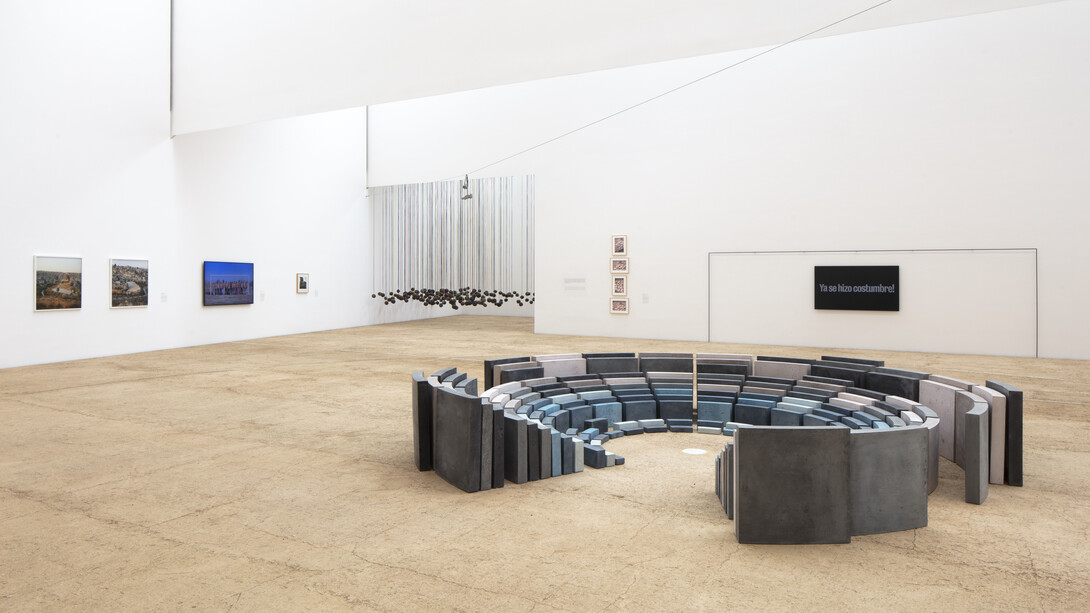
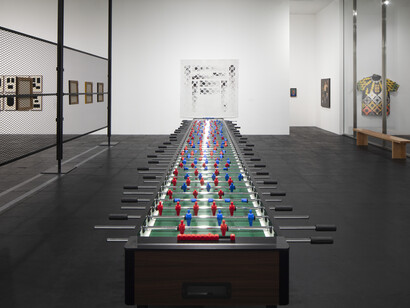
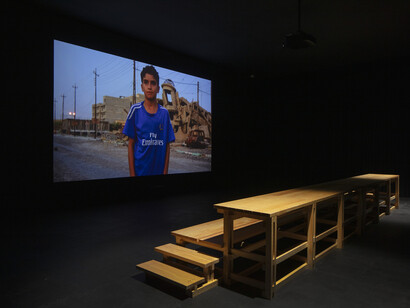
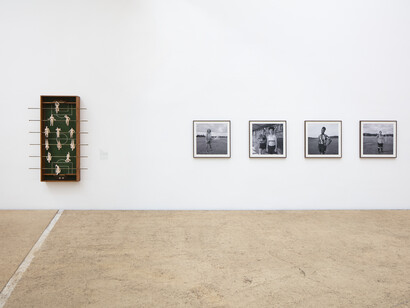
In conjunction with the 2026 World Cup, Museo Jumex will present Football and art. A shared emotion through July 26, 2026. This exhibition explores the various intersections between contemporary art and soccer as cultural, aesthetic, and social expressions.
Curated by Guillermo Santamarina, the exhibition addresses themes of gender, community, identity, and globality, while analyzing both the playful power of games and their critical and political dimensions.
Santamarina states, “I see soccer as a field of thought, critical and deliberative. A playground for creativity. A universe that intertwines with art, sharing similar parame ters, related challenges and achievements, and often, that same emotion: the feeling of being alive.”
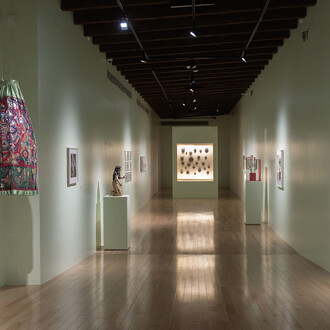
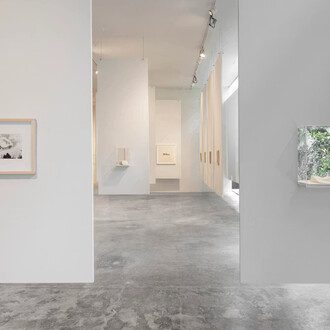
Through paintings, sculptures, installations, photographs, and videos—encompass ing both historical works and pieces commissioned specifically for this exhibition— Football and art. A shared emotion examines how this sport, extending beyond the field and the stadium, functions as a common and universal language.
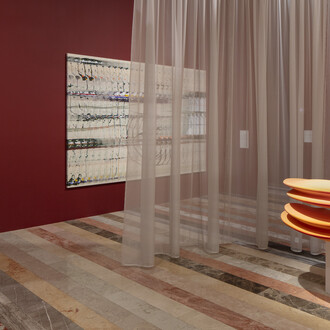
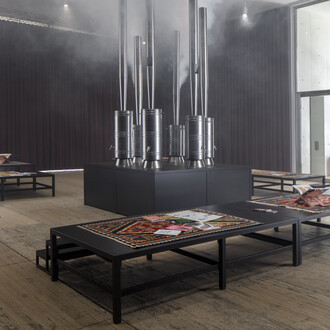
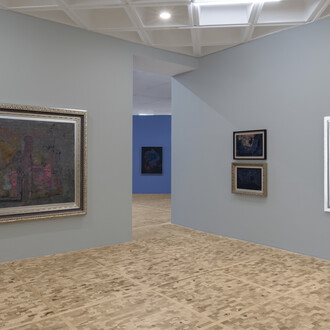
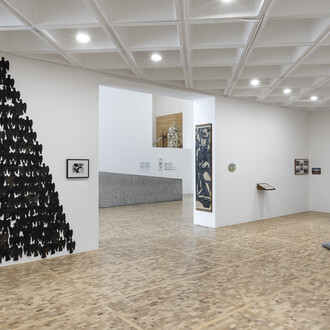
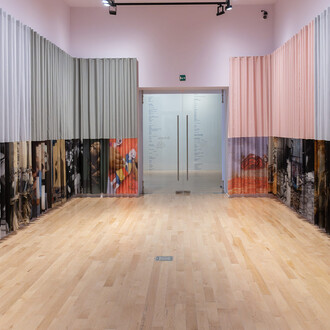
The exhibition design, created by architect Mauricio Rocha and his studio, offers a spatial reinterpretation of the elements that shape the soccer experience. Drawing on references to dirt fields, locker rooms, and structures specific to the game, the design transforms the galleries into an environment that links the global spectacle of the stadium with the everyday practices of the sport. It establishes a dialogue be tween architecture, the body, and visual culture that accompanies and expands the exhibition route.
For this exhibition, Museo Jumex commissioned works from artists Diego Berruecos, Iñaki Bonillas, Sofía Echeverri, and Tercerunquinto.
The commissioned works address, through different artistic languages, the ways in which soccer articulates collective imaginaries, systems of representation, and structures of cultural circulation, while attending to both its affective dimensions and its social and political implications.
In the Museo Jumex plaza, the collective Tercerunquinto, composed of Gabriel Cázares and Rolando Flores, presents Tribunas (2026), a sculptural installation con ceived specifically for this setting. The work is based on the collective’s practice of exploring the boundaries between public and private spaces. The installation con sists of seats salvaged from the recent renovation of the Azteca Stadium, which have been affixed with steel plaques bearing the names of Mexican soccer players. This evokes collective memory, national identity, and the rituals of soccer.
The installation comes to life through a public program that includes literary, perfor mative, and musical activities, as well as the broadcast of sports games, emphasiz ing encounter and shared experience as central dimensions of the piece.
Football and art. A shared emotion features the following artists: Franco Aceves Humana, Francis Alÿs, Marco Arce, Gina Arizpe, Gustavo Artigas, Diego Berruecos, Iñaki Bonillas, Mark Bradford, Alejandro Cartagena, Maurizio Cattelan, Leda Catunda, Nicola Costantino, Rodolfo de Florencia, Wim Delvoye, Sofía Echeverri, Darío Escobar, Pedro Friedeberg, Gabriel Garcilazo, Gabriela González Leal, Napoleón Habeica, Jonathan Hernández, Graciela Iturbide, Clotilde Jiménez, Néstor Jiménez, Jeff Koons, Iván Krassoievitch, Alejandra Laviada, Mauricio Limón, Pablo López Luz, Sarah Lucas, Jesús Lugo, Roman Manfredi, Natalia Marmolejo, No Martins, Francisco Mata Rosas, Manuel Mathar, Santiago Merino, Ricardo Milla Hierro, Marta Minujín, Rodrigo Moya, Hassan Musa, Wangechi Mutu, Newton, Lagartijas Tiradas al Sol, Juan O’Gorman, Damián Ortega, Alberto Perera, Paul Pfeiffer, Ilán Rabchinskey, Carlos Reygadas, Manuel Rocha Iturbide, Mauricio Rocha, Betsabeé Romero, Oswaldo Ruiz, Sector Reforma (Javier Cárdenas Tavizon, Santino Escatel, Alejandro Fournier), Renard, Melanie Smith, and Rafael Ortega, Juergen Teller, Tercerunquinto, Francisco Toledo, Benjamín Torres, Marco Treviño, Adam Wiseman, Marek Wolfryd, Xie Nanxing, Ana Zambrano, Ángel Zárraga, and Nahum B. Zenil.
With this exhibition, Museo Jumex reaffirms its commitment to artistic practices that engage with popular culture, sports, and everyday life. Football and art. A shared emotion not only celebrates the aesthetics of the game but also invites reflection on soccer’s power to bring communities together and transcend borders, at a time when the entire world is united around the sport.