English
 Español
 Français
 Deutsch
 Italiano
 Português
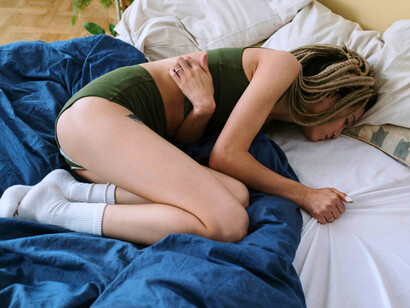
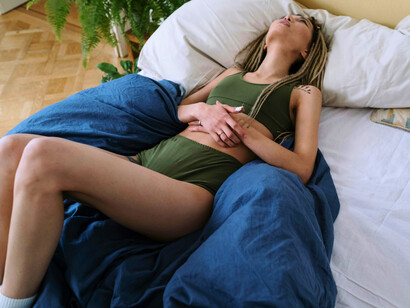
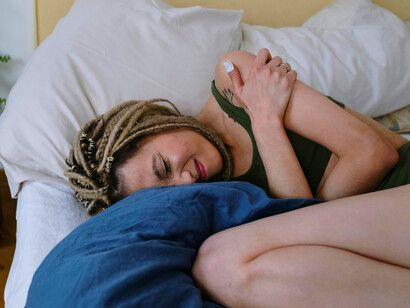
There is an invisible emotional labour that many girls begin carrying long before they fully understand their own bodies. It is the work of managing pain in silence, planning daily life around periods, hiding discomfort, and learning often very early that menstruation is something to handle quietly and alone. This labor is rarely acknowledged, yet it shapes how girls experience school, health, and public space from adolescence onwards.
For many girls, the first lessons about menstruation are not learnt through open conversation or comprehensive education but through uncertainty and partial explanations. In classrooms, menstrual health is often reduced to simplified biological facts: the uterus, the cycle, ovulation, and reproduction. While these elements are important, they leave out what matters most to those experiencing menstruation pain, irregularity, emotional impact, and the question of what is normal and what is not.
This gap in education represents the first structural failure girls encounter. They are taught how menstruation functions in theory, but not how it is lived in reality. Severe pain is mentioned but rarely explained. Missed or irregular periods are normalised without guidance. Girls are rarely told when pain is no longer normal, when symptoms deserve attention, or when seeking medical care is necessary. Questions are often discouraged, rushed, or answered in ways that reinforce silence rather than understanding. Rather than empowering girls to know their bodies, education conditions them to endure discomfort without clarity.
Beyond the classroom, menstrual health is shaped by a dense web of social norms that regulate how girls and women are expected to behave, speak, and exist while menstruating. In many societies, periods are not simply private; they are actively silenced. Girls are taught explicitly or implicitly that menstruation should not be discussed in front of men, that it should be hidden, and that acknowledging it openly is inappropriate or shameful. In some contexts, women are expected to isolate themselves, withdraw socially, or “tough it out,” as if menstruation itself were a disruption rather than a natural bodily process.
This silence produces shame. Saying something as simple as “I am on my period” becomes difficult, sometimes even unacceptable. As a result, girls and women develop coded language euphemisms, jokes, and secret expressions to communicate among themselves without being understood by others. What appears playful on the surface reflects a deeper reality: menstruation must be concealed, and those who experience it must adapt quietly.
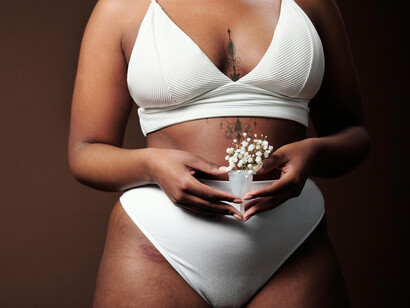
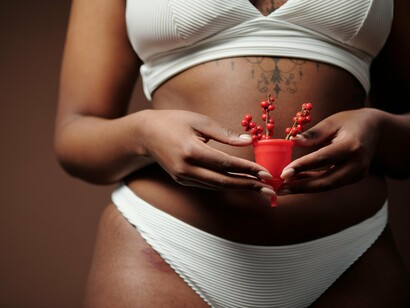
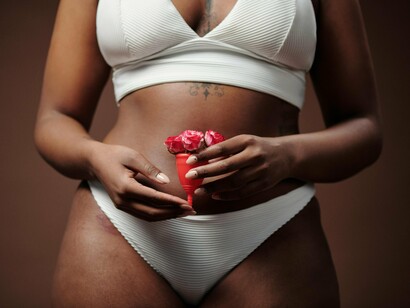
Everyday interactions reinforce this logic. Even purchasing menstrual products can become an exercise in concealment. Pads or tampons are often wrapped in layers of paper and hidden inside bags, as if their visibility were inappropriate. This ritual of over-wrapping sends a quiet but powerful message: menstruation should not be seen. Menstrual products are treated differently from other essential items, and women are expected to participate in hiding what their bodies naturally require. These practices may seem minor, but they normalise the idea that menstrual health is something to be discreet about, rather than openly acknowledged.
At the same time, this silence reinforces another imbalance, one in which men are not expected to understand menstruation at all. Fathers, brothers, partners, and even educators are often excluded from conversations about menstrual health, as if women’s bodies were too private, too complicated, or simply irrelevant to collective understanding. The burden of adjustment falls entirely on women, who are expected to endure pain, maintain productivity, and show resilience without visible discomfort. What is framed as strength is often forced endurance.
In this context, pain is mistaken for weakness, and rest is mistaken for failure. Yet menstruation is not a sign of fragility. It is the body communicating, regulating, and renewing itself. Treating it as something that must be hidden or overcome rather than understood reflects how deeply social norms continue to shape whose discomfort is acknowledged and whose is ignored.
This normalisation of silence extends into policy choices. In many countries, menstrual products are taxed as non-essential goods, making access dependent on income and privilege. For women and girls living in poverty, menstruation becomes a recurring financial burden that affects health, education, and daily participation. In other contexts, the challenge is not cost alone but availability and infrastructure. Schools without adequate sanitation, privacy, or supplies force girls to miss classes not because they cannot learn, but because systems fail to accommodate their bodies.
At the same time, some governments have begun to challenge this logic. Policies such as reducing or eliminating taxes on menstrual products, recognising menstrual pain in labor frameworks, or introducing paid menstrual leave reflect a growing acknowledgement that menstruation is a legitimate health and workplace issue. These measures do not grant special treatment; they recognise reality. They challenge the expectation that women must function as if their bodies do not exist.
Yet policy reform alone is not enough. At the heart of menstrual health lies education—comprehensive, honest, and inclusive education that treats menstruation not as a source of embarrassment but as a subject of knowledge and empowerment. This education must begin early, evolve with age, and address not only biology but also lived experience: pain, cycles, mental health, and bodily awareness. Crucially, it must include all genders.
Excluding boys and men from menstrual health education reinforces the very silence that sustains stigma. When menstruation is treated as “women’s business,” responsibility is unevenly distributed, and understanding remains limited. Inclusive education allows fathers, brothers, partners, educators, and policymakers to engage with menstrual health as a shared social reality. It replaces discomfort with understanding and distance with responsibility.
Empowerment, in this sense, is not about romanticising menstruation or framing it as strength through suffering. It is about knowledge, autonomy, and dignity. Knowing one’s cycle, recognising warning signs, and feeling entitled to rest or care are not privileges; they are rights. When girls are equipped with this knowledge, they are better positioned to remain in school, participate in public life, and advocate for their well-being.
Ultimately, how societies address menstrual health reflects how they value girls and women more broadly. When menstrual needs are acknowledged, supported, and normalised, girls are less likely to fall behind, withdraw, or be excluded. Their participation increases not only in classrooms but also across social, economic, and political spaces. Investing in menstrual health is therefore not a marginal concern; it is a foundation for equality. When girls are supported, societies grow stronger and more just.