English
 Español
 Français
 Deutsch
 Italiano
 Português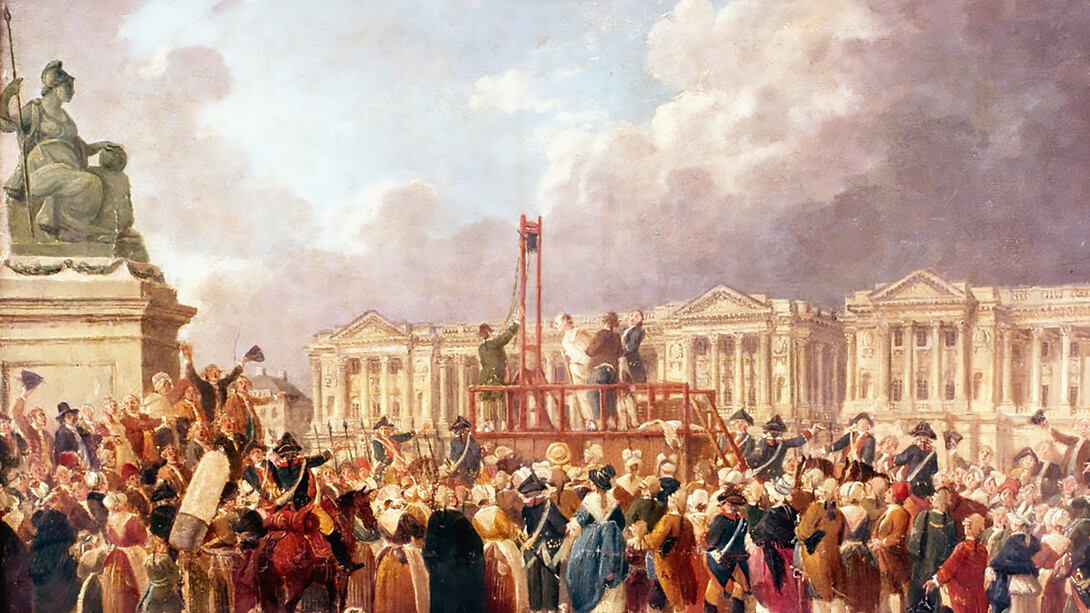
The individual is a grain of sand among other grains of sand, which the wind stirs up at will.
(Gustave Le Bon)
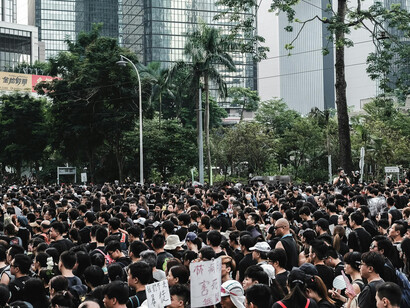
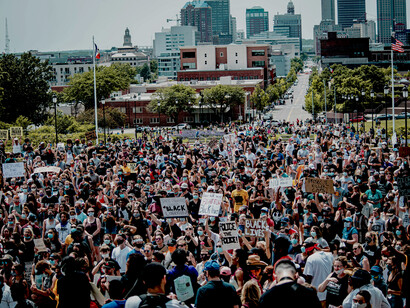
Gustave Le Bon’s seminal work, The Crowd: A Study of the Popular Mind, provides a chillingly accurate framework for understanding the volatile nature of collective human behaviour. According to Le Bon, when individuals merge into a crowd, their conscious personality vanishes, replaced by a "collective mind" that is impulsive, irritable, and governed by subconscious instincts rather than reason. This transformation is the engine behind some of history’s most significant political shifts.
The power of the masses in overthrowing regimes
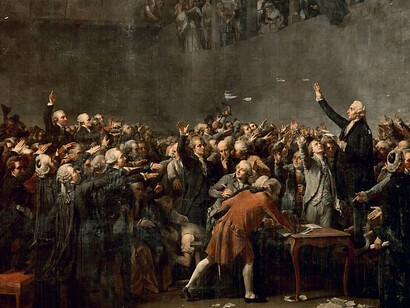
History is replete with examples where the sheer momentum of a crowd has toppled seemingly immovable systems. Le Bon notes that crowds are naturally inclined toward rebellion against weak authority, yet they ironically bow only to strong, assertive power.
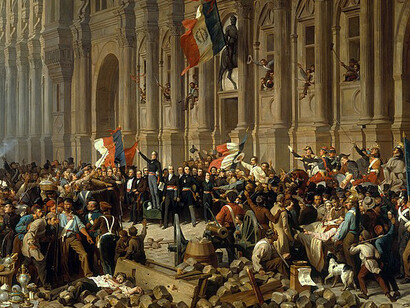
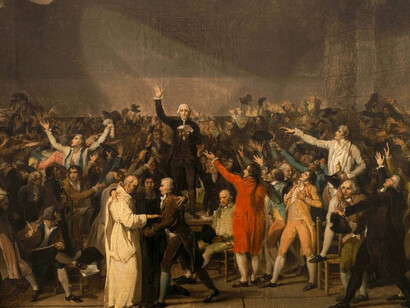
The French Revolution (1848): the "roaring and miserable" crowd that attacked the Tuileries Palace demonstrated the sheer force of numbers. Interestingly, while capable of violence, this crowd also exhibited a strange "moral" restraint, refusing to steal valuable artefacts despite their poverty.
The September Massacres: Le Bon uses the sociological observation of "Taine" to show how crowds can commit atrocities (like the September Massacres) while simultaneously adhering to a distorted sense of duty—returning valuables found on victims to revolutionary committees.
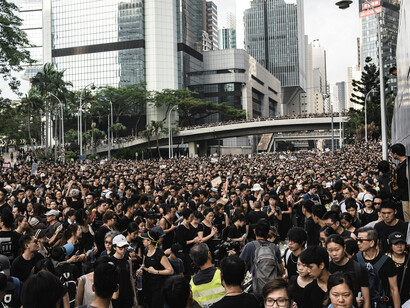
Modern Arab Spring: although not in Le Bon’s time, the dynamics of Tahrir Square in Egypt mirror his theory. The individual’s sense of responsibility vanishes as the "power of number" takes over, allowing them to face tanks and security forces with a courage that an isolated individual would likely lack.
The role of clergy and political parties in mobilisation
Le Bon argues that crowds do not follow logic; they follow leaders who can stir their emotions. Religious and political leaders act as "hypnotists", using simple, repetitive, and violent slogans to capture the collective imagination.
Religious Zeal: clergy often leverage the "religious sentiment" inherent in crowds. By framing a political struggle as a divine mission, they can lead the masses to extreme acts of sacrifice or cruelty. The Crusades are a classic historical example where masses were mobilised to "liberate" sacred lands based purely on faith-driven images.
Political demagogues: Political parties often use "affirmation and repetition" to instil ideas. For instance, how leaders like Maurice Barrès or socialist leaders move crowds not by rational debate—which crowds cannot tolerate—but by identifying a common enemy, such as the "grand bourgeoisie" or specific ethnic groups, to ignite ancestral hatreds.
Brainwashing through dogmatic and reactionary concepts
The crowd’s mind is a fertile ground for myths and illusions. Le Bon explains that crowds think in images, and these images often have no logical connection to reality.
Myth-making: simple events are distorted into grand legends. A crowd can easily be convinced of a "reactionary" conspiracy or a "utopian" promise because they cannot distinguish between the subjective image in their heads and objective reality.
The illusion of truth: once an idea—no matter how regressive—is planted, it becomes an absolute certainty. The crowd "does not doubt for a moment" what it believes to be true or false. This is how dogmatic ideologies take root, turning individuals into "puppets" guided by a will not their own.
The role of social media in moving the masses
In the modern era, social media has become the ultimate "accelerant" for Le Bon’s theories. While Le Bon wrote about physical gatherings, digital crowds exhibit the same psychological traits:
Contagion: ideas spread like a virus across platforms. The "anonymity" of the internet provides the same lack of responsibility that a physical crowd offers, emboldening individuals to act aggressively.
Echo chambers: social media algorithms reinforce "images" and "slogans", preventing any "contradiction or discussion", which Le Bon identified as things a crowd cannot tolerate.
Rapid mobilisation: the "instantaneousness" of digital communication allows for the "sudden obstacles" to be broken with "furious madness", as seen in flash protests or online cancel culture.
Yet Le Bon’s theory also raises an unsettling question for contemporary democracies: if crowds are so easily manipulated, what happens when political legitimacy itself depends on mass mobilisation? Modern populist movements across the world increasingly rely on emotional spectacle rather than rational discourse. Leaders cultivate outrage, fear, and identity-based loyalty because these emotions travel faster than facts. In digital environments saturated with misinformation, conspiracy theories, and algorithm-driven outrage, the collective mind becomes even more unstable. The danger lies not only in violent revolutions but in the gradual erosion of critical thinking itself. When societies begin to value emotional affirmation over evidence, crowds cease to be temporary gatherings and instead become permanent psychological conditions shaping everyday political reality.
Conclusion
The "Psychology of the Masses" reveals that the individual, once part of a crowd, descends several rungs on the ladder of civilisation. Whether driven by a priest, a politician, or a trending hashtag, the crowd remains a powerful, feminine, and often destructive force that shapes the destiny of nations.
References
Le Bon, G. (1895). The Crowd: A Study of the Popular Mind. Project Gutenberg.
Price, R. (1987). A Concise History of France. Cambridge University Press. (For historical context on the French Revolution of 1848).
Kramer, A. D. I., Guillory, J. E., & Hancock, J. T. (2014). “Experimental evidence of massive-scale emotional contagion through social networks.” Proceedings of the National Academy of Sciences, 111(24), 8788–8790.