English
 Español
 Français
 Deutsch
 Italiano
 Português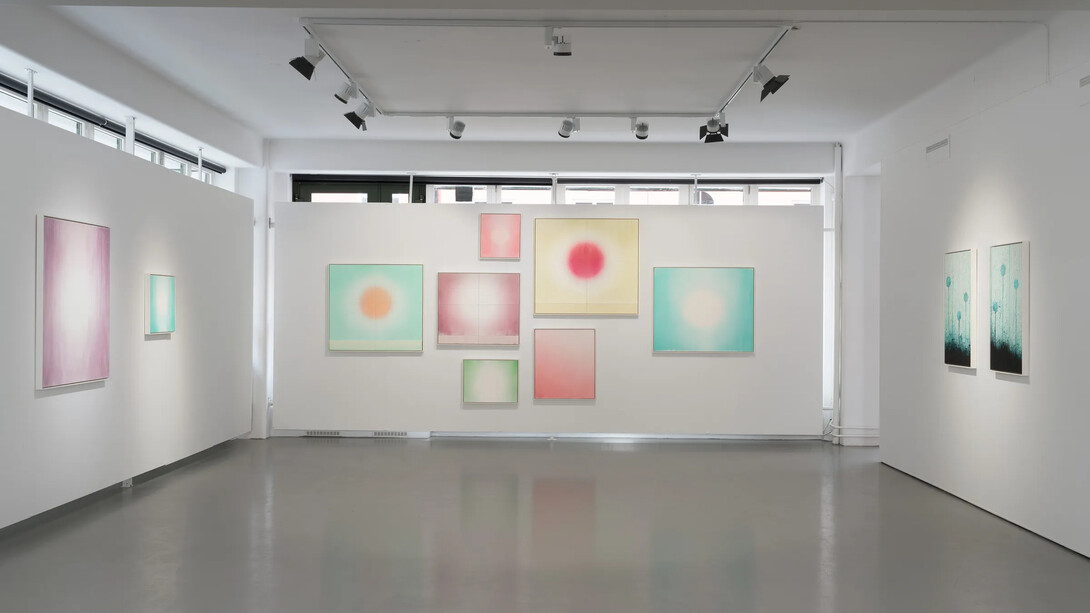
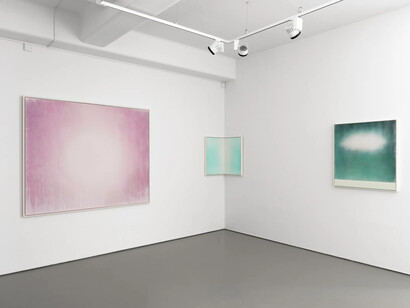
In the exhibition Equilibrium, Joakim Eneroth opens a metaphorical portal to a parallel reality in which a state of parhelia prevails—an optical phenomenon where multiple suns appear in the sky. This phenomenon, also known as ”sun dogs” or ”mock suns”, occurs when airborne ice crystals refract the sunlight.
The sun is a recurring motif throughout the exhibition. As the primary source of all life on Earth, it can be understood as a force that establishes balance and equilibrium. Eneroth also regards it as a symbol of abundance—not of consumption, but of light, energy, and vitality.
The exhibition title alludes to the societies depicted in Ursula K. Le Guin’s science fiction novel Always coming home and James Hilton’s Lost horizon, where people live in coexistence with their surroundings. The exhibition weaves together a critique of consumer society and its environmental impact with the notion of ecological healing—that is, how the relationship between humans and nature can be restored.
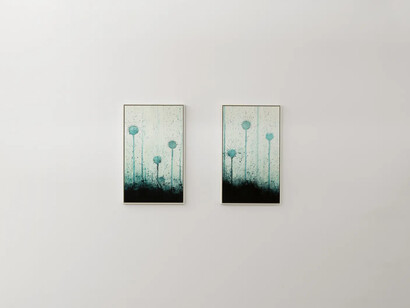
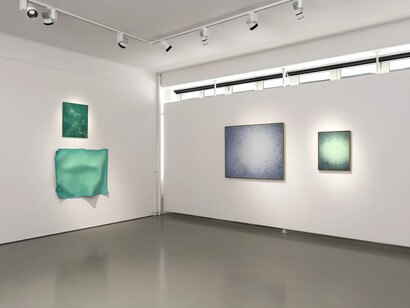
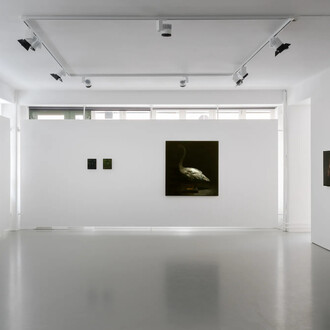
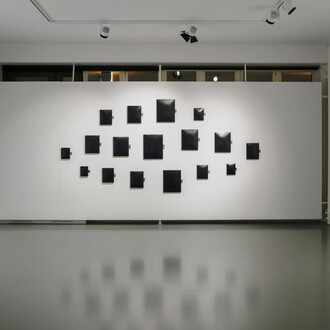
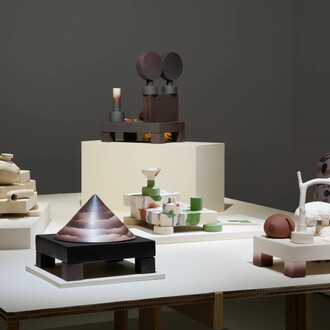
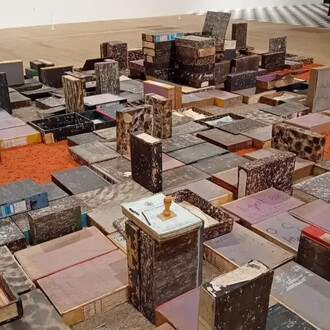
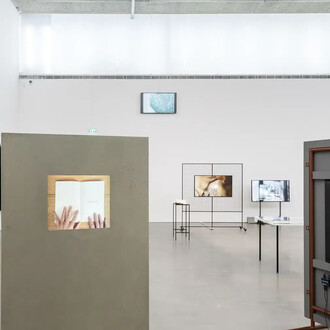
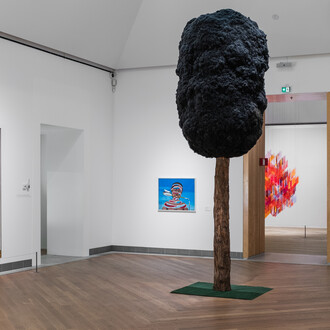
These ideas materialize in various ways throughout the artistic process. Eneroth, known for his multi-disciplinary art, presents both paintings, sculpture, and lens-based works in the exhibition. In the series of paintings called Parhelia – Alkaline sun, he has mixed small amounts of various cleaning agents with acrylic paint and then immersed the works in lime paint. The process reflects how liming is used to restore acidified lakes. Cleaning agents, soaps, and laundry detergents are among the substances that contribute to acidification, while lime helps to neutralize the acidity and restore pH levels. Eneroth's work thus brings together problem and solution in a single, material gesture.
The wall sculpture Organic transition brings to mind another method of ecological restoration: aluminum treatment. The method is used to restore polluted lakes and waterways by adding aluminum, which turns the water turquoise blue.