English
 Español
 Français
 Deutsch
 Italiano
 Português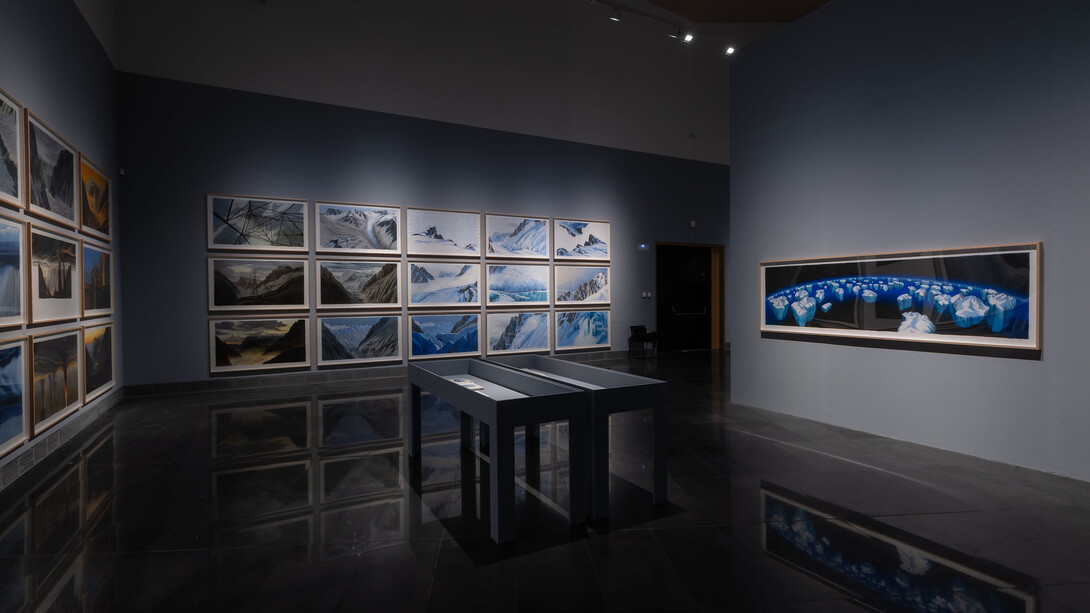
Lazkano reflects on human-induced climate change through the reproduction of the same place across different periods and historical moments.
The natural context in which we live is marked by a situation of climate change largely caused by human action, which is currently being partially addressed and, to some extent, reversed. However, despite scientific evidence, part of society remains reluctant to accept this change. It is within this context that Natura Fugit is situated, a project created by Jesús Mari Lazkano (Bergara, 1960) as part of the Museo Universidad de Navarra’s Tender Bridges artist residency program.
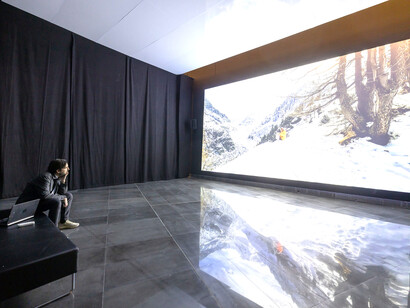
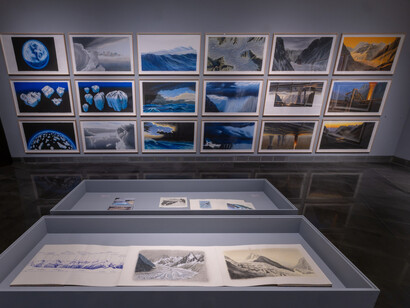
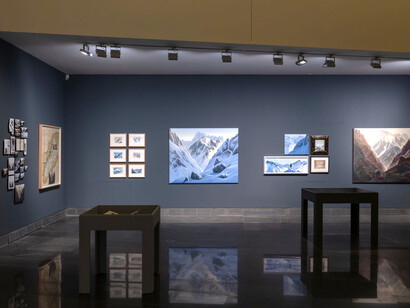
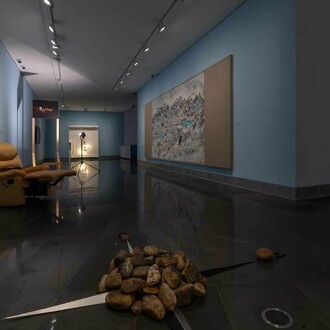
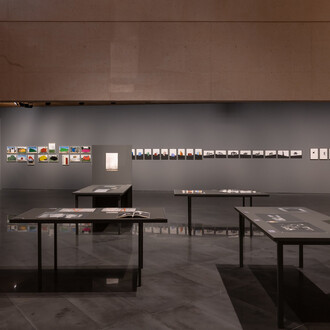
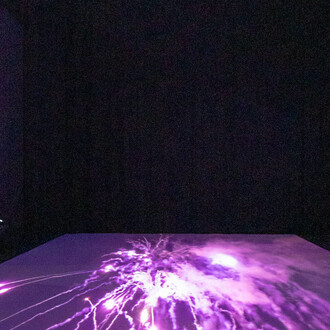
According to the artist, art can act as a driver of awareness, as its ability to move people emotionally provides a perfect “bridge” to spark the necessary debate and change our behavior—not through propaganda, but through sensitivity and reflection. In this work, Lazkano draws on the transformation process affecting the landscape and nature, focusing in this case on the Mer de Glace glacier in Chamonix, in the Alps. His work captures the light, atmospheric, meteorological, and spatial changes experienced by the glacier, blending them with historical images such as paintings, postcards, early photography, and diverse iconographic material. In doing so, he assembles a range of “gazes” that result in a film and a series of pastel drawings. As he himself notes, this line of work is based on William Kentridge—his most well-known reference—and his process of drawing over drawing to create stop-motion films. Lazkano follows a similar method, using nearly 3,000 drawings that are destroyed and reconstructed throughout the cinematic process, ultimately concealed beneath a final layer composed of 122 definitive drawings. The film offers a temporal journey through the transformation of the landscape, from the last Quaternary glaciation to a near future marked by the complete disappearance of ice, the occupation, urbanization, and destruction of the environment, its extinction, and a subsequent natural collapse from which a “super-nature” ultimately emerges, occupying a new place in the world.
For the realization of this project, Lazkano starts from an image in the MUN collection, Mer de glace (1875) by S. Thompson, which depicts the view toward the Grandes Jorasses from the Montenvers refuge in Chamonix. Lazkano connects this photograph with the painting High mountain region (1824) by Caspar David Friedrich (1744–1840), one of his main references, painted in the same location.