English
 Español
 Français
 Deutsch
 Italiano
 Português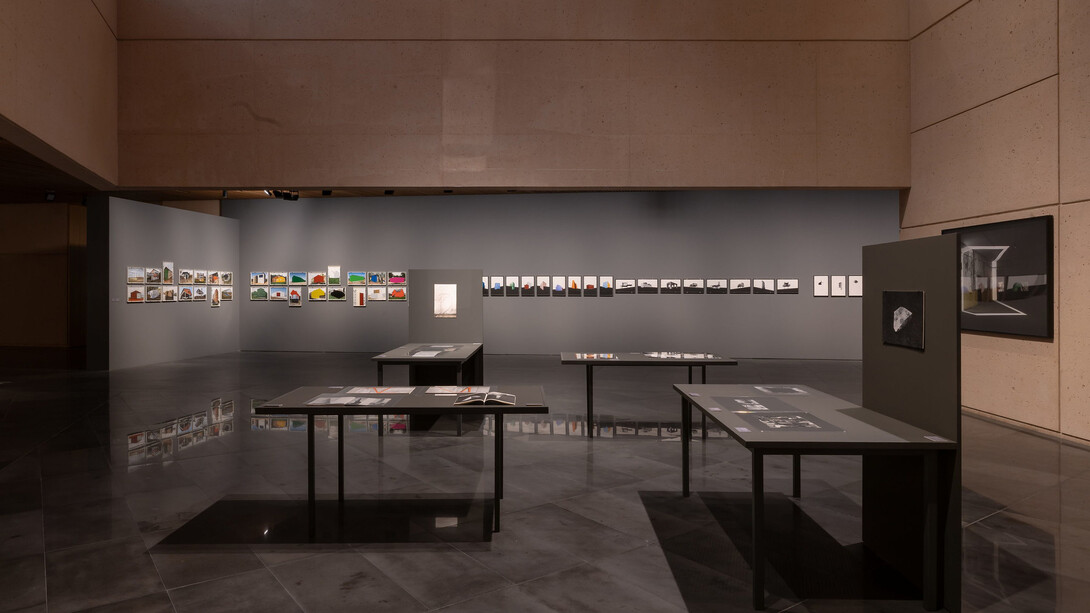
A compilation of the work of the artist Nicolás Combarro, following his encounters with constructions, their remains, or structures located in urban, semi-urban, or rural territories.
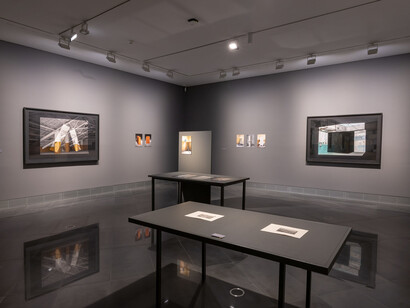
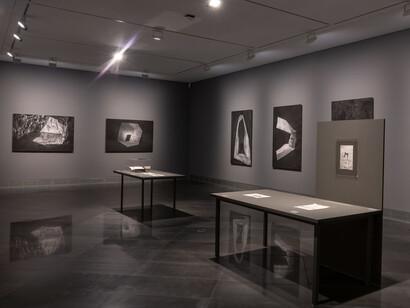
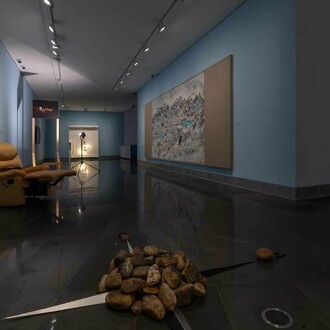
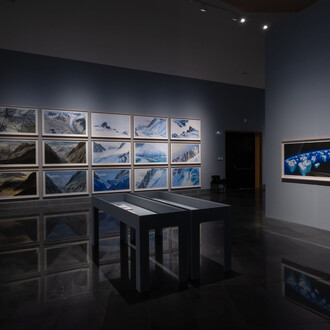
The exhibition Looking the other way presents a cross-analysis of six of Nicolás Combarro’s most recent series: Black series, Hidden architecture, Spontaneous architecture, Reveal displace, Soterranei, and The matter of silence, the latter part of the Museo Universidad de Navarra’s Tender bridges artist residency program.
Nicolás Combarro (A Coruña, 1979) begins from an encounter with the real, establishing a dialogue with constructions, their remains, or structures that usually go unnoticed and that the artist discovers while traversing urban, semi-urban, or rural territories. These vestiges are the starting point of his work. After documenting and researching them, he intervenes in and photographs these remnants of industrial buildings, abandoned structures, self-built constructions, foundations, shelters, and sites of confinement and repression. In this way, he has built a catalogue of images and documentation that allows him to investigate the ideologies embedded in different types of architecture, as well as how the relationships between reality and fiction, memory and forgetting, or between the individual and the collective, are articulated in the construction of the visual regime.
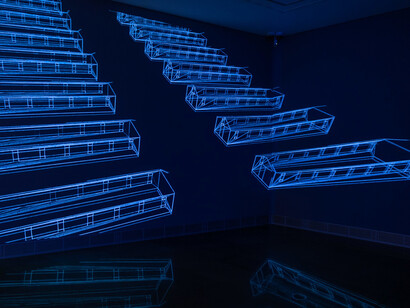
The matter of silence, his most recent project, originates from an encounter with the photograph Bram concentration camp! by Centelles, part of the MUN collection. From this image, the series focuses on producing images of the places and architectural vestiges where the concentration camps designed by the regimes of Spain and France between 1936 and 1947 were located. Combarro undertakes both a documentary and on-site journey, recording the remains of these infrastructures in a series of nighttime photographs of the spaces once occupied by these structures, with their architectural vestiges illuminated. The symbolic unveiling of these spaces—metaphors for events erased from the country’s memory—simultaneously represents the shadow of an ideological system that acted against respect for human life throughout Europe.