English
 Español
 Français
 Deutsch
 Italiano
 Português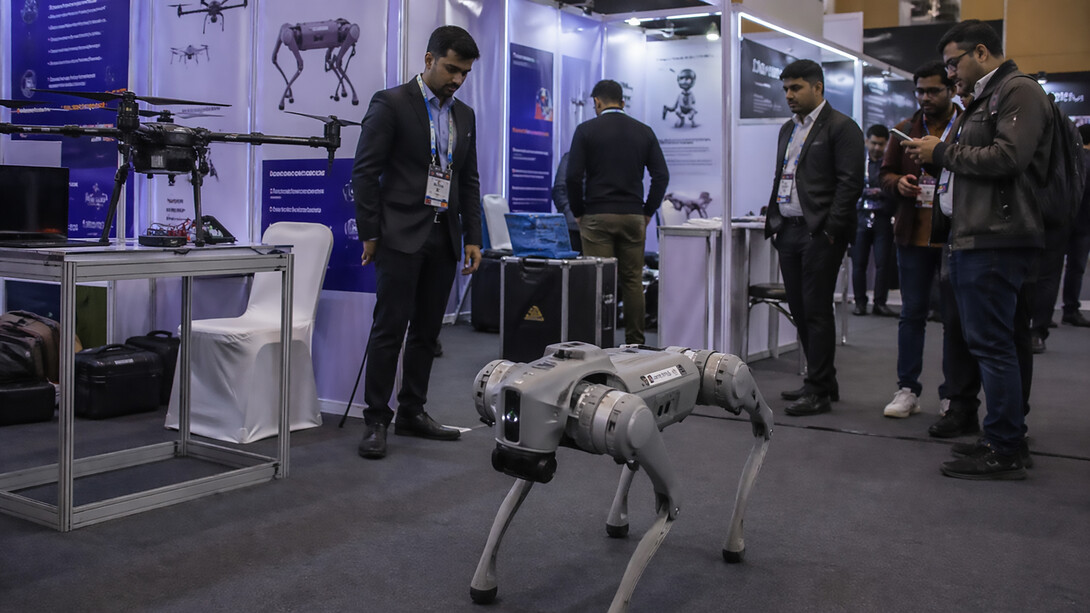
What happened at a high-profile technology summit in New Delhi in early 2026 might have seemed, at first glance, like a minor exhibition mishap. But as the details unfolded, the episode began to resemble something far more revealing—a small moment that exposed deeper tensions around credibility, branding, and authenticity in modern higher education.
The setting was the India AI Impact Summit, an event meant to showcase the country’s ambitions in artificial intelligence and technological innovation. Universities, startups, and research institutions gathered to present breakthroughs that would symbolize India’s growing presence in the global AI landscape.
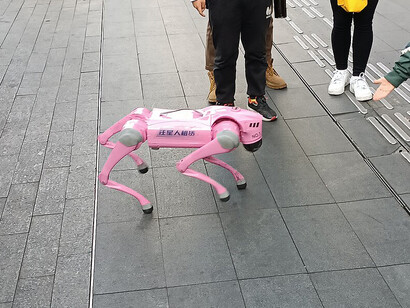
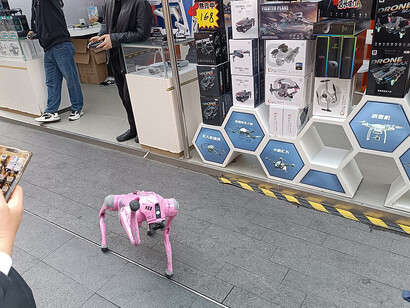
Among the exhibitors was Galgotias University, which introduced what it described as a major in-house innovation: a four-legged robotic dog named “Orion.”
During demonstrations, a university representative confidently explained that the robot had been developed within the institution’s Centre for Excellence. The message was clear. This was meant to illustrate the university’s investment in advanced AI research and engineering capability.
But the story began to unravel almost immediately.
Observers familiar with robotics quickly noticed something unusual. The machine looked strikingly similar to an existing commercial product. Within hours, online commentators and technology enthusiasts had identified it as a Unitree Go2, a robotic dog produced by the Chinese company Unitree Robotics.
In other words, the robot wasn’t a prototype. It was a commercially available product—one that could be purchased in India for a few lakh rupees.
What had been presented as a technological breakthrough was, in reality, an off-the-shelf machine.
The reaction was immediate.
When the demonstration collapsed
If the situation had ended with online criticism, the incident might have passed quickly. But events at the summit took a dramatic turn.
According to witnesses and officials present at the exhibition, organizers from the India AI Mission, operating under the Ministry of Electronics and Information Technology, intervened directly. The university’s exhibition space was reportedly shut down. Power to the stall was cut, and staff were seen dismantling the display while attendees watched.
Officials clarified that the problem was not the presence of the robot itself. Displaying commercial robotics equipment at an AI event would not have been unusual.
The issue, they said, was misrepresentation.
When a university publicly frames a commercial product as internally developed research, it raises serious questions about credibility—especially at an event designed to highlight national technological capability.
But the situation did not end there.
The foam drone that made things worse
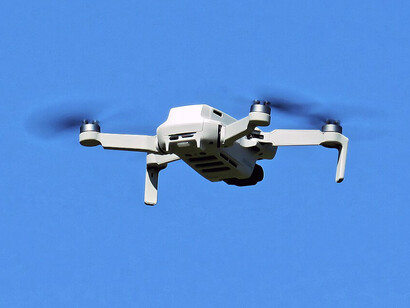
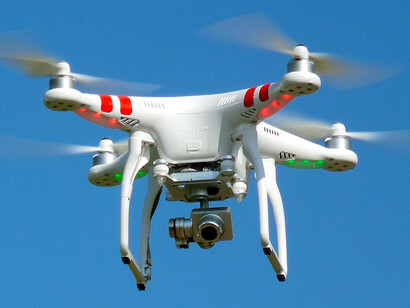
Alongside the robotic dog, Galgotias University had also displayed another device: a drone model constructed largely from foam.
Under normal circumstances, such a demonstration might have attracted little attention. Early-stage prototypes often look crude.
Yet in the context of the robot controversy, the drone became symbolic of something larger.
Journalists attending the event openly mocked the model, describing it as rudimentary and unimpressive. Instead of reinforcing the university’s claims of cutting-edge research, the display appeared to confirm a growing suspicion among observers—that the exhibit had been staged more for optics than for substance.
The combined effect of the robotic dog and the foam drone created a damaging impression: innovation was being performed rather than demonstrated.
What had begun as a technical showcase had turned into a credibility crisis.
The story refuses to fade
Controversies at technology events usually disappear quickly. But this one proved unusually resilient.
Several weeks after the summit, Galgotias University launched a full-page advertising campaign in major newspapers celebrating its position in international rankings—specifically its placement in the QS World University Rankings 2026.
The campaign was clearly intended to reinforce the university’s reputation.
Instead, it reopened the wound.
Across social media platforms, critics began sharing screenshots of the advertisements alongside footage of the robot demonstration. The contrast between polished marketing claims and the earlier controversy quickly became the subject of memes, commentary, and satire.
Users questioned whether global rankings reflected genuine research capacity or simply strong branding strategies.
The debate was no longer about a robot dog.
It had evolved into a broader discussion about credibility in higher education.
When politics entered the conversation
As the story gained momentum online, it eventually crossed into the political arena.
During proceedings in the Uttar Pradesh Legislative Assembly, opposition leaders referenced the incident directly. The robotic dog demonstration became a point of ridicule during debates about education policy, private universities, and rising tuition costs.
Lawmakers mocked the episode openly, drawing laughter from both sides of the aisle.
The criticism extended beyond the exhibition itself. Some politicians questioned whether institutions were prioritizing marketing over meaningful research. Others raised concerns about the commercialization of higher education and the incentives created by global ranking systems.
What had started as a technical controversy had now become part of a larger political conversation about the future of education.
The university’s response
Faced with mounting criticism, the university issued a series of explanations.
At first, officials suggested the situation had been misunderstood. Later statements implied that the controversy might have been amplified by hostile actors or coordinated criticism.
Eventually, the institution released a formal apology.
The statement attributed the incident to an “ill-informed representative” who had spoken inaccurately while explaining the exhibit to cameras. According to the university, the individual’s enthusiasm had led to statements that did not accurately reflect the nature of the technology.
The apology attempted to reposition the narrative.
Rather than claiming the robot had been built by the university, the statement emphasized the institution’s broader role in developing talent and encouraging innovation.
But the evolving explanations raised additional questions.
Who approved the exhibit in the first place? Why was a communications faculty member representing the project without clear technical guidance? And perhaps most importantly—who within the institution had authorized the original claim?
These questions remained largely unanswered.
A deeper issue: branding vs. substance
Over time, the controversy began to take on a meaning larger than the incident itself.
For many observers, the robot dog episode illustrated a broader challenge facing universities around the world: the widening gap between institutional branding and demonstrable capability.
Modern universities operate in a highly competitive environment. Global rankings, marketing campaigns, and international partnerships play an increasingly important role in attracting students and funding.
In that environment, perception can become almost as important as reality.
Promotional videos, innovation centers, and technology showcases are designed to signal progress and relevance. But when the performance of innovation outpaces the underlying research, the result can be reputational risk.
The summit incident served as a reminder that public scrutiny—especially in the age of social media—can dismantle carefully constructed narratives in a matter of hours.
The ranking question
The controversy also revived a long-standing debate about university rankings.
Systems such as QS, Times Higher Education, and ARWU are often treated as global indicators of academic quality. Universities frequently highlight their positions in marketing materials, viewing rankings as a powerful recruitment tool.
But critics argue that rankings often emphasize metrics that do not necessarily reflect genuine research capability or educational impact.
Indicators like international partnerships, citations, and reputation surveys can sometimes favor institutions with strong marketing strategies rather than those producing groundbreaking work.
The robot dog incident became, for many commentators, a case study in that disconnect.
If a university celebrated for its ranking could be caught misrepresenting a simple robotics demonstration, critics asked, what did that say about the broader system?
Government responsibility
The episode also raised questions about oversight.
Government agencies that host technology summits play a role in shaping the narrative of national innovation. When institutions participate in such events, their claims contribute to the country’s public image in global technology discussions.
That raises an important issue: how thoroughly should organizers verify the technologies being presented?
Some observers argued that stronger vetting mechanisms could prevent similar controversies in the future. Others suggested that open demonstration environments inevitably carry risks.
Either way, the event illustrated how quickly credibility can become a shared responsibility.
When institutions exaggerate claims and organizers fail to challenge them, the resulting fallout affects the entire ecosystem.
The real lesson
In the end, the incident at the India AI Impact Summit was never really about a robotic dog.
It was about trust.
Universities occupy a unique position in society. They are expected not only to educate students but also to serve as centers of knowledge, discovery, and intellectual integrity.
When an institution’s public claims collapse under scrutiny, the damage extends beyond reputation. It raises questions about accountability, transparency, and priorities.
And perhaps the most unsettling question of all is this:
If one case of misrepresentation could unravel so quickly under public observation, how many others might remain hidden—until the next moment of exposure?