English
 Español
 Français
 Deutsch
 Italiano
 Português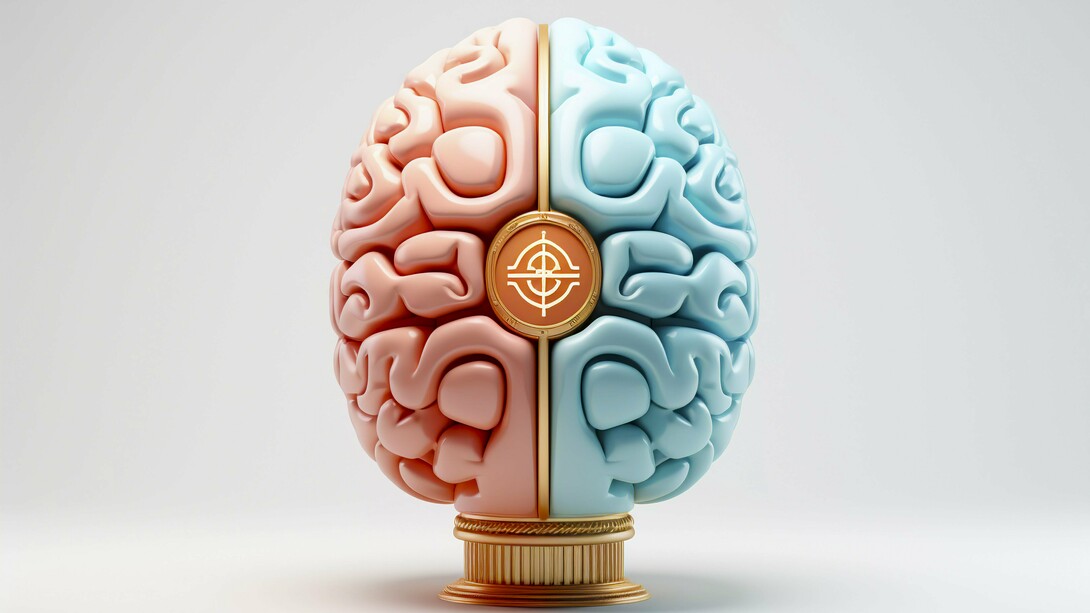
The concept of left brain and right brain began in the 19th-century research and was further developed through work done by Roger Sperry in the 1960s. He studied so-called "split-brain" patients who suffered from severe epilepsy. He found what he interpreted as distinct functions for each hemisphere (e.g., left for language, right for spatial awareness) 1. Popular culture oversimplified these findings by defining personality types in which some people are analytical (left-brained) and others creative (right-brained).
Another oversimplification is that the mind is separate from the body and soul. It is the thing that thinks. It is in the brain that is inside the skull. It is where we engage in intellectual exercises, theological propositions, or talk about God without a true and complete encounter with him (or her). In contrast, the heart is not just where one feels emotions, but also the deep center of our being where we connect with God. It is not just an organ and a muscle that never rests. It is the heart of hearts, where one can memorize poems by heart and get to the heart of the matter. According to this paradigm, a spiritual journey requires moving from detached thinking (mind) to an embodied, vulnerable presence with God (heart), experiencing unity, love, and identity as God's beloved, as explored in books like The Way of the Heart. The heart is said to be the core of our identity, the sacred space where God dwells.
Roger Sperry's split-brain research in the 1960s led scientists to think that the brain's two hemispheres have specialized roles. This was based on observations made on patients whose corpus callosum was severed to treat severe epilepsy. Supposedly, this showed that each hemisphere could process information in its own way and even have separate awareness. Supposedly, the left side handles language, logic, and analysis, while the right side excels at spatial perception, music, and nonverbal cues.
With the corpus callosum cut, the hemispheres can't communicate. Sperry interpreted the results on a population that did not have the same functioning brain as most people have. Sperry then did some experiments that we now know are unthinkable and totally unethical. He severed the corpus callosum in cats and monkeys to study the function of each side of the brain. He found that if hemispheres were not connected, they functioned independently of one another, which he called a split-brain. He thought that the results showed the left and right hemispheres of the brain operate as two separate minds.
For example, information shown to the right visual field of humans (processed by the left brain) could be named, but an image to the left visual field (right brain) couldn't be named, though the patient could draw it with their left hand. A split-brain patient could learn a task with one hemisphere but not the other. This seemed to confirm separate learning and memory in everybody, and not just patients suffering from epilepsy. It completely ignored the fact that their immune systems were continuing to learn and make intelligent decisions. Their immune systems were still able to identify invading pathogens and internal cancers and make the decisions needed to eliminate the pathogens and cancer cells before they could spread. It also ignored the existence of the second brain that is located in the gut – the enteric nervous system.
This nonsense earned him a Nobel Prize.
As described in important books, the mind is not separate from the body 2-3. Moreover, the thing that is in our skull that many call our brain is isolated only in the human imagination. It is part of the neuroendocrine immune system and is connected with the entire body. The mind is an emergent property of life's processes. The mind is the self-organizing activity of living networks. It is not a separate thinking thing.
The mind and body are complementary aspects of life. The entire neuroendocrine immune system is part of the process that many call the mind. Also, cognition is inherent in all life, not just humans. This holistic view connects us to all the creatures who share this sacred biosphere with us and with the universe. The mind and body aren't separate in humans. They're a unified system where mental stress can cause physical symptoms (like a racing heart), and physical activity can improve mood. True healing involves mental resilience, emotional balance, nutrition, and mindfulness, not just physical treatment. Inner peace focuses on finding internal happiness and strength. It reduces focus on "I, me, mine," and recognizes our interconnectedness.
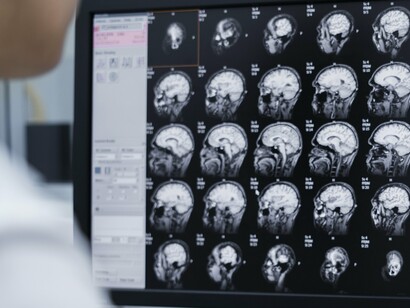
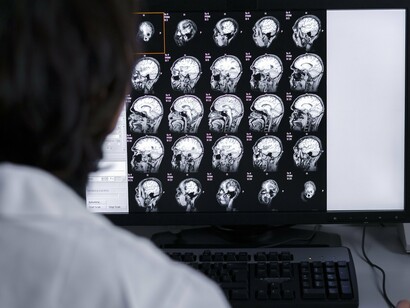
A landmark study using resting-state functional magnetic resonance imaging (fMRI) was done on over 1000 people who had an intact corpus callosum. No evidence was found to support the idea that people have a stronger left or right brain network 5. Brain scans showed that people use both hemispheres. Complex tasks activate networks across both sides, with strong connections between them. So, the idea that people are either left-brained or right-brained is just a persistent pop-psychology concept. However, evidence from brain imaging indicates that we use both hemispheres in an integrated way with the rest of our body.
The left brain vs. right brain idea suggested that the left is logical and analytical, while the right is creative and intuitive. This is a myth. Both hemispheres work together, though they specialize, with the left handling language/math and the right focusing on spatial skills/emotion. However, tasks require both sides, and the whole brain, and the rest of the body. People aren't just left-brained or right-brained. The neuroendocrine immune system is a complex, interconnected system where both sides of the brain in our skulls are necessary but not sufficient for most functions.
Still, the concept of the mind being separated from the body and the heart is used by some people to help explain the idea of contemplative prayer 6. It may not be accurate according to analytical thinking, but it may be useful when dealing with emotions. That is, true intelligence is emotional, and not just logical. Logic and mathematics can create amazing technologies, but only wisdom, empathy, and self-regulation can decide how to use them for the common good. People with wisdom and emotional intelligence can build relationships and sew harmony where there is discord.
As taught by Henri Nouwen, one moves from the mind to the heart in spiritual formation and contemplative prayer. In the process, one moves from opaqueness to transparency, from illusion to power, from sorrow to joy, from resentment to gratitude, from fear to love, from exclusion to inclusion, and from denying to befriending death. When God (or the source of all blessings) is just a subject for analysis and discussion, it can easily become an instrument of destruction and not a guide to love and enlightenment.
However, when we stop our internal conversations and analysis and become mindful in our prayers, we feel connections and a reality that exceeds that which is achieved by mere reductionist thinking. So, when the mind is thought of as a thing that is above the heart, it can be misleading. Instead, I prefer to think of the mind as a holistic process. When I become mindful and prayerful, my neuroendocrine immune system and my entire body feel a deeper reality than what I can achieve through thinking about the past or the future. Beyond memory, there is a gift. For those who don’t think of the past or what might happen in the future, there is a reward – a mystic vision. Everybody can have a mystical experience this way 7.
Notes
1 Roger Sperry’s Split Brain Experimentson Embryo Project Encyclopedia.
2 Capra F. [The Web of Life], Anchor Books. New York, 1997.
3 Capra F, Luisi PL. [A Systems View of Life: A Unifying Vision], Cambridge University Press, Cambridge, UK, 2014.
4 Our second brain. The enteric nervous system and gut microbiome on Meer.
5 Nielsen, J.A. et al. An evaluation of the left-brain vs. right-brain hypothesis with resting state functional connectivity magnetic resonance imaging on PloS one.
6 Nouwen, H. Spiritual Formations, HarperCollins Publishers, 2010.
7 Steindl-Rast, Gratefulness, The Heart of Prayer: An Approach to Life in Fullness, Paulist Press, 1984.