English
 Español
 Français
 Deutsch
 Italiano
 Português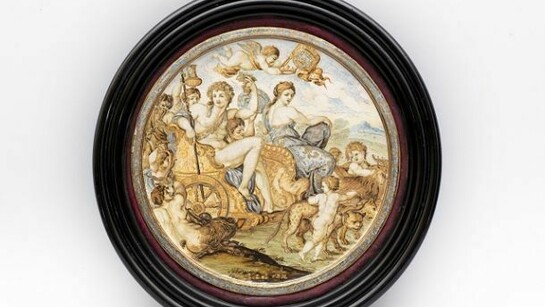
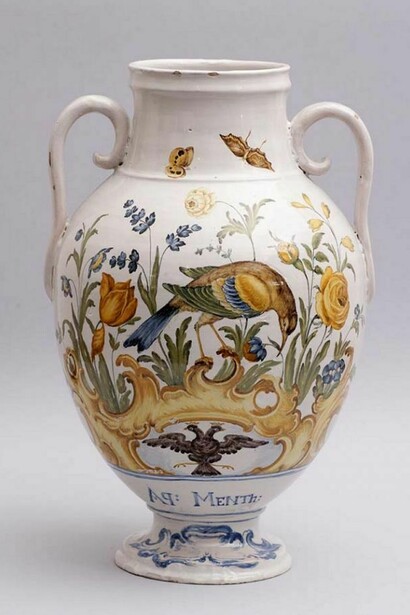
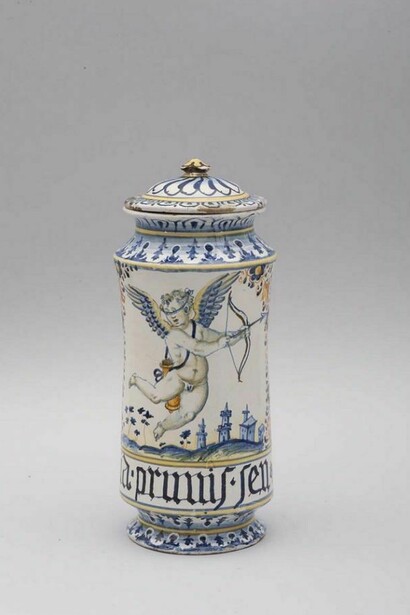
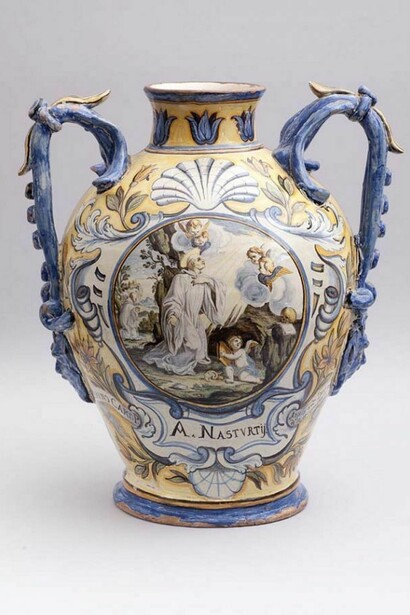
The exhibition “Masterworks of Castelli majolica: from the sixteenth century to the third fire. The Matricardi Collection” will open on April 3 (through October 31, 2012) at the Painting Gallery of the City of Teramo.
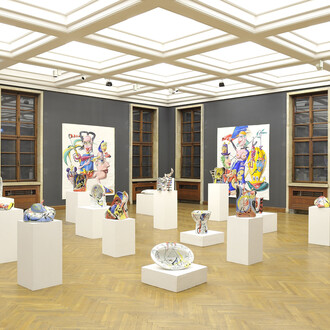
The exhibition will present a selection of two hundred masterworks from the sixteenth to the eighteenth centuries, mostly never published before, from one of the most internationally renowned and complete collections. The masterworks exemplify the huge value of the Castelli manufacture with a display path that represents various ages and families of artists, including the Pompei, Cappelletti, Gentili and Grue who, over the centuries, made the Castelli majolica famous across the world. These two elements are the key to grasp the historical, iconographical and scientific richness of the Castelli production and its artists.
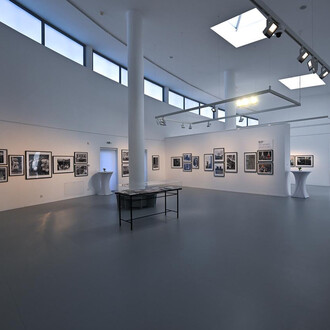
The objects include jugs, flasks, jars, cups, and plates of various sizes, displayed on a continuous narrative path arranged in a chronological sequence and in consistent groups related to a specific author or his family in the rooms of the Painting Gallery.
Sponsored by the City of Teramo and the Tercas Foundation, the exhibition was curated by Paola Di Felice. It is under the High Patronage of the President of the Italian Republic and the patronage of several other public institutions such as the Chamber of Deputies, the Ministry of Cultural Heritage and Activities, the Abruzzo Region, the Regional Direction for Cultural and Environmental Heritage of the Abruzzo Region, the Regional Direction for Cultural and Environmental Heritage of the Marche Region, the Department for Architectural, Landscape, Historic, Artistic and Ethno-Anthropological Heritage of the Marche Region and the Province of Teramo.
The exhibition brings the ceramics of Castelli and its peculiar shapes, colours and motives, to the attention of a national and international audience. Produced from the early sixteenth to the late eighteenth centuries, these fine artifacts are magnificently represented in the precious and sumptuous Matricardi Collection, one of the most influential collections rightfully compared to those boasted by several international museums including the Hermitage in St. Petersburg, the Victoria and Albert Museum and the British Museum in London, the Louvre in Paris and the Metropolitan Museum in New York.
The exhibition also represents an admirable example of “enlightened” collecting, with high quality objects selected in the early twentieth century. As the heir to a passion that has run through three generations, Mr. Giuseppe Matricardi has put together an artistic heritage of huge historical and scientific value, currently counting up to 430 art objects of Castelli ceramics alone. Built through the acquisition of several masterworks mainly from European collections, this group of works is an example of the precious contribution given by private collectors to rebuild this historical heritage in the art expressions and embodies the lively cultural climate in Castelli and the neighboring hamlets at the time, thus reviving an artistic experience that is unique in terms of expressive quality and technique.
A traveling exhibition completes the event and includes the ceramic collection at the Tercas Foundation in the ancient Palazzo Melatino, another example of historical heritage, the Capitular Museum of Atri with its collection of Castelli ceramics from the sixteenth to the twentieth centuries, and finally Castelli itself, the cradle of ceramic art. Here, in a sort of historical promenade, the visitors might admire ancient factories and shops offering productions that, although modern, clearly belong to such a refined tradition. It will be possible to follow the traces of the ancient ceramic production and at the same time enjoy the creative stimuli expressed in the artifacts of the Art Institute where young students are trained in the production of modern ceramics.
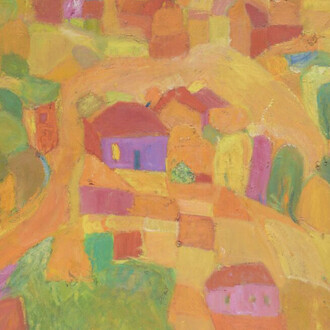
A small hamlet with only 1,300 residents, Castelli, although isolated in the heart of the Abruzzo mountains and almost sculpted in the rock of the Park of Gran Sasso, is an international center of ceramic production. Clinging to the rocky soil and the inaccessible roads of the massif, this tiny hamlet is famous across the world and rests on the very clay that made its fortune over the past nine or ten centuries. Here, a community of Benedictine monks used clay, water and timber and first embarked on the production of ceramics, later refined by the skill of the local population. The majolica’s colours evoke the natural tints of the place: the sludge green of the woods on the slopes of the Gran Sasso, along with sky-blue, manganese, orange and ramina (emerald green).
Today, strolling in the alleys of this small hamlet, one can still admire the traditional craftsmanship, sometimes in the same venues where it was exerted five centuries ago.