English
 Español
 Français
 Deutsch
 Italiano
 Português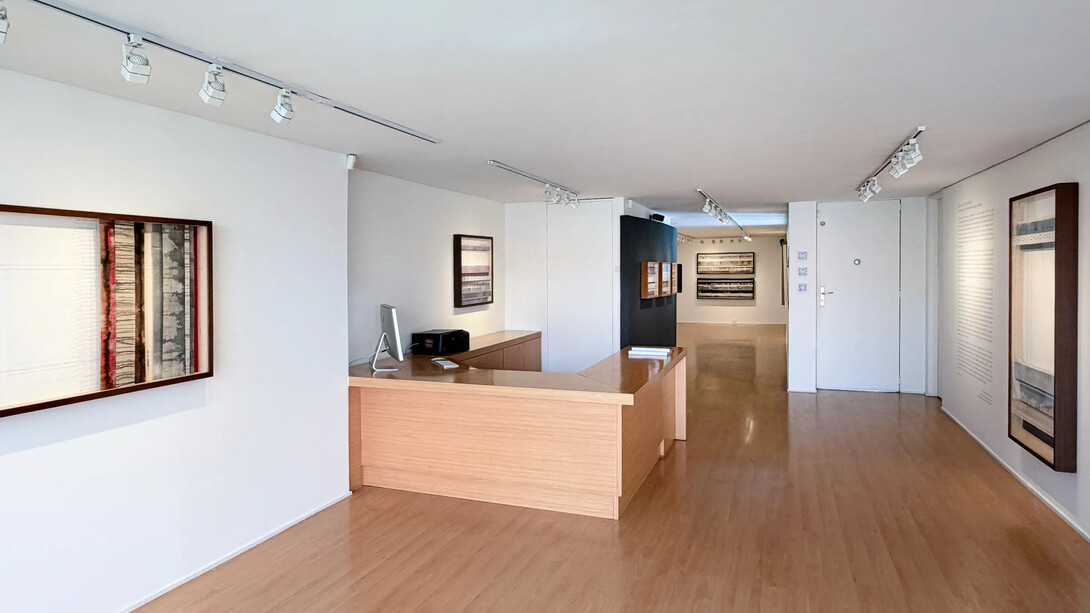
Black is not absence, but a threshold—where shadow becomes substance, and in embracing darkness, we uncover the quiet conditions that make light, transformation, and self-knowledge possible.
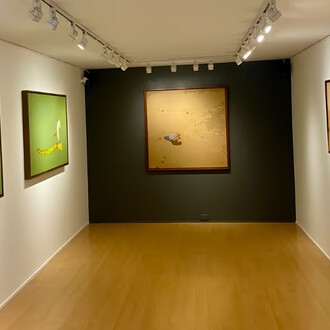
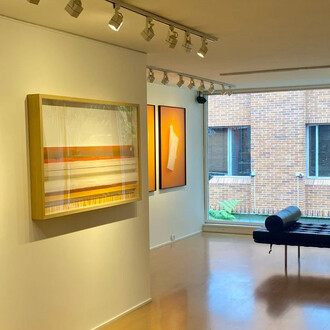
What is black—absence or possibility? In her new exhibition at Beatriz Esguerra Art, Colombian artist Angélica Chavarro explores the infinite expressive and existential nuances of the color black. Rather than suggesting emptiness, lack, or loss, black becomes for Chavarro a metaphor for the necessary duality that makes light possible—physically, emotionally, and spiritually. Through a series of new assemblages, black takes form in fragments of fabric, stitches, traces, gestures, and written phrases that conceal the light that emerges when darkness is embraced: that shadow we often avoid, yet which forms an essential part of who we are.
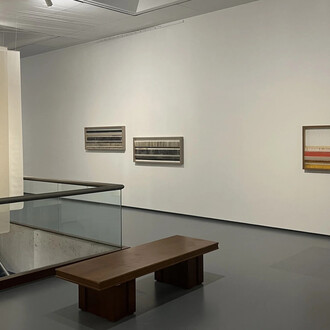
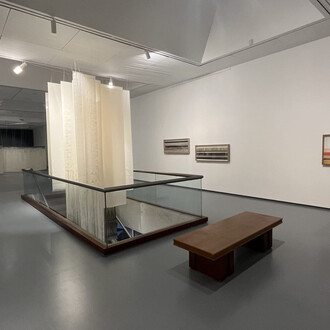
Chavarro approaches her practice as an ongoing process of self-knowledge, almost like a perpetual ritual. From this perspective, painting, textile intervention, embroidery, and writing transform her spiritual search into material form. Over more than a decade, this process has given rise to assemblages where gesture, silence, movement, repetition, line, and poetry unfold in layered strata—something akin to an archaeology of the inner self. At the same time, it has led to large-scale installations in which the viewer’s body moves through labyrinthine structures and enveloping fabric environments that trace uncertain paths.
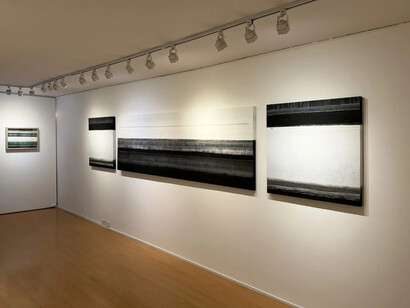
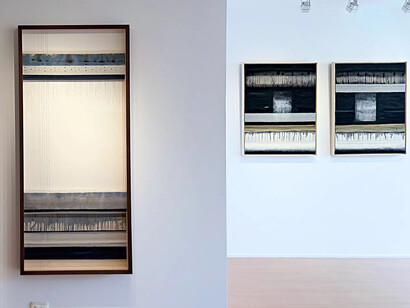
The works presented at Beatriz Esguerra Art emerge from the metaphysical dimension that has long defined Chavarro’s practice. Yet here the artist ventures into black—a color she may have unconsciously resisted for years. “For me, black had been an undesirable color, one that might contaminate the palette,” she reflects. “Now I value it differently, as the result of a reflection that leaves its trace through it.” In these works, black—often associated with the apparent absence or the overwhelming saturation of light, with sadness, or even with latent fear—transforms into atmospheric landscapes that reveal the beauty of darkness when we allow ourselves to inhabit it. This perspective becomes even more meaningful when we recognize that the very darkness we tend to avoid is also essential to our survival, as it sustains the rhythms of the circadian cycle. In Chavarro’s sensory collages, built through interwoven lines of production, multiple gradations, and delicate veils, black emerges as a kind of mist—at once fog, intellectual density, and, at the same time, hope.
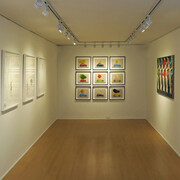
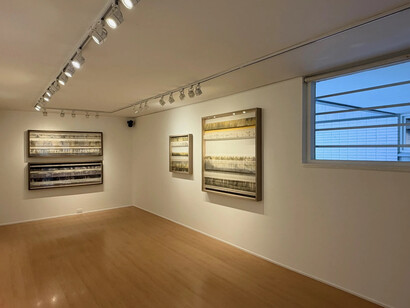
In many ways, the exhibition unfolds as an introspective installation in which works of varying formats enter into dialogue and extend beyond the boundaries of the canvas. Within this network of relationships, the layered surfaces of each piece guide the eye through ethereal abstractions, where drips and subtle accents of color appear like traces of an emotional ebb and flow. There is a sense of openness here—an invitation to contemplation, but also to self-reflection about our instinct to flee from adversity when, in fact, it may hold the possibility of transformation. “There is no light without darkness,” Angélica repeats, almost like a mantra, in several of the works.
(Text by Constanza Ontiveros)