English
 Español
 Français
 Deutsch
 Italiano
 Português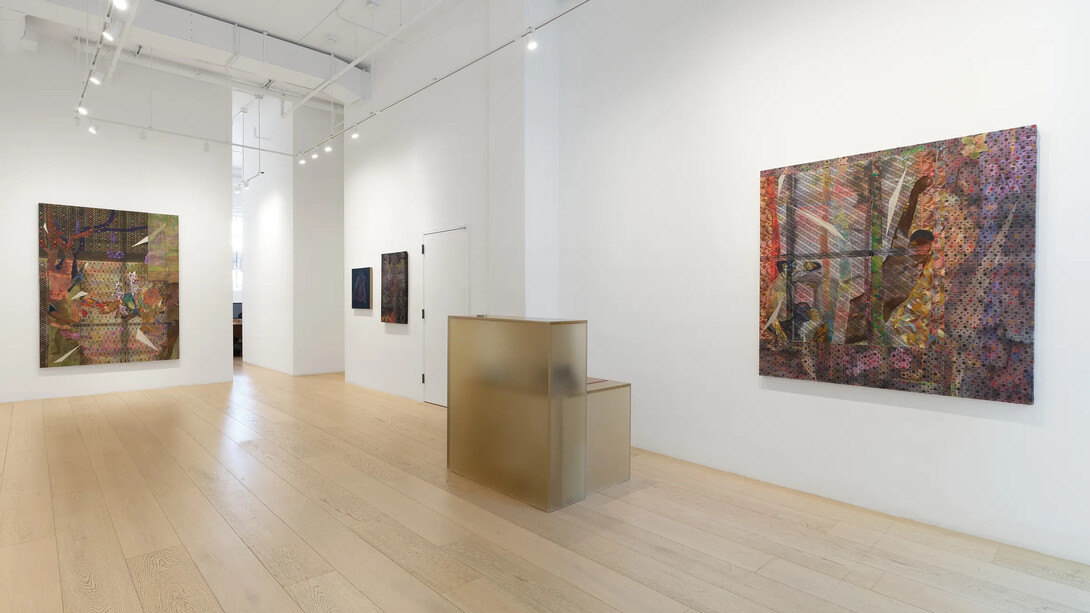
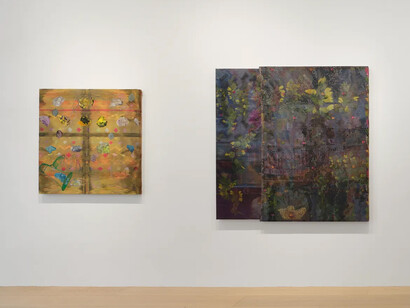
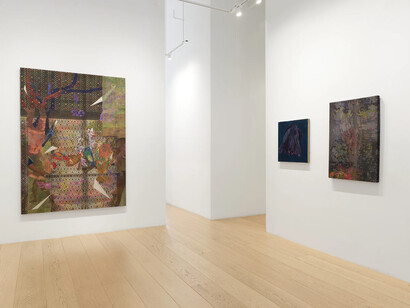
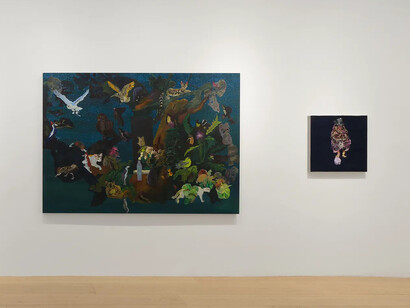
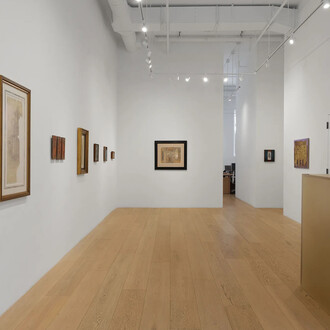
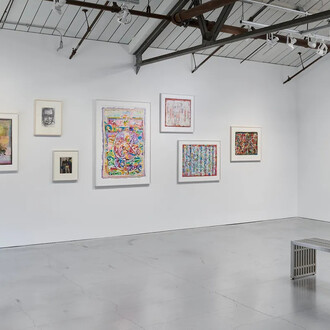
Over the last thirty years, Ranu Mukherjee (b. 1966, Boston, MA) has developed a multidisciplinary practice that questions Western and human-centric ideas about intelligence, resilience, and survival, imagining a more tender and attentive way of relating to the world. This sensibility animates the eight new paintings on view in The long middle, Gallery Wendi Norris's sixth solo exhibition with the artist.
Borrowing its title from cultural theorist Lauren Berlant's phrase "the long middle of change," the exhibition reflects on our current paradigmatic shift as Mukherjee merges the autobiographical with the political, ecological, and geological—linking the pressures of mid-life, motherhood, and personal transformation with the threats of climate crisis, resource extraction, and species loss.
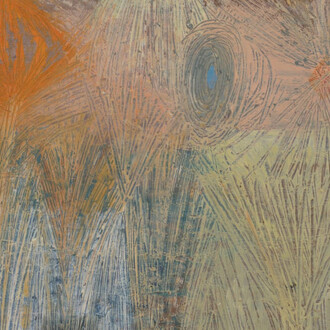
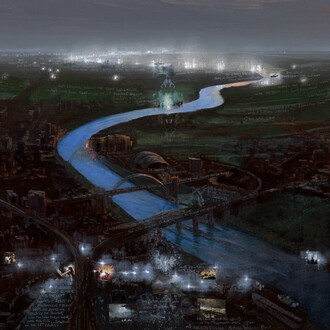
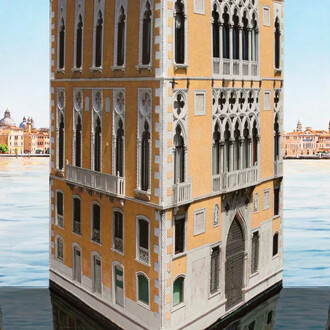
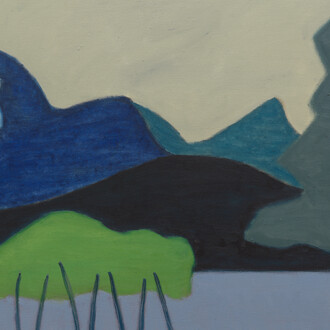
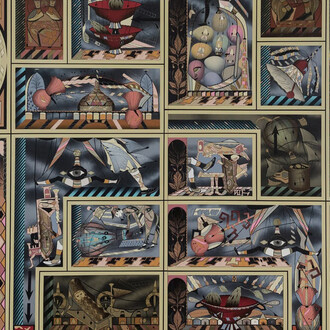
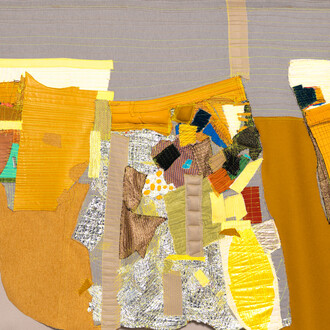
In Mukherjee’s paintings, the transitional conditions of The long middle arise through layered textile surfaces, geometric shards, and an interest in the tension between the static image, choreographed performance, and lived experience. She builds her paintings from pigment, crystalina, and ink printed on cotton jamdani and silk sari on linen, which acts as an architectural screen that simultaneously reveals and conceals what lies beneath it. She also deploys shards of geometric forms that cut through organic painted imagery—a technique she used to striking effect in her 2025 commission for the San Francisco Ballet curtain drop—which, like her cloth overlays, introduce a layer of visual dissonance that disrupts the expected syntax of each scene.
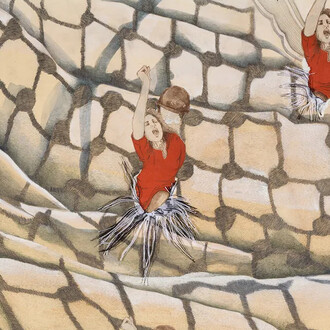
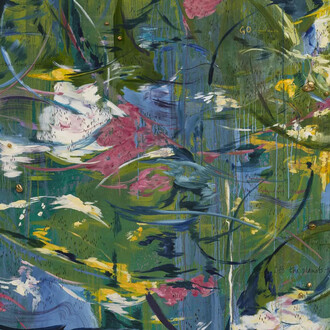
Mukherjee looks as much to the plant and animal worlds as the human one, from organisms that thrive not through urgency or force but through an intimate sensitivity to their changing surroundings. In healers (2026), Mukherjee depicts a field of yellow rattle, a plant that weakens dominant grasses and creates space for biodiverse wildflower meadows. A layer of silk sari cloth, also printed with a cellular honeycomb-like pattern derived from digitally abstracted protest imagery, stretches across more than three-quarters of the canvas and extends a quarter-inch above the surface, partially obscuring the scene beneath it while keeping the composition in motion.
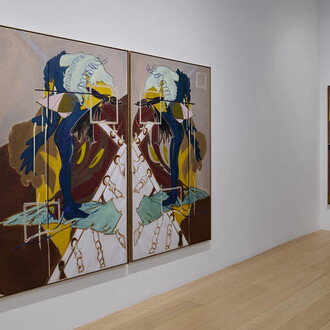
Though plants and animals function as Mukherjee's primary protagonists, human figures recur throughout the exhibition. In men being tender (2025), two former wrestlers discover unexpected gentleness in an improvised duet, sharing the canvas with ashwagandha and saffron, plants long used in Ayurvedic medicine to support balance and restoration. Together, the wrestlers and the botanicals propose a shared vocabulary of recovery.