English
 Español
 Français
 Deutsch
 Italiano
 Português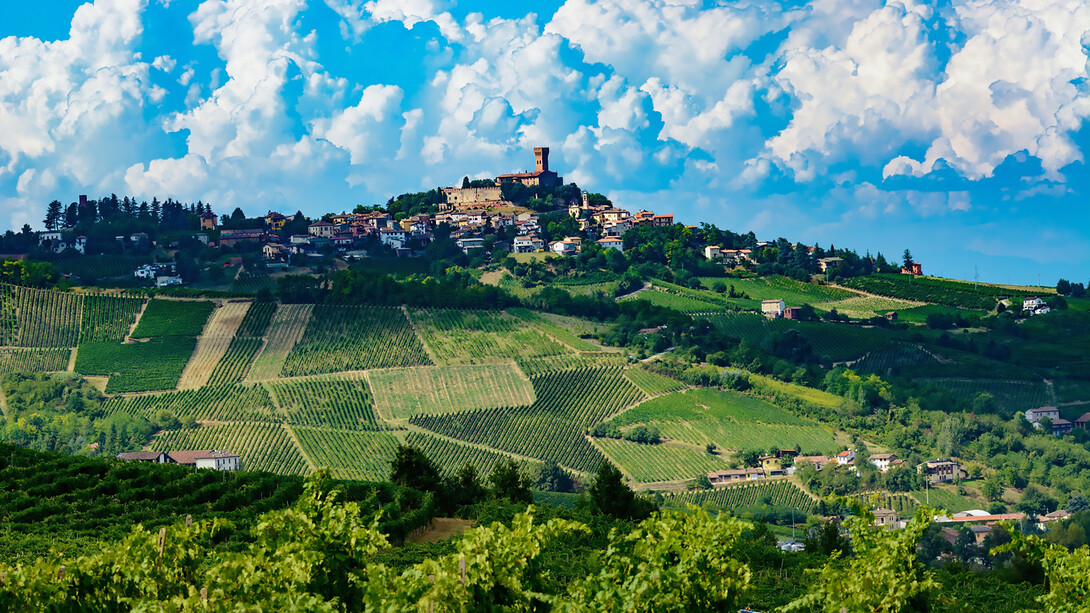
Broni was for me a synonym of photography because of its Oltrepo Photographic Association, which for forty years has been organizing, among other activities, a photo contest. When my interest switched from photography to wine, Broni remained at the center stage this time because it is home to a chapter of Italian enological history, the Maga family, and Barbacarlo wine.
French would define this as a cru monopole, a small hill with a 70% incline, a few hectares that have been in the Maga family for over 150 years since Uncle (Barba in local dialect) Carlo (Charles) left his vineyard and all his land—the entire hill—to his nephews as inheritance. The nephews were so grateful for this gift that they petitioned to have the name of the land changed from Porrei to Barbacarlo, in which they succeeded, and founded the Barbacarlo Vineyard in 1886. In 1961, the Consortium of Fine Typical Wines of Oltrepo Pavese (Consorzio Vini Tipici Pregiati dell’Oltrepo Pavese) was founded, and a young Lino Maga joined as a member.
The Consortium’s role was not only promoting but also acting as consultants to the Ministry of Agriculture, which in 1963 instituted the DOCs and DOCGs. As Barbacarlo was synonymous with good wine, many producers that had nothing to do with Uncle Carlo and the former Porrei hill had added the name to their wines, which were produced elsewhere and with different criteria. Thus, considering Barbacarlo a fantasy name, the governmental decision was to allow that the name Barbacarlo could be produced in some 45 different Communes of the Oltrepo area. This was unacceptable to Lino Maga, who left the Consortium and started a battle to reclaim ownership of his name.
The City of Milan tried to appease him by granting the definition of Classico (in the sense of original) to the Barbacarlo produced in 7 communes around Broni, but, against his lawyer’s advice, Lino Maga did not accept and, as a modern Don Quijote, hired a different attorney, starting a fight against several labor unions, the Pavia Chamber of Commerce, the Ministry of Agriculture, the National Committee for the Protection of Wines, and the State General Attorney’s office. A battle like David and Goliath, and just like David, Lino Maga, after 22 years, won. In 2014, the State Council published the final judgment stating that only Lino Maga and his family had the right to write "Barbacarlo" on the label (on that occasion, the State Council also awarded Lino Maga a sum to cover legal expenses).
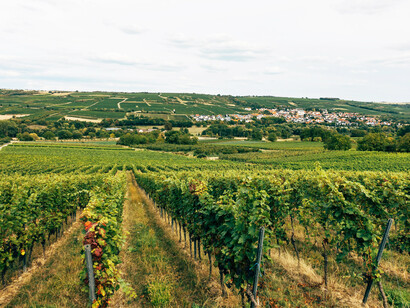
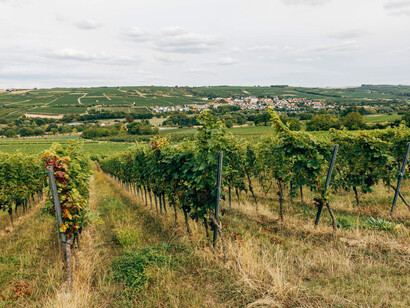
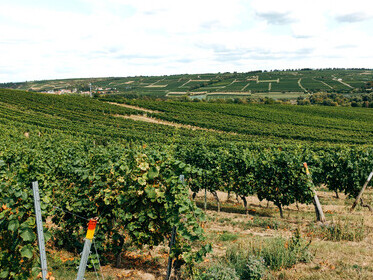
The Barbacarlo hill is a very steep slope (70% incline) surrounded by forest in the hills outside Broni, in the Oltrepò Pavese part of Lombardy, with a unique microclimate. Hectares of, on average, 50-year-old vines are planted at 1000 feet above sea level on tuffaceous and gravelly soils with a south/southwest aspect, basking all day in the sunlight. This area is famous for the Pinot Nero-based Classic Method spumante wines, but in the past it was well known for the production of red wines, also appreciated by Napoleon.
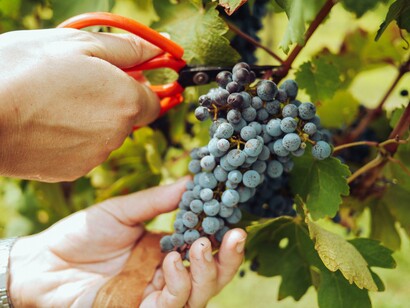
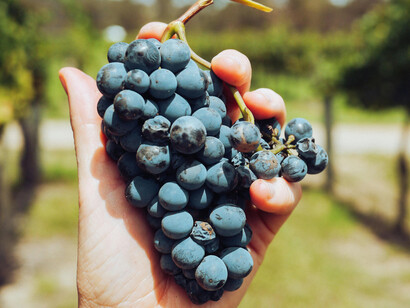
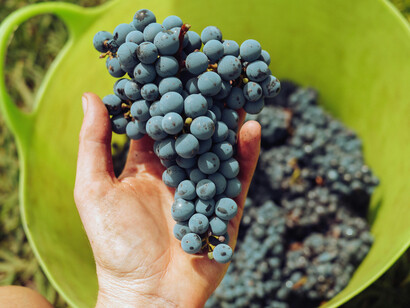
The varietals are the autochthonous organically or biodynamically grown (no use of herbicides and/or chemical products) Croatina, Uva Rara, Ughetta, and Vespolina, which are hand harvested and selected. To make Barbacarlo, they are usually used in a percentage of 40% Croatina, 30% Uva Rara, and 30% Ughetta/Vespolina, but percentages may vary depending on the harvest (so the wine is never the same). Barbacarlo is made using only wild yeasts with minimal intervention, avoiding the use of chemicals, additives, and technology. In the cellar, grapes are pressed and fermented for approximately 7 days in old oak vats so that the wine does not pick up the taste of wood (each cask bears its own name, which is the name of a friend or a family member!). It remains in the casks without temperature control for 8 months, racked following the moon cycle at each old moon, and bottled in the spring with no additives.
The bottles are placed in a horizontal position for about 60 days, then stored in a vertical position. Produced in limited quantities and only when production allows (in 1992, for example, it was not produced), it is a wine that keeps evolving in the bottle for up to 30 years. Unusually, the wines finish fermentation in the bottle, resulting in wines that differ markedly from year to year: “Why put the vintage if the wine is always the same?” stated Lino Maga in an interview. That is why, in 2003, Magas came out of the DOC and switched to IGT. The tasting commission had declared the wine had too much residual sugar, but Lino, in that hot summer, had only indulged the messages of that special year and put them in the bottle.
Abiding by governmental rules would have meant curbing nature to man’s rules in total disrespect of natural differences from year to year. “The winemaker’s job,” stated Lino Maga, “is the hardest there is. Harvesting has its times; one cannot stress nature, it needs respect.” Lino Maga was so upset that, following the tasting commission’s verdict, he called his friend Gino Veronelli to vent. Veronelli asked to receive a few bottles of that wine, and the result was that he assigned Barbacarlo 2003 the prestigious Sole award, the last attributed to an Italian wine.
What kind of wine is Lino Maga’s, and now his son Giuseppe’s, Barbacarlo? If two words should be used, they are "genuine" and "authentic." It has utmost elegance, a wine where you can taste the grapes and you can taste the taste the soil confers. A wine where less is more, a wine that surprises and you do not forget. If it were a conversation, it would be a direct conversation, without intermediaries, with words that reach your heart and soul and give you the emotion of a first kiss. Strangely, when reading the definition of wines, one reads the most diverse aromas, from slate to citrus, from pear to hydrocarbons, but grape is never present.
In Lino Maga, instead, you can taste the grapes. Even those grapes that are added in small quantities because production is always scarce have a reason to be there, and you can taste it. Because of the winemaker’s philosophy of producing according to nature, this wine is true to itself but never the same (as it is stated in the note attached to each bottle, almost a warranty). Certainly it is a wine that leaves a mark and remains in your memory, one of those few wines that once you taste, you do not forget and that, at least once in a lifetime, every wine lover should taste. A wine that surprises and should be tasted for sheer pleasure, in a personal search of authenticity and honesty, and, leaving behind all soul-emptying technicalities, allow it to carry us on sincere emotions and feelings.