English
 Español
 Français
 Deutsch
 Italiano
 Português
Who wants to be a hero?
In a society where graft and corruption are deeply entrenched, integrity often comes at a heavy price. For those who dare to resist the current of wrongdoing, the consequence is not recognition but punishment—sometimes even the threat of death.
This is not an abstract notion but a lived reality, especially for social workers who face corruption not in theory, but in the field, where ethical decisions can determine the lives of others. The question then arises: Who protects those who protect others?
In many workplaces, those who choose not to participate in corruption are not celebrated for their honesty. Instead, they are marginalized, labelled as “difficult,” denied promotions, and excluded from recognition. Honesty, once a virtue, becomes a liability. When integrity leads to professional isolation and personal risk, one cannot help but ask: Who would willingly choose to be a hero?
The night the earth trembled
That question returned to me one sleepless night when the ground beneath me shook once more. At around three in the morning, an earthquake jolted me awake. As silence settled after the tremor, I was transported back to 2019—a year etched deeply in memory.
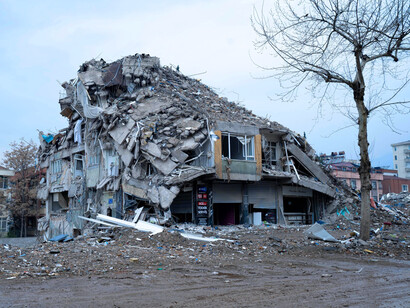
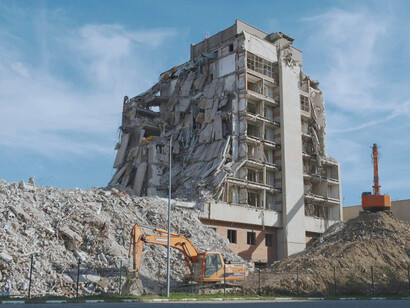
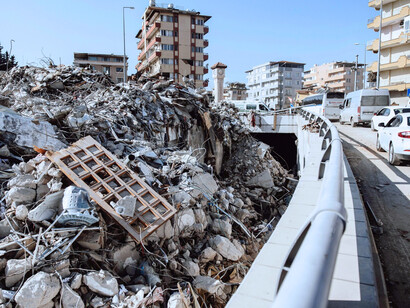
It was the year we first offered the Bachelor of Science in Social Work program at our state college. That same year, a 7.5 magnitude earthquake struck our campus, destroying three of our main buildings. In an instant, we were displaced, forced to teach in tents pitched near the road and close to the shore. The air was thick with dust, the heat relentless, and the environment uncomfortable. Yet, amid that chaos, we carried on.
When the buildings collapsed, it wasn’t only concrete that fell—it was trust in the systems that should have protected us. Still, even in those ruins, we found ways to rebuild. We continued teaching, writing, and mentoring our students. I remember developing almost all the modules for our major social work subjects that year. Recognition was scarce, but I chose forgiveness over resentment. I believed that time—and God—would eventually balance both justice and grace.
From ruins to resilience
Then came an unexpected reward. Our school placed in the top 6 in the National Licensure Examination for Social Workers—a result that filled me with awe and gratitude. My only prayer at that time was for all our students to pass, given the hardships we had endured: the earthquake, displacement, and later, the pandemic that forced us into remote learning.
For nearly two years, we had no face-to-face classes. Yet, through Google Classroom, self-learning modules, and sheer persistence, we kept the flame of learning alive. Those experiences became the foundation of my research: Reshaping Social Work and Resilience in Social Work. The pain, uncertainty, and exhaustion of that period became fertile ground for innovation and growth.
Recently, I had a heart-warming reunion with my former students. Seeing them again after six years filled me with pride. Their journey—from studying in tents to passing the licensure exam—is a living testament to resilience and the strength of the Filipino spirit.
I still recall their convocation ceremony when the results were announced: over 80 percent passing and our school placing in the top 6 nationally. It was a collective triumph—proof that perseverance, guided by integrity, can overcome even the hardest odds. Today, many of them are registered social workers, now serving communities across the region and beyond—living embodiments of the values we once fought to teach under tents and tarpaulins.
Lessons from the ground and the heart
As we gathered for a photo, laughter and stories filled the room. We reminisced about the dust, the heat, the sleepless nights, and the unrelenting hope that bound us together. Those hardships, once heavy to bear, had become sacred memories—evidence that from brokenness, something beautiful can still rise.
I realized then that during their student days, our learners may not have fully understood why we pushed them so hard or why we emphasized ethics and critical reflection so strongly. But now, as professionals navigating real-world challenges, they see it clearly: those lessons were preparation for the moral earthquakes of life—moments when standing for truth feels as dangerous as standing on shaking ground.
The beauty and fragility of the Filipino spirit
Our country, the Philippines, is indeed breath-taking. From Palawan to Tawi-Tawi, each island tells a story of wonder. But beneath this beauty lies a truth we must face: living among islands and natural forces demands responsibility. Each typhoon, flood, or earthquake reminds us of our structural and moral integrity—how our buildings, systems, and principles must be strong enough to endure.
Disasters, in their devastating honesty, reveal what we try to conceal. They expose corruption, incompetence, and neglect. No matter how we try to cover them up, time and truth eventually surface. And yet, amidst the ruins, hope persists. We rebuild not only our homes and schools but also our faith in humanity, in integrity, and in the unbreakable beauty of the Filipino soul.
In the end, who are the heroes?
So, when the ground shakes again—as it did last night—I am reminded that this is home: a place of both fragility and strength, despair and grace. A place where ordinary people—teachers, students, and social workers—quietly become heroes, not through grand gestures, but through steadfast integrity in a trembling world.
Heroism is not always found in the spotlight. Sometimes, it lives in the quiet courage to do what is right, even when no one is watching.
And that, I believe, is the true heartbeat of the Filipino spirit: unbroken, unyielding, and forever rising.
The influence of teachers extends beyond the classroom, well into the future. It is they who shape and enrich the minds of the young, who touch their hearts and souls. It is they who shape a nation's future.
(F. Sionil Jose)