English
 Español
 Français
 Deutsch
 Italiano
 Português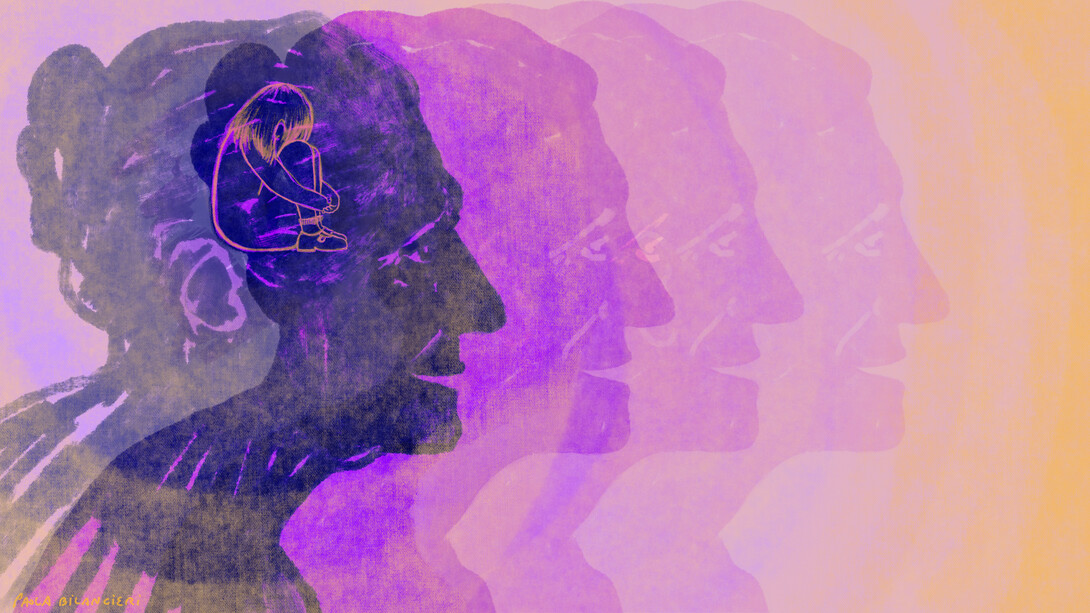
Bullying — the use of force to coerce, tease, or threaten another person — is becoming an increasingly common phenomenon. While it can affect people of any age, children and adolescents are particularly vulnerable, lacking many of the defense mechanisms adults develop over time.
A defining feature of bullying is the perception of an imbalance of physical or social power. Experts classify it as a form of aggressive behavior marked by hostile intent. It can be carried out by a single individual or by a group, in which case it becomes mobbing.
When bullying targets children or teenagers, the consequences can be severe. The impact on their health and development may later surface as depresión, anxiety, suicidal attempts, and even dangerous antisocial behavior if the problem is not addressed early. Justifications for bullying often hinge on differences in social class, race, religion, nationality, disability, gender, or sexual orientation.
Bullying can take root in many environments — schools, families, workplaces, homes, and neighborhoods, where youth gangs can destabilize entire communities. Its forms vary: physical, verbal, relational, cyber, and mobbing when a group is involved.
The rapid expansion of social media has added a new layer of complexity. These platforms have become fertile ground for harassment, giving rise to “cyberbullying,” which unfolds in the virtual world, typically online. Such cases often begin in early adolescence, when young people first acquire mobile devices.
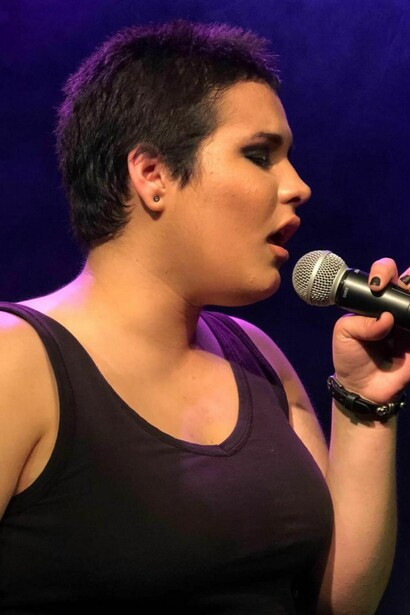
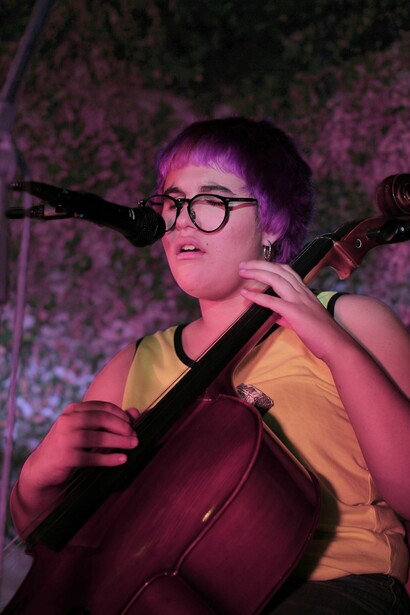
The following is a testimony from Juanita Elizalde, a young woman from Gualeguay, a city in the province of Entre Ríos, Argentina.
Classes are starting… I can’t help remembering the little girl I once was, and how many children must be suffering the same things I did. I always felt different. I remember that the first thing they made fun of me for in first grade was hugging too much and too tightly, and also for being weird. Later, it was telling me, “You’re crazier than your sister,” and shouting “autistic” or “retarded” at me during recess because I had a sister with a disability. Later on, they made sure that even a simple “hello” from me became a reason for everyone to laugh — everyone except me.
Time went by, they didn’t invite me to their birthdays, and I hated mine more and more. They didn’t invite me to their houses either, and with everything happening at home because of the special needs of my autistic sister, I had to grow up and mature much earlier than the rest. So now I wasn’t just weird — I also no longer cared about earning their affection (even though deep down I did).
We grew older, and, as in every Catholic school, high school arrived, and we had to take Confirmation (the sacrament in which a young person is believed to receive the fullness of the Holy Spirit). My logic was simple: why should I take Confirmation if they preach “love thy neighbor” and talk to me about God, but never see all the times I asked for help, or the times my mother went to speak with them looking for a solution, while they laughed in our faces? I decided I wouldn’t do it. Very subtly, they made sure my grades suddenly started dropping, and the mistreatment came not only from students but also from teachers and administrators.
My classmates found out I liked another girl because I confided in someone who wasn’t really my friend, and she told the whole school. Now I wasn’t just weird, autistic, and ugly — I was also a lesbian. I was discovering my sexuality while they were destroying it. You could say that year was chaotic, and that they discreetly invited me to leave the institution.
I started at a new school, another private one. I was very happy and had wanted that for a long time, but as in every small town, my new classmates knew the old ones and knew exactly how to bother me. In those last four years, everything got much worse. My mental health deteriorated, I had several suicide attempts, and I began taking antidepressants and anxiolytics.
They started judging me for my ideals, arguing with me. I remember once a classmate — the leader of the class — said in geography that if he were president, he would send everyone to the Malvinas and didn’t care if people died. I couldn’t believe what I was hearing, and obviously, since no one else reacted, I did. Any different point of view became a reason for arguments or mistreatment.
In the final year, we had a subject called Educational Practices, and in that class, we did activities related to what we wanted to study. There was one activity that marked my escape from the institution. It was called “What do you see when you look at me?” The idea was to write that title and our names on a sheet and pass it around the class so people could leave positive adjectives or comment on our strengths. Obviously, the activity didn’t work as the teacher expected. My classmates’ sheets had jokes, while mine had comments of all kinds — but above all, one phrase I will never forget: “Why didn’t you manage to kill yourself?” I even remember the font. My mother, already exhausted, forced me to change schools, but I made a crucial decision: I was going to say goodbye, but not just any way — with a letter I would read in front of the whole class, the administrators, and the teachers. And that’s what I did.
I changed schools and spent the last four months of classes at the Escuela Normal of Gualeguay, where I was very warmly received. There, I understood what true companionship was. I didn’t attend my graduation or reception, but having a good four months was enough for me.
Most of the negative effects of bullying can be mitigated with proper psychological counseling and strong family support. Juanita’s experience shows this: once a child struggling with the weight of constant harassment, she is now a thriving music student in Buenos Aires, Argentina.