English
 Español
 Français
 Deutsch
 Italiano
 Português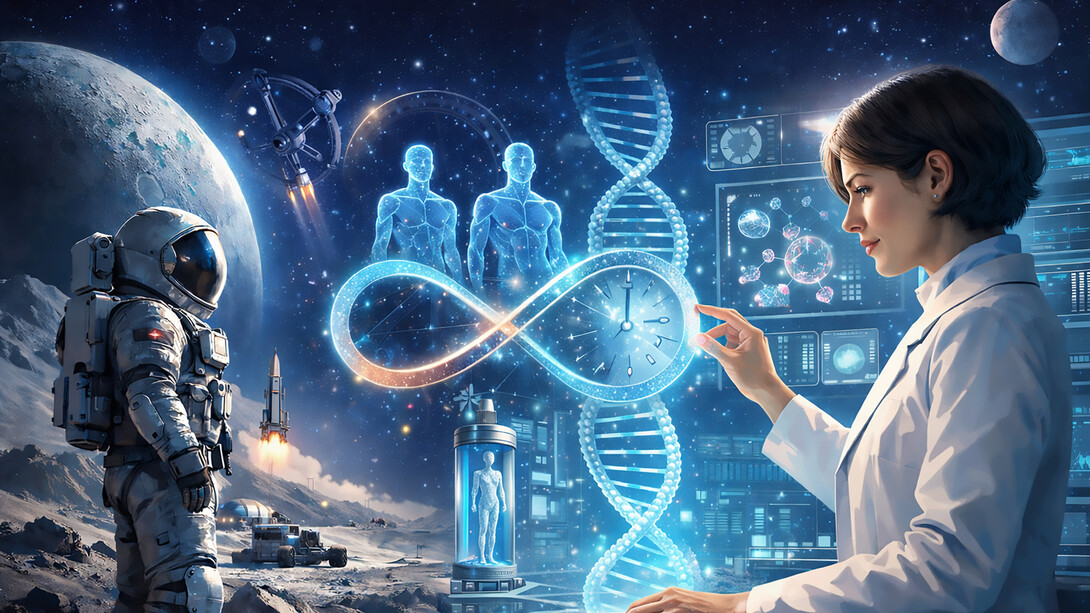
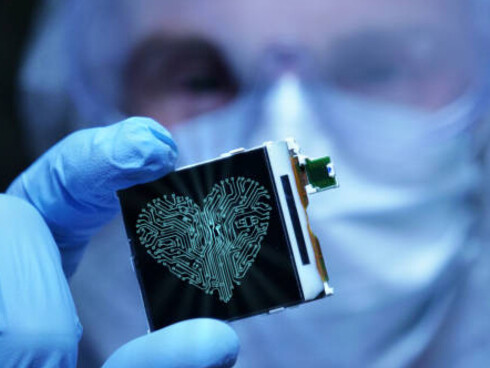
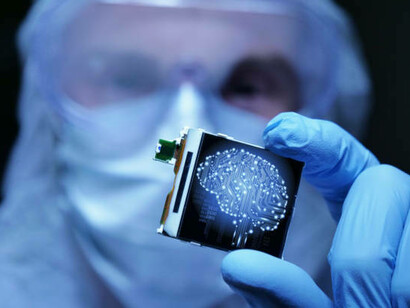
When the Artemis II astronauts launched on their loop around the Moon, they were not travelling alone. Inside the Orion capsule, organ-on-chip devices, each roughly the size of a USB drive, carried blood-forming cells derived from each crew member's own bone marrow, traveling with them as biological "avatars." These miniature tissues experienced the same deep-space radiation and microgravity as the astronauts themselves. Once back on Earth, researchers will compare the flight chips against genetically matched chips that remained on the ground, providing the most detailed picture yet of how the deep-space environment reshapes human biology at the cellular level. It is the first time personalized organ chips, matched to the actual crew flying the mission, have ventured beyond low Earth orbit—and the first real test of whether a chip can faithfully mirror its donor.
That validation matters enormously for what comes next. Before sending astronauts to Mars, the vision is to send their organoids ahead of them, exposed to the mission's radiation and gravity conditions, and tested against candidate interventions, helping to map what will protect each individual's unique biology before a single human boards the rocket.
And if we accept that microgravity and radiation compress the biology of aging, accelerating in months processes that normally unfold over decades (a premise backed by a growing body of research), then the implications reach well beyond astronauts. The same logic that makes space a laboratory for protecting crew health makes it a laboratory for understanding aging itself. A trip for your cells into deep space is, in a meaningful sense, a trip into the future of your biology: by combining that extreme stress environment with systematic intervention testing, we may be able to learn what will keep you in the best shape ten, twenty, or fifty years from now.
This experiment crystallizes a new view: space is not just a dangerous environment to endure but a powerful laboratory for understanding—and potentially steering—the biology of aging. As we plan months-long missions to Mars and, eventually, longer journeys deeper into the solar system, we will need sophisticated strategies to protect astronaut health from the ground up. The science behind those strategies is likely to generate insights for everyone on Earth, while, in turn, longer and healthier lives will make deep-space exploration more feasible.
Astronauts: extreme test pilots for aging
Astronauts are exposed to an unusual combination of stressors: microgravity, ionizing radiation, disrupted light–dark cycles, isolation, and confinement. Together, these pressures produce bone and muscle loss, immune and vascular changes, and metabolic shifts that resemble an “aging‑like” syndrome compressed into months instead of decades.
The key question is whether these changes only look like aging or whether they truly accelerate biological aging. To probe this, researchers have turned to molecular “aging clocks,” particularly epigenetic clocks based on DNA methylation patterns that correlate with age and health risk. In the one‑year NASA Twins Study, one twin spent almost a year in orbit while his identical brother remained on Earth. Surprisingly, first‑generation epigenetic clocks showed little or no change in biological age in the space‑flown twin, despite clear physiological stress.
That paradox had two major consequences. First, it suggested that clocks trained on Earth populations might miss key aspects of space-induced stress. Second, it pushed the field toward a more nuanced view of clocks: some are calibrated to predict chronological age, others mortality risk, and others the “pace” at which damage accumulates. Under extreme conditions like spaceflight, these different clocks can diverge, each capturing a different slice of aging biology.
Epigenetic clocks in orbit: aging fast, then rebounding
More recent work has used broader panels of clocks and denser sampling during and after spaceflight. In a small study of 4 astronauts on a commercial mission, dozens of epigenetic age measures were assessed before launch, during a short stay on the International Space Station, and in the days after return.
On average, many clocks showed a rapid increase in biological age, on the order of a couple of years within the first week in orbit, even after accounting for shifts in blood cell composition. After the astronauts returned to Earth, those same clocks swung back, with biological age dropping below pre‑flight levels before settling again near baseline.
The picture that emerges is of spaceflight as both accelerator and reset: a sharp, transient push toward an “older” epigenetic state, followed by a compensatory rebound as repair and adaptation pathways kick in. This oscillation makes space missions uniquely valuable for testing interventions: if a training regimen, dietary protocol, or candidate drug can blunt the spike in biological age in orbit—or speed its recovery—that is a strong signal it might slow or reverse aging processes on the ground as well.
Fourteen hallmarks of aging: compressed in space
Modern geroscience often describes aging as a network of “hallmarks”: core processes such as genomic instability, telomere dynamics, epigenetic alterations, loss of proteostasis, impaired autophagy, deregulated nutrient sensing, mitochondrial dysfunction, cellular senescence, stem‑cell exhaustion, altered intercellular communication, chronic inflammation, and microbiome dysregulation. More recent work argues for an expanded set, bringing the conceptual landscape to 14 hallmarks once non‑genomic processes like systemic inflammation and dysbiosis are fully integrated.
Spaceflight appears to press on many of these. Ionizing radiation and microgravity promote DNA damage and imperfect repair, driving genomic instability. Mitochondria, the cell’s power plants, show altered function and redox balance, feeding into oxidative stress. Nutrient‑sensing pathways and mechanical signaling change when cells and tissues are no longer constantly loaded by gravity. Immune dysregulation and endothelial stress contribute to chronic, low‑grade inflammation. The gut microbiome shifts toward more opportunistic species in flight, echoing age‑related dysbiosis seen on Earth.
Some hallmarks, like telomere length, show a complicated pattern: apparent lengthening during missions and rapid shortening after return. Others, including proteostasis and macroautophagy, are clearly affected in model systems but are still being mapped in detail in humans. Still, the overall picture is clear enough: space compresses many of the processes that normally unfold over decades, making them more visible and more tractable as experimental targets on the timescale of a mission.
From astronauts to “avatars”: organoids-on-chips in space
Astronauts are rare, precious experimental subjects, and there are obvious ethical and practical limits on what we can try in their bodies. That is where organoids‑on‑chips come in. By deriving 3D organoids from human stem cells and integrating them into organ‑on‑chip platforms, researchers can create miniature, living models of hearts, guts, brains, bone marrow, and more under tightly controlled conditions.
In the context of aging, these systems can be built from donors of different ages, genetic backgrounds, or disease states, then exposed to microgravity and radiation in orbit. Multiple candidate anti-aging interventions can be tested in parallel. Readouts can include not just cellular function and resilience, but also how epigenetic clocks and other biomarkers move under stress and treatment.
Artemis II’s AVATAR mission embodies this strategy. By focusing on bone marrow, the source of red and white blood cells and platelets, it targets a tissue that sits at the crossroads of immunity, oxygen transport, and clotting, all central to aging and frailty. For each astronaut, an in‑flight bone‑marrow avatar will be compared with a genetically matched chip on Earth. If these avatars reliably mirror how that individual responds to deep‑space stress, they could become powerful tools to screen and customize countermeasures before future missions.
Scaled up, the same logic applies on Earth. Organoid‑on‑chip avatars derived from patients could be used to evaluate combinations of geroprotective interventions under controlled “aging‑like” stress, whether simulated in lab settings or exposed to actual spaceflight conditions.
A virtuous circle: longevity for space, space for longevity
The relationship between longevity science and space exploration is not one‑way; it is a feedback loop.
On one side, space missions are already forcing the issue of prophylactic longevity. Even current missions in low Earth orbit expose astronauts to stresses that threaten bone, muscle, brain, immune system, and cardiovascular health. For multi‑year missions to Mars or extended stays on lunar or deep‑space stations, simply “treating problems as they arise” will not be enough. We will need integrated strategies to slow the underlying processes that make tissues fragile in the first place.
On the other side, designing, testing, and refining these strategies in space will almost certainly reveal interventions that matter for everyone. Spaceflight is a sharp, time‑bounded challenge to resilience; any approach that keeps biological age from spiking, preserves function across multiple hallmarks, and speeds recovery in that environment is a strong candidate to improve healthspan on Earth. New clocks and biomarkers tuned in space, organoid‑on‑chip platforms validated in orbit, and combinations of interventions proven under extreme conditions can all flow back into mainstream prevention and care.
Finally, as longevity science succeeds, it will expand what is possible in space. Longer healthspan and lifespan mean larger pools of fit astronauts, more people able to contribute to exploration and research across the lifespan, and more time to amortize the costs of training and missions. A society that ages more slowly can invest in longer‑term projects, from multi‑decade exploration programs to intergenerational infrastructure, creating more knowledge and wealth that can be reinvested into both space and life‑extending technologies.
The universe has never been kind to life; it has only ever tested it. Now, for the first time, we are turning that test to our advantage: measuring not just our courage, our ingenuity, or our reach, but something deeper, the slow clocks ticking inside every human cell. In learning to keep life flourishing at the edge of the cosmos, we may finally learn to keep it flourishing here for far longer than nature ever intended.
References
Artemis II AVATAR (A Virtual Astronaut Tissue Analog Response).
The Effect of Long-Duration Spaceflight on DNA Methylation of Longevity-Related Genes in a One-Year Astronaut Study.
Astronauts as a Human Aging Model: Epigenetic Age Responses to Space Exposure.
Cosmic chronometers: Is spaceflight a catalyst for biological ageing?
Aging and putative frailty biomarkers are altered by spaceflight.