English
 Español
 Français
 Deutsch
 Italiano
 Português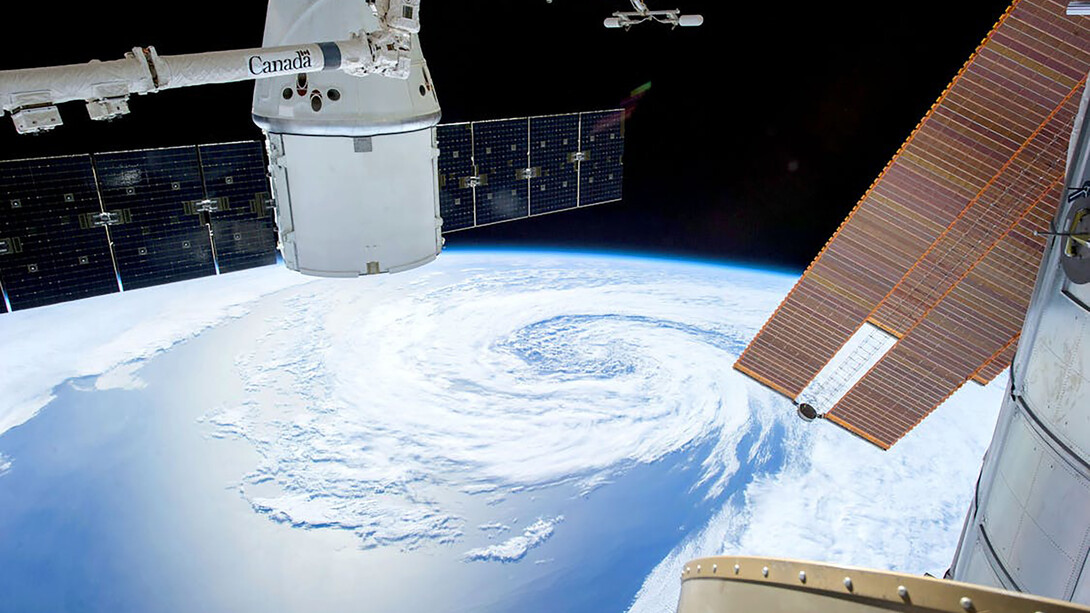
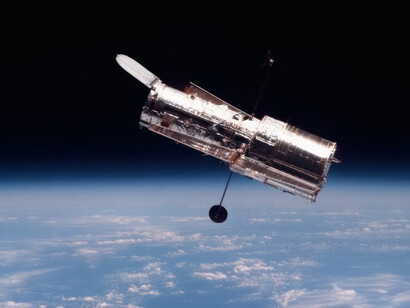
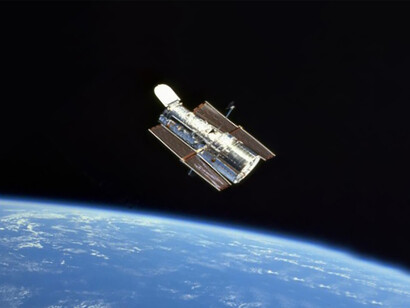
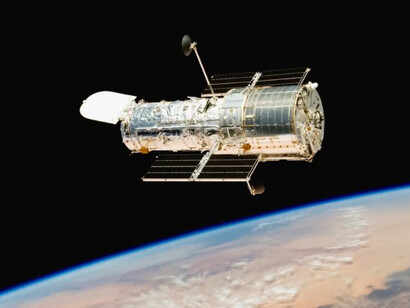
Space may seem like a distant frontier, but its technologies are already woven into the fabric of our daily lives. Weather forecasts on our smartphones, GPS navigation in our cars, and global internet connectivity all rely on satellites orbiting hundreds of miles above Earth. Indeed, a recent World Economic Forum (WEF) report, developed with McKinsey, projects that the global space economy will soar to $1.8 trillion by 2035 (up from about $630 billion in 2023). This explosive growth is fueled by “lower costs and improved access” to space-enabled services such as communications, positioning/navigation, and Earth observation. By 2035, space-based capabilities are expected to be as integral to daily life as semiconductors, underpinning everything from global supply chains to climate action.
Satellite technology is not science fiction—it’s already at work 24/7. It drives modern weather forecasting, enables climate and environmental monitoring, powers GPS navigation, and provides telecommunications worldwide. Below, we explore these real-world applications, the insights, and the economic and societal impacts of putting space technology “within reach.”
Eyes in the sky: weather forecasting and climate monitoring
Satellites have revolutionized weather prediction and climate science. Over 85% of the data fed into modern weather models comes from orbiting sensors. Polar-orbiting weather satellites (like NOAA’s JPSS series) continuously measure atmospheric temperature, humidity, wind profiles, and more, feeding numerical models that produce 3–7 day forecasts for storms and hurricanes. Geostationary satellites (like NOAA’s GOES series) provide real-time high-resolution imagery of developing weather systems, enabling meteorologists to track severe storms, wildfires, and floods almost instantaneously. For example, NOAA notes that its geostationary lightning mapper can detect bursts of lightning to warn of rapidly intensifying storms, giving critical lead time for safety. In short, satellite data literally saves lives by giving earlier warnings of extreme weather events.
Satellites are equally indispensable for understanding our changing climate. From their unique vantage point, they gather “critical long-term observations of our changing planet,” according to NASA. Instruments on orbiting platforms continuously measure global sea surface temperatures, cloud cover, ice-sheet and glacier thickness, atmospheric greenhouse gases, sea level rise, and deforestation, among other indicators. The European Space Agency (ESA) emphasizes that satellites provide “unequivocal evidence of the changes taking place” on Earth and give decision-makers the data needed to tackle climate challenges.
Satellite records have, for example, tracked the steady decline of Arctic sea ice and the warming of the oceans—data that is fundamental to climate science. As ESA notes, “Satellite measurements of Earth’s changing temperature, sea levels, atmospheric gases, [and] declining ice and forest cover… provide the scientific community with the data they need to improve our understanding of the Earth system and predict its future.”
Satellites also enable practical climate adaptation and disaster response. For instance, Earth observation data helps monitor droughts, crop health, and water resources, allowing farmers and planners to adapt to changing conditions. In disaster scenarios, satellites provide real-time assessments: high-resolution imagery can quickly map flood extents after a hurricane or the spread of wildfires, guiding emergency relief. Together, these capabilities underscore that space-based sensors have become humanity’s “environmental watchdog,” constantly surveying the planet and alerting us to risks. The vast majority of weather data and well over half of the climate-monitoring data originate from space.
Guiding the way: navigation and transportation
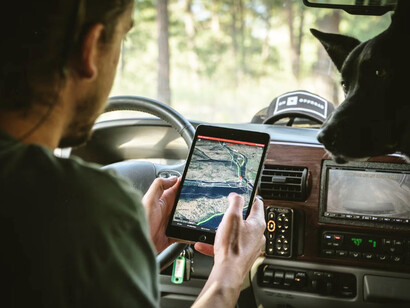
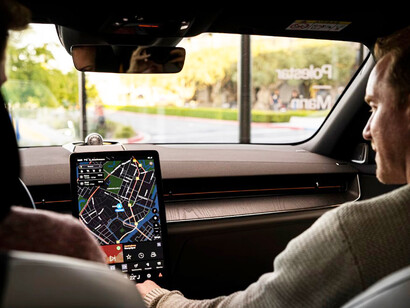
Few space technologies touch as many lives as satellite navigation. GPS, GLONASS, Galileo, and other Global Navigation Satellite Systems (GNSS) have made precise positioning ubiquitous. Today’s smartphones, car dashboards, and even wearable devices routinely use satellite signals to pinpoint our location within meters. ESA notes that satellite navigation “is changing the way in which we travel from place to place—by land, sea, or air, in remote areas or through congested city streets.” In practical terms, this means we can use our phone to find the nearest parking spot or restaurant, navigate unfamiliar cities, and time travel in ride-sharing apps with ease. Another growing application is dynamic road management: if every vehicle could transmit its GPS position, traffic could be regulated in real time to reduce congestion and emissions.
Navigation satellites are also crucial for safety and security. All over the world, emergency beacons and smartphones send out distress signals that include GPS coordinates, enabling rescuers to find stranded hikers, shipwrecks, or vehicles in remote areas. During crises, GNSS underpins search-and-rescue coordination. In air travel, more precise satellite-based navigation (as with Europe’s upcoming Galileo system) will allow airlines to plan routes closer together safely, significantly increasing airport capacity. Freight, shipping, and logistics firms rely on GNSS to optimize routes and manage just-in-time supply chains. Indeed, the 24/7, global nature of satellite navigation means it touches nearly every element of modern transport and commerce. In short, satellite navigation has become an infrastructure layer of the global economy.
Looking ahead: space at the helm of innovation
The next decade promises even more dramatic developments. Emerging technologies like in-orbit manufacturing, space-based solar power, and lunar exploration could open new frontiers. For example, producing solar panels or chips in microgravity might revolutionize materials science. Mining resources from the Moon or asteroids could provide rare elements for Earth industries. Meanwhile, constellations of thousands of mini-satellites will ensure ubiquitous global 5G/6G connectivity.
By 2035, our children may take for granted space services we consider cutting-edge today. Just as no one doubts the importance of GPS or the internet now, tomorrow’s generation will likely view space applications as everyday tools: checking global pollution maps, receiving personal health advice via satellite, or even participating in “space economy” jobs. The World Economic Forum report predicts that in an “increasingly connected and mobile world,” space will shift from being about rockets and astronauts to being about people and goods on Earth.