
 English
 Español
 Français
 Deutsch
 Italiano
 Português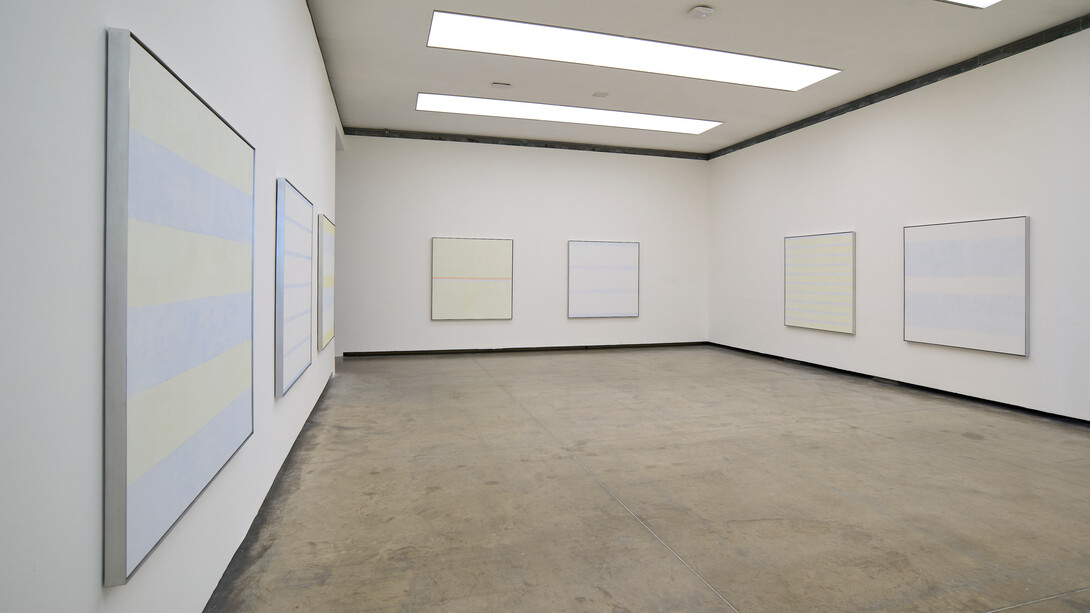
We are presented with Penumbra: Dia art foundation, a historic exhibition that brings together, for the first time in Argentina, fundamental artists of contemporary art who have never before been exhibited in the country. The exhibition constitutes a milestone in Proa’s program and a major event for the local and regional art scene. In 1998, Fundación Proa and Dia Art Foundation presented the first major exhibition of Dan Flavin in Buenos Aires, followed by the wall drawings of Sol LeWitt.
Those unforgettable experiences marked a decisive moment: they not only introduced extraordinary artists previously unseen in the local scene, but also represented a fundamental institutional recognition in Proa’s early years. The support of Dia opened new possibilities, projecting the Foundation into the international sphere and establishing a working model that expanded its horizons. Today, almost thirty years later, and on the eve of Proa’s 30th anniversary, we revisit that relationship to once again present key artists in the history of art from the second half of the twentieth century.
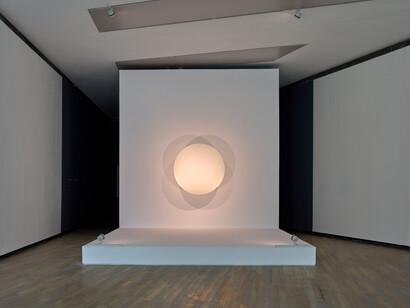
Curated by Humberto Moro, with curatorial assistance by Ella den Elzen, the exhibition is organized around a central idea: penumbra as experience. It is not simply a condition of light, but an intermediate state, a threshold where perception becomes unstable and the work ceases to assert itself as an object, instead unfolding in relation to space, time, and the presence of the viewer. In this sense, the practices brought together in the exhibition share a decisive transformation in the history of art: the shift from the artwork as an autonomous form to the artwork as a situation. Matter—whether steel, light, or image—is presented not as representation but as presence. Space ceases to be a neutral support and becomes a constitutive part of the work, and the viewer becomes an active agent whose experience completes what takes place.
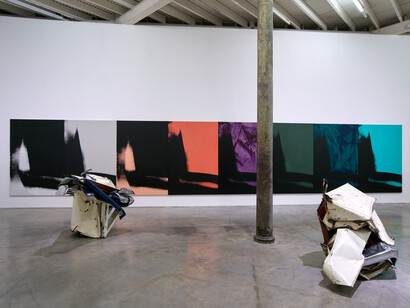
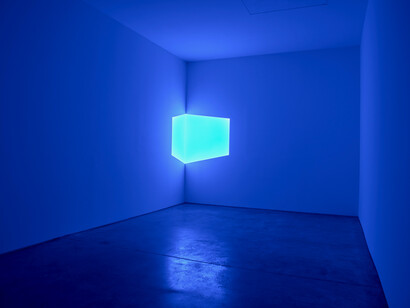
The works brought together at Proa allow for an appreciation of moments of great intensity in each artist’s trajectory. In Andy Warhol, Shadows—his large “penumbras”—unfolds as a monumental, almost abstract pictorial sequence. Richard Serra’s investigations in steel explore weight, tension, and balance, while in James Turrell light becomes substance. In the work of Robert Irwin and in the curtains of Felix Gonzalez-Torres, light and the passage of time alter the experience: nothing is fixed; everything depends on duration and movement through space. In the case of Gonzalez-Torres, the curtains—traversed by natural light—fill the space with a shifting tonality that changes throughout the day, transforming the interior and making the passage of time visible. The work does not impose itself: it happens. By contrast, in the almost imperceptible surfaces of Agnes Martin, repetition and delicacy invite a sustained form of contemplation, akin to meditation.
As Moro notes, these works converge on a shared question: how we look and how we inhabit space. In this journey, penumbra ceases to be a condition of light and becomes a field of perception: a territory where the visible and the hidden are held in tension, where the gaze adjusts and becomes aware of itself, and where each experience occurs in the present, in a unique and unrepeatable way.
Fundación Proa expresses its special recognition to Tenaris – Ternium and to American Friends of Fundación Proa for their sustained commitment to cultural development and for making this exhibition possible. It also extends its deep gratitude to the teams of Dia Art Foundation and Fundación Proa, whose joint, rigorous, and committed work has been essential in bringing this project to fruition.
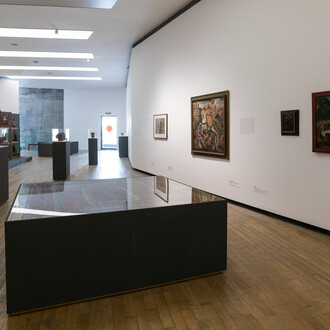
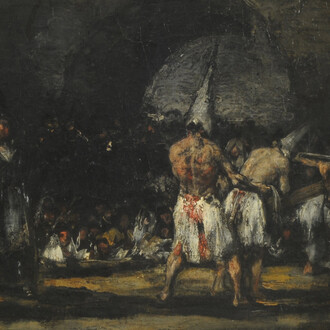
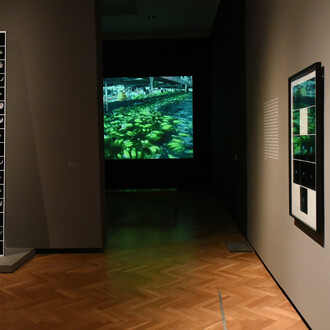
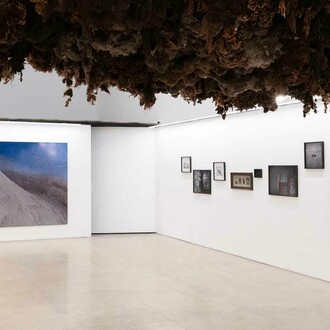
![Various artists, La memoria de la colección. El Moderno en el parque [The collection remembers: the Museo Moderno at Parque de la Memoria], exhibition view. Courtesy of Museo de Arte Moderno de Buenos Aires](/attachments/d292b175cb675e87e5e0bc4f1db740c9e6fcfbe7/store/fill/330/330/5bd19cc5226872f7bb4139c896d817d255dad63113d554be1b333dde96bb/Various-artists-La-memoria-de-la-coleccion-El-Moderno-en-el-parque-The-collection-remembers-the.jpg)