English
 Español
 Français
 Deutsch
 Italiano
 Português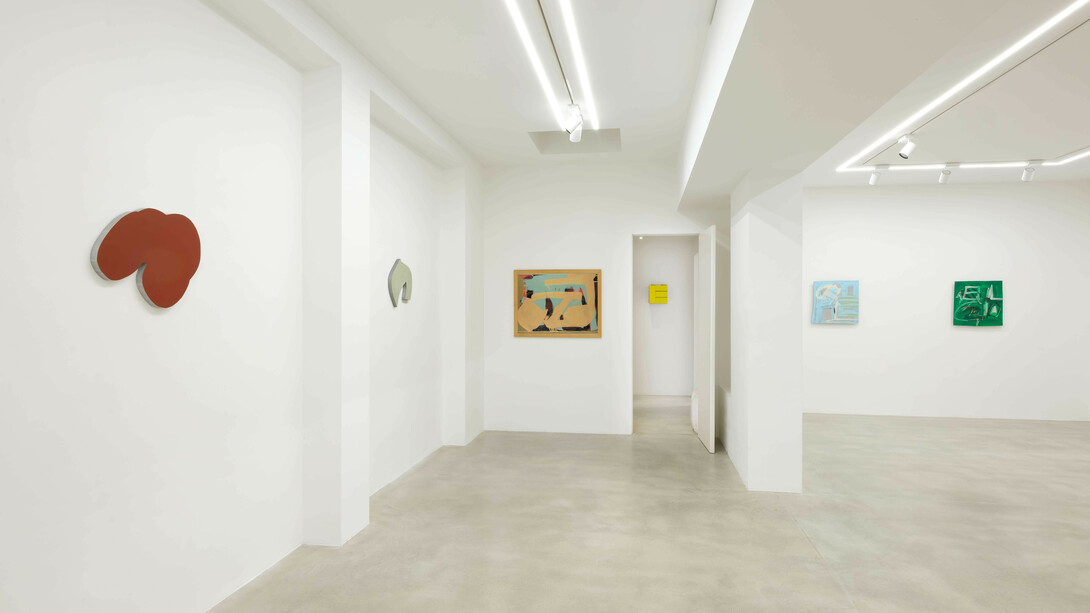
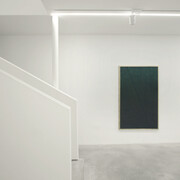
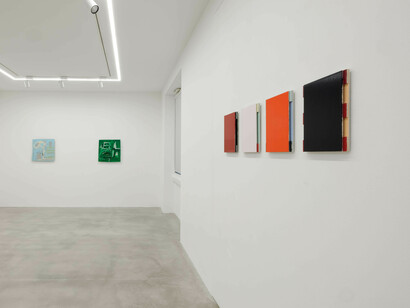
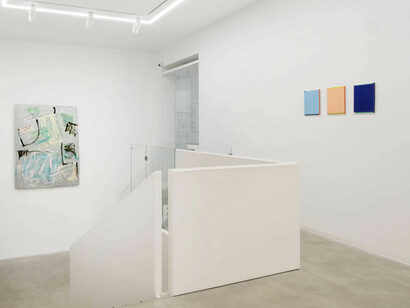
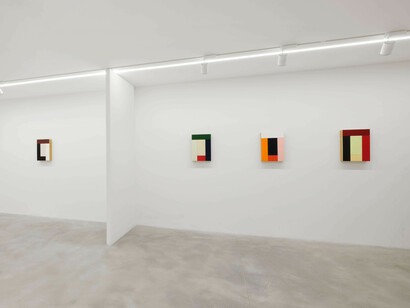
Dep Art Gallery presents A song sleeps in all things (Schläft ein lied in allen dingen), an exhibition dedicated to Imi Knoebel, one of the leading figures of European Abstract Art in the second half of the 20th century. Curated by Gianluca Ranzi, the exhibition opens to the public on Tuesday, 3 March 2026 – from 12:00 to 8:00 p.m. on the opening day – and runs until 30 May 2026.
The title of the exhibition is drawn from a verse by the Romantic poet Joseph von Eichendorff, and suggests a simple yet powerful idea: there is a silent “music” in things, which may emerge when the right key is found. In this spirit, the exhibition invites visitors into a direct and sensitive experience with Imi Knoebel’s work: time, gaze, and attention become tools for letting oneself be guided by rhythm, balance, and intensity.
Imi Knoebel has always worked under the sign of an abstraction that pushes towards the purest perception: sensitive forms that the artist knows how to “make sing” through colour, line, space, and materials. His approach is multimedia, anti-hierarchical, and unconventional, and since the late 1960s has crossed the boundaries between artistic genres, creating a dialogue between drawing, painting, sculpture, architecture, projection, photography, and installation.
As the chronological order of the works on display shows – from a 1983 Untitled work to several series from 2025 – the artist’s method is open and composite, marked by numerous references and often based on a reconsideration of previous cycles. These thus become the starting point for the next ones, windows opening onto other windows.
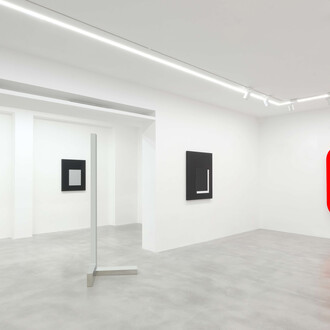
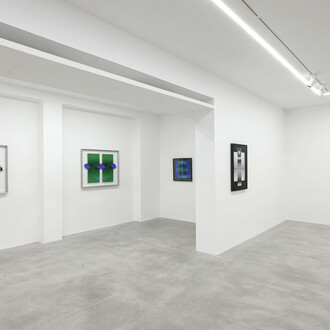
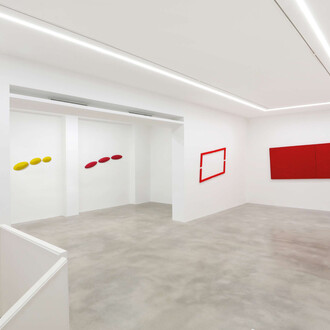
The beauty inherent in Knoebel’s works – that is, the song he knows how to bring forth from things – does not arise from logic or the expression of existential content, nor does it require spiritualist or metaphysical explanations. Rather, it is based on pure sensory aesthetic perception and on the relationships the artist brings forth from the compositional elements. This concept is reflected in the exhibition as it combines a series from the early 1990s (Portrait, 1991–92) and from the early 2000s (Düsseldorf–Paris, 2001, and Düsseldorf–Reykjavik IV, 2000) with works from 2016 (Tafel) and from 2025, such as Zeichen, Ligatur, and Etcetera. These combinations powerfully reveal a vocabulary of forms ranging from analytical rigour to gestural expression, from Euclidean linearity to irregular contours, from visibility to dematerialization, from simultaneous contrast to the poetic fusion of forms, colours, and surfaces.
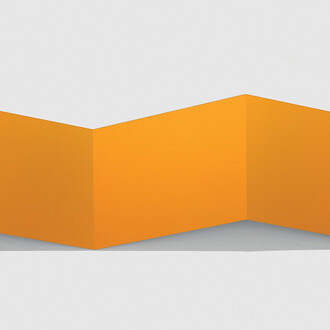
His typical creative method, which unfolds through groups or series of works, begins with prolific experimentation in his studio and leads to the creation of works each with an unrepeatable character. The Portrait series, for example, articulates the dry essentiality of coloured edges into individual “portraits”; the Zeichen possesses the incomparable and fluid singularity of flying clouds; Ligatur recalls the movable type of a visual grammar expressed through poetic imagery, while the brushstrokes of Etcetera evoke letters, numbers, and signs that emerge on the surface as yet another challenge to the conventions of vision — another song of freedom by one of the most radical and significant contemporary artists.