English
 Español
 Français
 Deutsch
 Italiano
 Português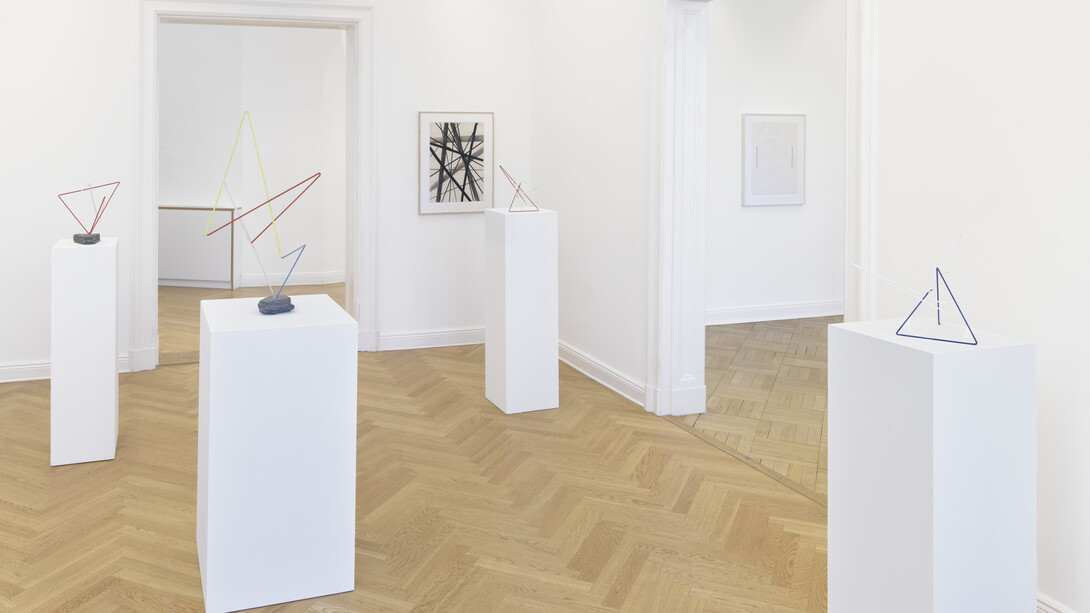
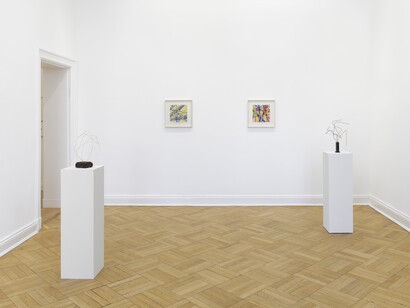
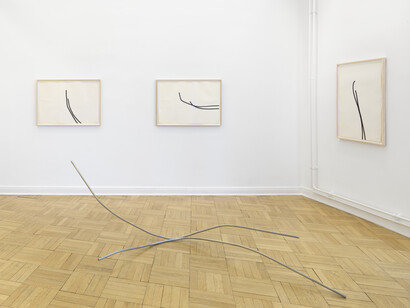
Norbert Kricke (1922–1984) is one of the central figures of postwar German art. His body of work, comprising three-dimensional sculptures and drawings, spans just over three decades and is consistently dedicated to exploring the line in space.
The exhibition presents works from the 1950s and 1970s in collaboration with the artist’s estate. A special focus is placed on a group of large-format, minimalist drawings from 1976: black ink lines traverse the drawing surface, transforming it into a pictorial space.
In the context of postwar modernism, Kricke’s work can be read as an act of liberation for a new beginning, one that had far-reaching consequences for subsequent generations as well as for the definition of the genres of sculpture and drawing.
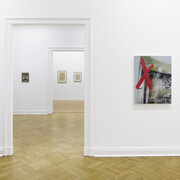
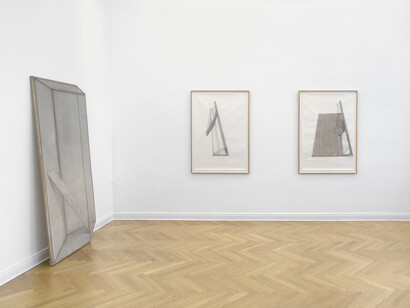
Norbert Kricke was rector of the Düsseldorf State Academy of Art from 1972 to 1981. In this capacity, he appointed Dieter Krieg as a professor at the academy in 1978; Krieg’s works are on view in the first two rooms of the gallery.
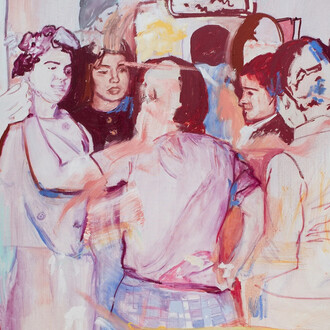
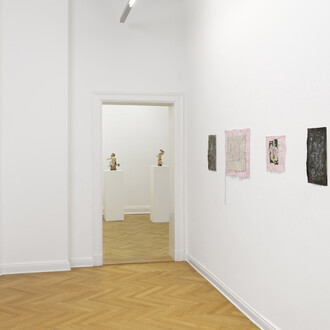
The presentation of Dieter Krieg (1937–2005) focuses on the artist’s little-known early work, featuring pieces from 1970 to 1972. In these works on paper, often created with spray paint, Krieg explores fundamental questions of spatiality and objectivity using highly reduced means.
Even though these early, minimalist works do not yet reveal his later development, a characteristic feature of his oeuvre is already evident here: the objects depicted are always marked by a kind of patina, a physical, human presence. Even in the empty tub, in the corner of the room, or in the empty shirt, one senses the presence of the human body.
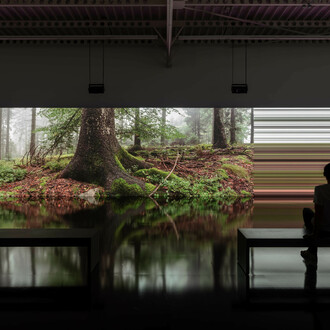
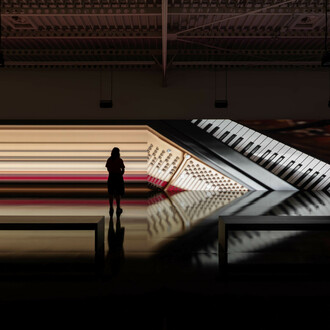
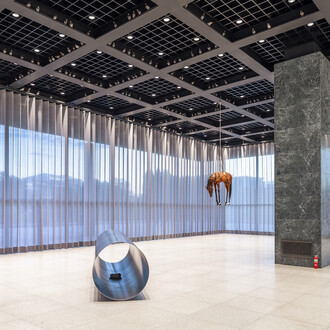
![Various artists, [ materialistin ], exhibition view. Courtesy of Hamburger Bahnhof](/attachments/fd8f4fd76b73be0a02d398535c29d017e1309b65/store/fill/330/330/3f54331fd7869a13166dfe67a9e91306c6e180b2e29b9fd308d958b87ad2/Various-artists-materialistin-exhibition-view-Courtesy-of-Hamburger-Bahnhof.jpg)