English
 Español
 Français
 Deutsch
 Italiano
 Português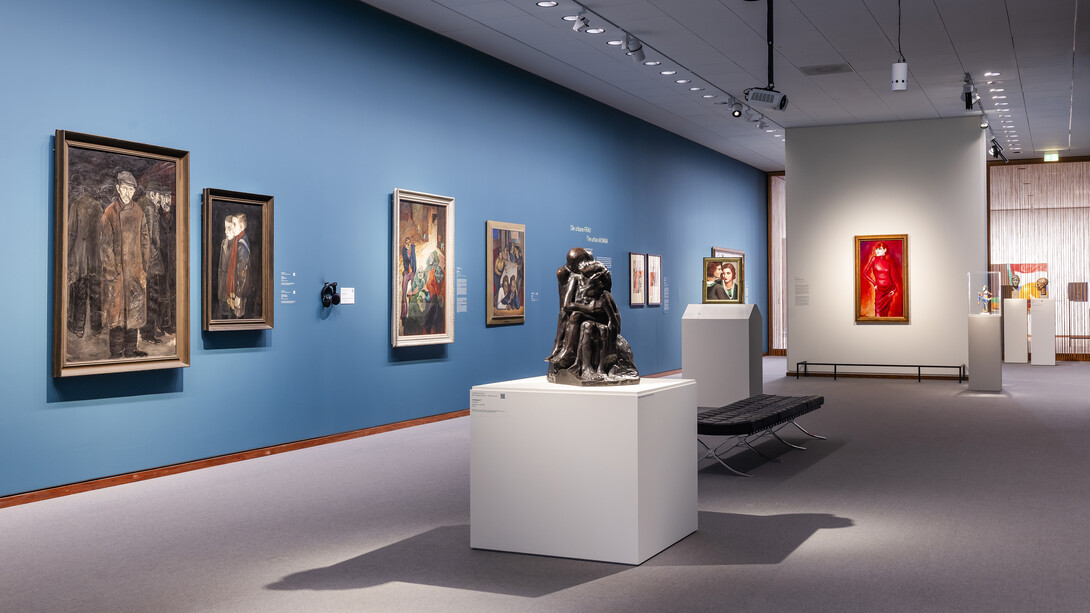
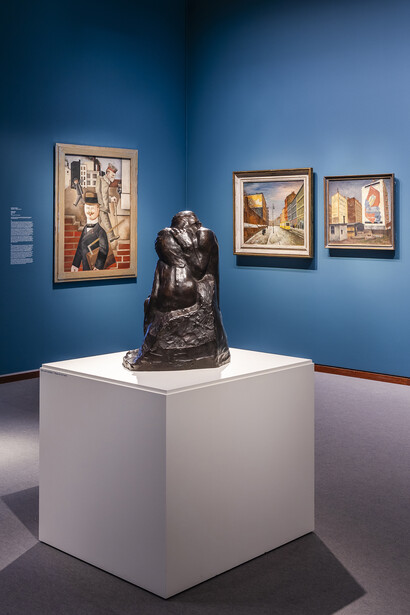
With Ruin and rush, the Neue Nationalgalerie highlights selected works from its Classical Modern collection that explore Berlin in the 1910s and 1920s. These decades – shaped by the First World War and the Weimar Republic – were marked by constant tension between extremes: excess and poverty, emancipation and extremism, all coexisting in a rapidly growing, cosmopolitan city. Featuring around 35 works in a variety of artistic styles, the exhibition brings to life the contradictions of Berlin’s past.
Around 1910, Berlin was on the rise: the city was growing at a rapid pace and becoming one of the most important centres of modernism in the world. Technological advances in industry, construction, and transportation accompanied the rise of a new mass culture, with an emphasis on leisure. As the city transitioned from the conservative German Empire to the democratic Weimar Republic, its intellectual climate underwent a profound transformation – defined by sharp contrasts: liberating and unsettling at once, chaotic yet innovative, brilliant and ominous. The traumas of the First World War and political unrest cast a long shadow over the “Golden Twenties”. The metropolis was in upheaval on every level: freedom, consumption, and excess coexisted with growing poverty and unemployment. Even back then, Berlin was nicknamed “Babylon” – an allusion to the biblical “Babel” – a place where people from all over the world converged and moral boundaries were crossed.
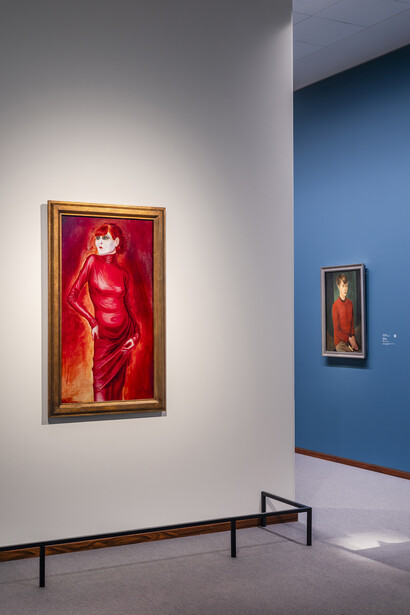
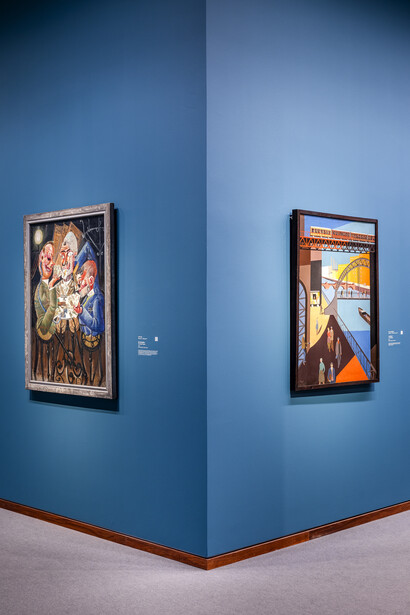
Ruin and rush explores, in three main sections, the simultaneity of glamour and misery, and rise and fall in Berlin during the 1910s and 1920s. The exhibition opens with Ernst Ludwig Kirchner’s painting Potsdamer Platz, which, as early as 1914, captured the fractured spirit of the age. After an introductory section examining the dynamism of the growing metropolis – its architecture, traffic, and nightlife – the second part of the exhibition turns to the social suffering, hardships and deprivations that defined the daily lives of most of the population. The third section sheds light on the multifaceted, urban new woman, addressing changing attitudes toward freedom, self-determination, and queer life. The exhibition closes with Lotte Lasersteins melancholic work Evening over Potsdam (1930), a reflection on the rising tide of National Socialism.
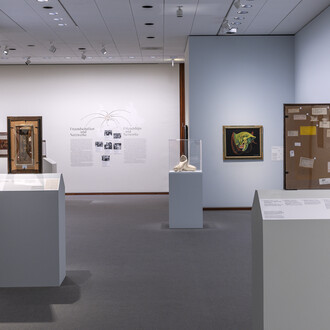
The exhibition primarily features paintings and sculptures from the Nationalgalerie’s collection, supplemented by a major loan from the Landesbank Baden-Württemberg collection at the Kunstmuseum Stuttgart: Otto Dix’s 1925 portrait of the dancer Anita Berber. All works have an explicit connection to the city of Berlin – whether through their subject matter or through biographical ties to the artists. The polyphonic voices of the era unfold through works representing styles as varied as Expressionism and New Objectivity. Clips from Fritz Lang’s silent film classic Metropolis (1927) and Walther Ruttmann’s experimental documentary Berlin: symphony of a great city (1927) are also on view. Three listening stations feature poems by Anita Berber, Mascha Kaléko, and Erich Kästner that complement the exhibition’s themes.
![Various artists, [ materialistin ], exhibition view. Courtesy of Hamburger Bahnhof](/attachments/fd8f4fd76b73be0a02d398535c29d017e1309b65/store/fill/330/330/3f54331fd7869a13166dfe67a9e91306c6e180b2e29b9fd308d958b87ad2/Various-artists-materialistin-exhibition-view-Courtesy-of-Hamburger-Bahnhof.jpg)