English
 Español
 Français
 Deutsch
 Italiano
 Português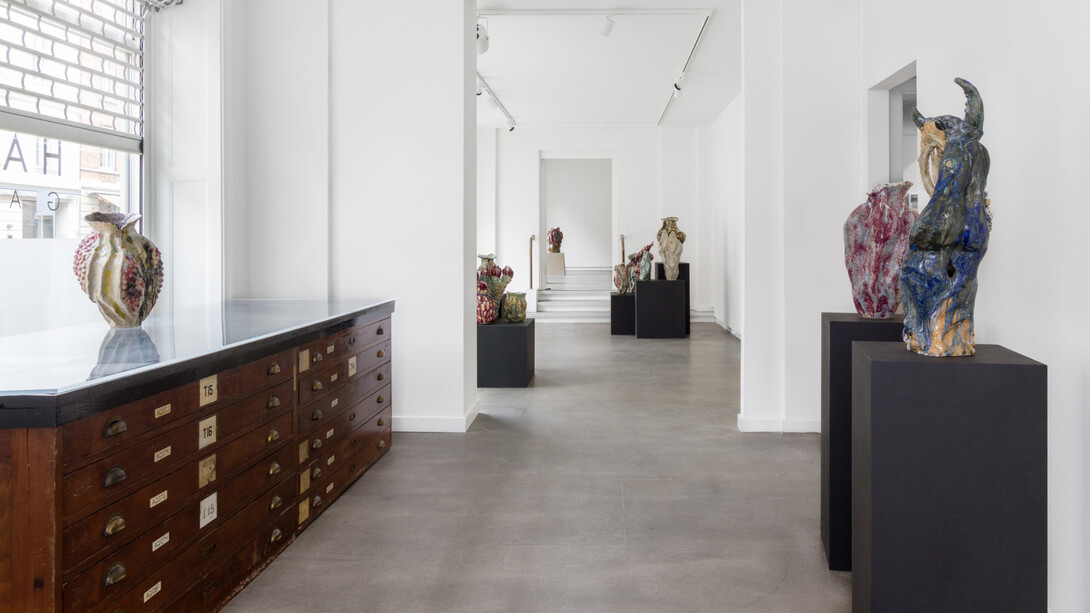
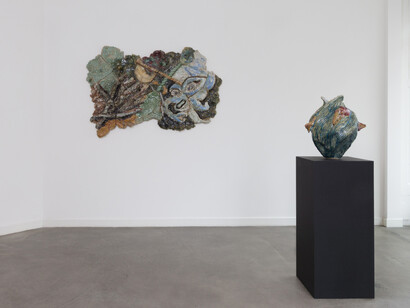
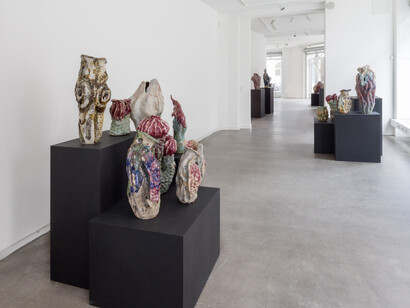
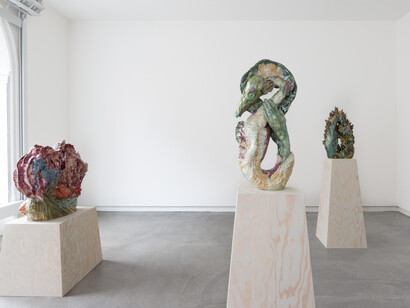
In Astrid Specht Seeberg’s exhibition Hope, Specht Seeberg creates an epistemological and psychological space directly inspired by oceanscapes. The exhibition investigates the relationship between the inner life of humans and an external maritime nature. With a symbolic and dreamlike maritime visual language, the works articulate the connection between the oceanic subsurface and the human subconscious. In Hope, Specht Seeberg presents the sea as a parallel reflection of the human mind and psychological plasticity—both full of possible emotional currents and transformative potentials.
The artist’s works can be placed within an art-historical tradition in which nature is understood as a projection of subjective and existential experiences—from the inner landscapes of Symbolism to Surrealism’s visualisation of the unconscious. Specht Seeberg positions herself within this tradition with a contemporary eco-critical inflection, in which humanity’s relationship to nature, beyond its poetic potential, is intrinsically political and ethically charged.
Specht Seeberg’s working process is clearly dialogical with the material and an extension of her own imagination, and in certain works her own hands appear as indexical traces of the body — she upholds an insistence on presence, vulnerability, and physical anchoring in an otherwise fluid and imaginary pictorial space.
Hope consists as a polyphonic space of communication and emptiness. The colours and organic forms of the sculptures stand in contrast to emptiness, stillness, and absence, which points to an ontological oscillation between being and dissolution. This structure can be understood as a reflection on the fundamental duality of existence: between becoming and destruction, autonomy and disempowerment, movement and stasis. Through its title, the exhibition emphasises that it appeals to the viewer’s hope, while hope in the exhibition does not manifest as a linear idea, but as a cyclical and persistent movement that endures despite the inevitability of upheaval.
Astrid Specht Seeberg’s thematic approach may lead the viewer toward thinkers such as Donna Haraway, who with her eco-critical theories, much like Specht Seeberg’s, whose works depict humanity as an incongruous being: at once an invasive species that is destructive to the very natural cycles on which we depend. This ambivalence unfolds through depictions of metamorphosis and fluid identity markers, where the boundaries between human, animal, and natural environments are destabilised.
Specht Seeberg’s works insist that knowledge and transformation must originate in an inner sensibility. By evoking an affective and bodily resonance in the viewer, the exhibition seeks to raise awareness of human nature’s responsibility in relation to the fragile ecosystems of the aquatic world. Hope functions here as a methodological and ethical beacon—a prerequisite for both self-understanding and collective action.
On Hope, Specht Seeberg herself says:
“Through the ocean we come into contact with our emotional life and subconscious. The works are an extension of my imagination, symbols. All beings contain infinite hope, this hope taking its starting point in curiosity and becomes life-sustaining. Nothing of substance is achieved without enthusiasm and belief.”