English
 Español
 Français
 Deutsch
 Italiano
 Português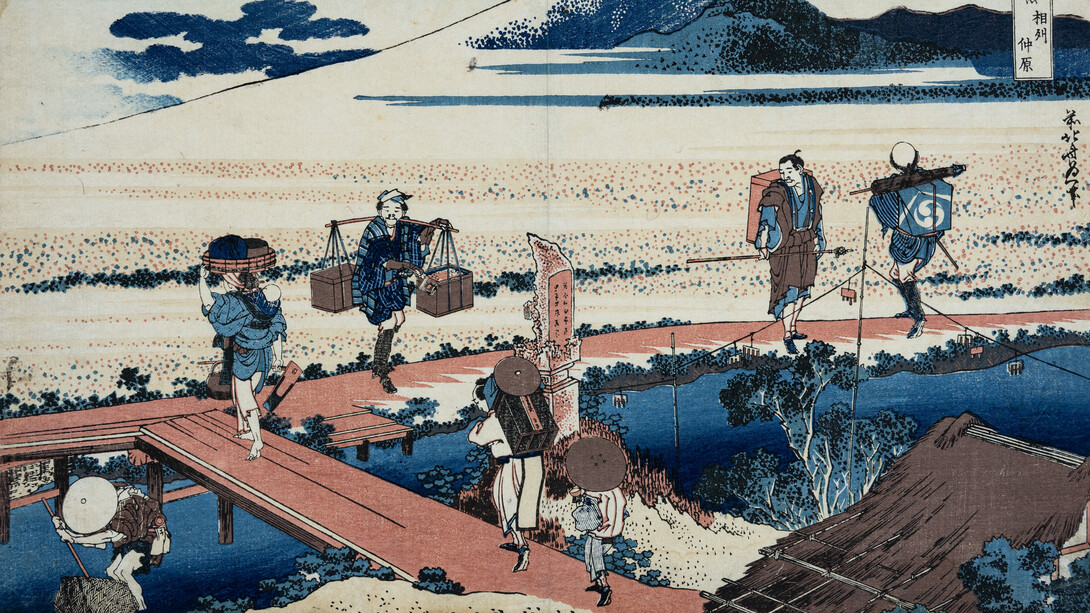
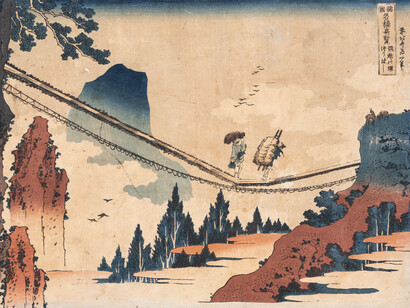
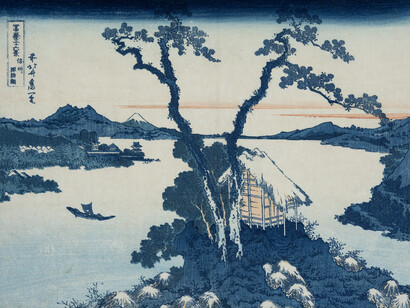
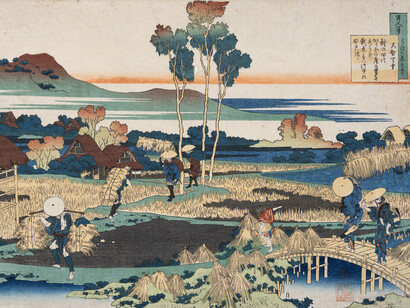
Concurrent with the exhibition Japan modern poster, visitors to Designmuseum Danmark can experience a smaller exhibition presenting 40 woodblock prints created by the renowned Japanese artist Katsushika Hokusai (1760–1849).
Katsushika Hokusai lived in Japan during the so-called Edo period (1603-1868), a time when woodblock printing underwent a revolutionary development – from hand-coloured, single-colour prints depicting life in Edo’s (present-day Tokyo’s) entertainment districts to mass-produced, multi-coloured prints. Over time, landscapes, travel scenes, and other popular cultural motifs also became common. Hokusai is particularly known for his dramatic landscape depictions and his striking use of colour. The 40 woodblock prints on display offer a rare opportunity to experience the museum’s entire collection of Hokusai prints, exhibited together for the first time.
A glimpse into Japan’s past
The Hokusai exhibition presents captivating woodblock prints from a bygone era, displayed in the museum’s historic Kaare Klint frames, offering a fascinating insight into what life looked like in Japan at the time. Woodblock printing was a mass medium – both because of its broadly appealing subjects and because it could be produced in large quantities. Many of the prints in the exhibition are part of Hokusai’s famous series Thirty-Six Views of Mount Fuji, which depicts the iconic mountain from various locations and under different weather conditions.
Danish design inspired by Japan
In the late 19th century, demand for Hokusai’s works grew in Europe and America. Interest in Japanese art and craftsmanship was also strong in Denmark during this period, and Danish designers were deeply inspired by Japan – including Kaare Klint, who in the 1920s re-designed the Design Museum’s listed building from the mid-18th century and created museum furnishings that are still in use today. The exhibition presents both iconic works by Hokusai and lesser-known pieces, offering insight into the development of his artistic expression.